


Or subscribe to get every pamphlet too, from $50 a year.



 Join 22,002 subscribers
 ’ve been thinking about what happens at concerts when we allow ourselves to get completely and unabashedly into something. We scream our lungs out, dance wildly, laugh hysterically with our friends as we scream “WOOOOO!!!!!” We become so overtaken by “fun” that we lose ourselves completely in pure joy and happiness.
When I recently attended Taylor Swift’s Era’s tour in Lisbon, that emotion was bubbling up inside me, I was smiling so big my cheeks hurt and singing so loudly I lost my voice.
It was so fucking fun.
But we don’t do that in real life. Rarely in our day-to-day lives do we get so excited that we are crying with our best friends, grabbing each other by the shoulders as we jump up and down with glitter on our faces screaming “WOOOOO!!!!!” Instead, we are stoic: This is not a concert, we are riding the train, we are on our way to work, and that requires a certain decorum.
Sometimes I feel like there is a forced stoicism placed on me by society. Outside of a concert arena my emotions don’t peak quite as wildly. I have watched videos of Taylor Swift’s concert without feeling the way I did in the crowd. Even if I love something or hear something funny, if I am at work or on the bus I am not screaming and crying about it, I am sitting still, a slight smile on my face.
It isn’t until we enter into arenas where expression can be at its fullest that we are free to do so: Squealing as a kid doing a cannonball into a pool, upside down and tumbling with laughter on a roller coaster, screaming our guts out at a concert, cheering vivaciously at a sporting event, dancing our hearts out at a wedding, laughing hysterically at a comedy club.
There are arenas where it is ok to be overflowing with happy emotions and we are even expected to do so. And that makes me wonder: Maybe it isn’t the thing itself that is “fun,” but the freedom to express it.
That is exactly the sort of thing that enthralled French philosopher Henri Bergson. In his 1900 essay, "Laughter: An Essay on the Meaning of the Comic," he explored what happens to us when we attend a comic performance in a crowded theater, and why we don’t respond with the same joy in our day-to-day lives.
“The comic spirit has a logic of its own, even in its wildest eccentricities,” he said. “It conjures up, in its dreams, visions that are at once accepted and understood by the whole of a social group. Can it then fail to throw light for us on the way that human imagination works, and more particularly social, collective, and popular imagination?”
The collective imagination is powerful. After all: I’ve been to concerts where I don’t even know the musician only to get swept up in the fervor of their hottest song. I’ve attended sporting events where I don’t even know the rules of the game only to start cheering with all the rest, hugging my friends and jumping up and down in ecstatic happiness at each point scored. It isn’t the concert or the game, then, that I thought was fun, but rooting for it—getting swept up in the emotion of a crowd that was having so much fun, outwardly throwing their hands up in the air, whooping and hollering.
“Laughter appears to stand in need of an echo,” Bergson said. “You would hardly appreciate the comic if you felt yourself isolated from others… Our laughter is always the laughter of a group.”
It is the group that gives us the freedom to laugh, and he gives a relatable example: Imagine that you are sitting on a train and the group next to you is recounting a story that has them all in stitches. “Had you been one of their company, you would have laughed like them; but, as you were not, you had no desire whatever to do so.”
Why is that? The same story can be hilarious if you are on the inside, but barely elicit a smile if you are on the outside. As Bergson says, “Laughter always implies a kind of secret freemasonry, or even complicity, with other laughers… how often has it been said that the fuller the theatre, the more uncontrolled the laughter of the audience!”
When we create these arenas of fun, we have more fun. What’s “fun” is experiencing those emotions together.
When a recent study claimed that exercise beat depression better than antidepressants, they buried the lede. As Erik Hoel and several others pointed out after its release: It wasn’t exercise in general that beat depression, it was specifically dancing. The researchers had lumped it together with all movement, but alone dancing outperformed every other option—including therapy and antidepressants and all other forms of exercise—by a landslide.
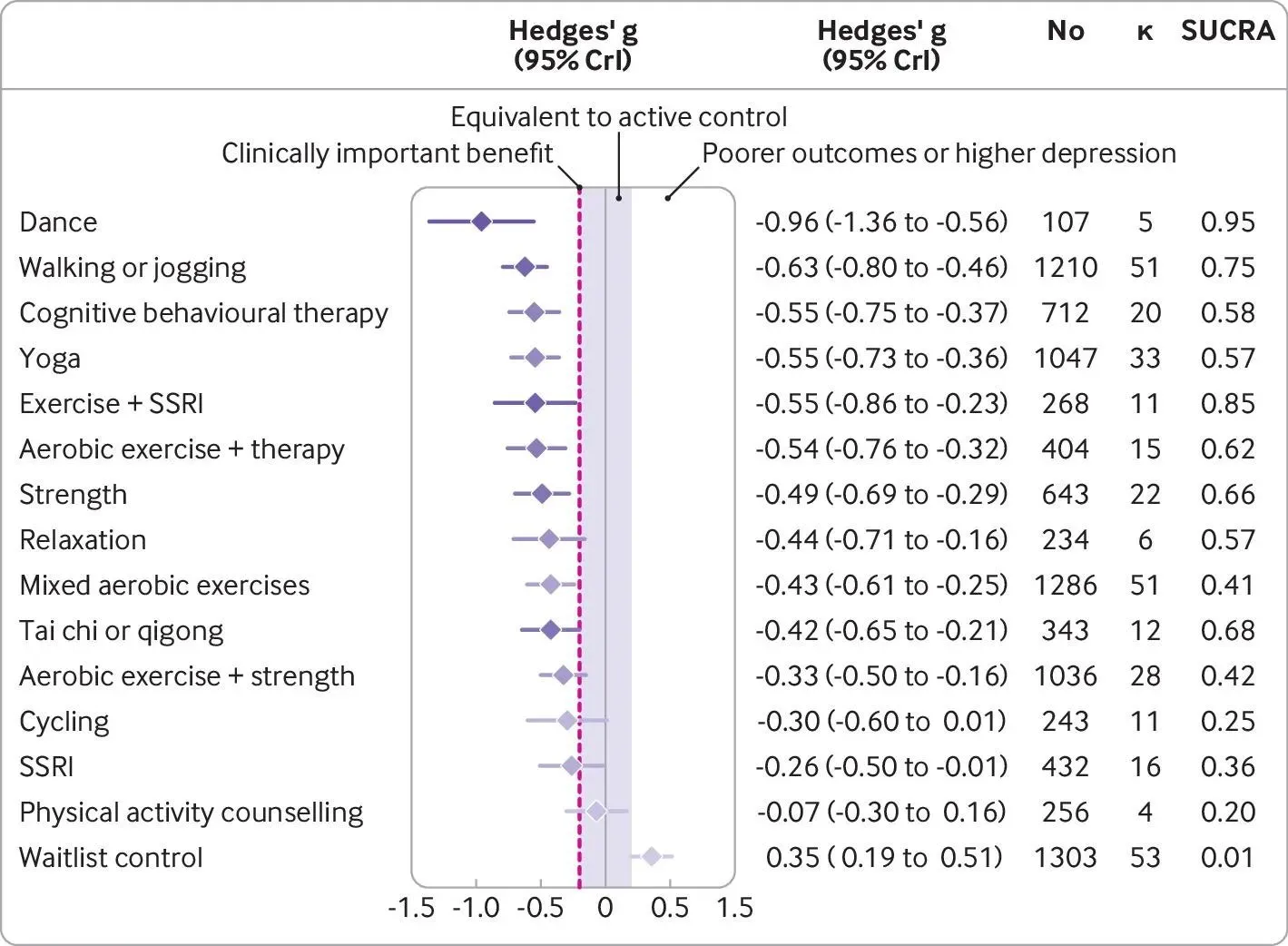
That dancing is more effective on depression than jogging or therapy is not surprising to me—of all of the options, it is the most emotive. We are smiling when we dance, we laugh, we are part of a collective group. I have been in a Jamaican dance class where I could not stop laughing for my complete inability to twerk, and the entire class could not stop laughing alongside me for my abhorrent attempts. A dance studio does not elicit the solemnity of yoga and tai chi or the solitude of cycling or strength training. It is art and emotion—it is the most “fun.”
When we live in absence of these arenas, we flounder. During the pandemic, we called it languishing. Without the chance to have fun, to be part of a group, screaming and laughing and having a good time, it was easy to enter into a sort of lifelessness. All the things proven to make us happier were still there—we could still exercise, engage in personal growth, find meaningful work, and remain close with friends and family—but all the things that were fun were gone.
We still studied even if we didn’t go to school. We still met with our families on Zoom even if we didn’t go to the family reunion. But without the thrill of college parties and dormitory antics, school was a boorish affair. Without going down a waterslide at the family picnic we were going through the motions. We became like that man on that subway: He may have a good life, he may even have a happy life, but he is still lacking some “X-Factor.”
I think that “X-Factor” is fun.
That the complete, unabashed and emotive enjoyment of life is human flourishing personified.
There is some evidence to support this. We have witnessed, for example, that more emotionally expressive cultures (like the US, Australia, and many Latin American countries) tend to be happier than less emotionally expressive (like Eastern Europe, many Asian countries, and Russia). Comparing the two, Dutch social psychologist Geert Hofstede said the former are socially free to enjoy life and have fun, as a result they tend to have a higher degree of happiness and optimism and emphasize leisure time and freedom of expression. But the latter suppress emotional gratification through strict social norms, as a result they tend to be less happy and more pessimistic, they focus on duty and discipline over leisure and enjoyment.
It makes sense. When you’re in a situation that elicits laughter (like a theme park) you are generally more happy than when you are in a situation that requires you to be serious (sitting in a meeting with your boss).
It’s probably a good idea that I’m not, if I was a therapist I would tell all of my clients to go have fun—the emotive and collective kind I’m talking about here. I would tell them to grab a friend and go to Disney World, to go to Comic-Con and get all the way into it, to go to Mardi Gras and throw all the beads they could get their hands on, to go to a haunted house with friends. Just see if you feel more alive, I would say. Just see if it will shake you out of your slumber.
The old philosophers would have found this a frivolous ask. As much as they spoke about the good life, it lived far apart from any kind of passion toward it. Aristotle's “Eudaimonia” is often translated to “flourishing,” but he actually defined it as living a virtuous life informed by reason. The stoics warned against the excesses of passions, saying we should be ruled by logic instead. Even the Epicurean concept of “pleasure” was more focused on the absence of suffering than having fun.
“Fun” itself would have seemed a dangerous pursuit. As we can observe in children: Emotive happiness can just as easily be accompanied by emotive tantrum. We think of Travis Kelce screaming at his coach during the Super Bowl, soccer fans getting so riled up that stadiums around the world have to ban alcohol. Good emotion often comes with bad emotion, and this is where the philosophers would place a wet blanket over the whole thing, calling passion and its erratic moods a precarious thing.
Compared to such whims, a docile “happiness” seems a much more appropriate goal, and in modern psychology culture this has become our north star. But I think “happiness” falls short. That it has become so entrenched in our minds that “working out” is essential to happiness seems proof we are going after the wrong thing. We write studies completely missing the point—that it is not actually exercise that’s making us happy, it’s having fun.
And going without it can be just as dangerous: I think about the riots that filled the streets during the pandemic. What was that but pent-up emotion? With no outlet for positive emotions our solitude led us to spiral in negative ones. There was no laughing and crying with a stranger, there was only fear of them on the street. Waiting in line for the Taylor Swift concert, we bought pizza and shared it with new friends from Turkey and Thailand. During the pandemic, our neighbor called the cops on us for standing together with our friends in the front yard.
Emotion can be both positive or negative, that’s true, but without emotion at all we are lifeless. When all I do is work from home, eat healthy foods, practice yoga, and go for long walks and hikes, I am bored. I read a lot of philosophy, I don’t spend time on social media or watch TV, but I am listless. I’m not eating enough cheesecake or drinking enough champagne. I’m not staying out late with friends. Sometimes I need to be shaken from my slumber with loud music, loud laughter, a roller skating party at the park, fantasy books only.
It’s easy to get into a routine of all the things that are supposed to be indicators of a good life, and yet that life is not good.
It’s just… fine.
The “good life” lives beyond those bounds.
Children intrinsically know this, and we create plenty of arenas in which they can have fun. At splash pads and playgrounds and birthday parties children can run around recklessly, squealing with laughter. By comparison: Adults have places to eat and drink. The comedian Mitch Hedberg once joked that if he wanted to go down a waterslide he’d have to pretend he wound up at the top of it by accident. “Whoops, guess I better slide down.”
But we can continue to play and have fun as we grow up, and we can seek out arenas in which we are free to do so with a group. The philosophers needn’t have worried: As we grow up, we are fully capable of emphasizing positive emotion in our lives without also swinging wildly in the negative direction. If our therapists asked us to unpack all of our happy memories instead of all of our traumatic ones I think we’d be much better equipped to do so.
As Bergson says: “In a society composed of pure intelligences there would probably be no more tears, though perhaps there would still be laughter.”
It might still be frivolous. Why should we care that any of us are having “fun” when there is still so much suffering in the world? Why does it matter whether we are going through the motions or are actually enjoying our lives? Maybe it doesn’t. But I don’t see the point in living in a world of zombies either. I still believe in “the good life”—that “human flourishing” doesn’t just mean all of our economic indicators are met and all of our “happiness” checkboxes are ticked.
It means finding that X-Factor.
There will still be suffering, but we do not need to live a life of languishing. We can seek out laughter instead. We can be happy and express emotion—we can laugh and jump up and down and scream “WOOOOO” with our friends at a concert.
We can have FUN!
If we can find that, maybe we will find happiness and human flourishing and all the rest.
I’d love to know your thoughts in the comments section. Treat this as our literary salon, a place where we can discuss human flourishing!
Thank you so much for reading,
Elle Griffin
Get every essay in your inbox
Weekly essays exploring a utopian future.
Join 22,002 subscribers

I don’t think that’s controversial at all. I think that’s beautiful! And I absolutely agree that societal norms stop us from being excessively emotive outside of “appropriate” venues.
I am very much an introvert, but I can act like an extrovert when I need to! (And for short periods of time!) Having a block party once a year made me more connected to my neighbors overall, one of my friends hosts a monthly "poker night" to keep us all connected, and a more intimate group of us gets together for "Whisky Wednesday" every week. But the vast majority of my time is still spent by myself or with my husband. One extroverted thing every now and then forms the basis of the more introverted existence we live on a day-to-day basis, even as we have community around us and neighbors we care about too. (If that makes sense?)
I appreciate your thoughts about "fun" and can very much relate!

I agree. We traded social interaction for "social media" and have suffered because of it.
My parents used to say, "Go outside and play." That was great life advice. We need to keep playing (sports, music, hobbies, etc.) even as adults. It relieves stress and makes life bearable. Go play. Have fun. Being serious all the time is depressing.

Dancing in the kitchen with family to good music is often better than being in a nightclub. Just get some good music going and boogie
I love that so much!!!!!

I love this on so many levels — dance has been a big part of my life and for the past several years I've missed it terribly, and also one of my favorite writers, Bob Black, emphasizes play in the same way you use fun, as a revolutionary return to our childlike rhythms. It turns out "revolutionary" action doesn't have to be protests and picket lines; it can just as easily be rest, rejoicing, rejuvenation (which means "being young again," another of my fav words!)
Words can’t express how much I love this idea!

I hope you had a blast in the Eras tour (though it sounds like you did)! This piece is convincing me that maybe an occasional hangover is worth it for the fun :)
Ha!!!! Is that the point I made??? 😆

As a parent, you get to visit that place very often - just yesterday we were screaming our way down waterslides for an entire afternoon! I do think you have to be careful about dopamine-seeking though. It can be addictive, and that "lose yourself" pleasure can be found in many different ways, some more socially acceptable than others. ;)
I’ve noticed this being an aunt! I think if you’re around children more often you can really appreciate how natural this is! And how freeing it is for them to be able to express their joyous emotions!
I can imagine a world that's materially better in many ways -- less disease, more wealth, more general well-being -- and would thus increase contentment but not joy, and it does seem that there would be something wrong there. It isn't a humanist utopia, certainly. It lacks peak experience. We need the ecstatic.
Looking back, I used the word "joy" whereas you've said "happiness". Are these the same in your mind or is there some distinction here? What might be different in attempting to promote one versus the other?
I totally agree with you. Joy isn’t inherent in all the other metrics! And yes, I do distinguish between joy and happiness. I think of joy along the lines of fun, and happiness along the lines of contentment. There’s probably room for interpretation there but to me the difference is that more ecstatic expressive joy that bubbles out of you!

Excellent post, Elle. And very interesting about dancing!

Your points about happiness and laughter and not being straightjacketed by adult propriety are well taken, and I think right, but the idea that ancient Eudaimoniac philosophers were dour probably isn't right.
Socrates loved to dance, apparently for joy and exercise. In Xenophon’s Symposium, Socrates asks a dance instructor to show him some dance moves. His friends laugh and ask him why. "I'll dance, by god!" he says.
Socrates and his entire circle of friends seem to laugh a lot when they're not getting into heated philosophical discussions.
In terms of the Stoics, the third head of the Stoa, Chrysippus, reportedly died during a fit of laughter, after seeing a donkey looking silly eating some figs and saying, ""Now give him a drink of wine to wash down the figs!"
Whenever humor is mentioned, the Stoic seem in favor. Certainly they thought it was better than being miserable about our life.
Even Cato, who was considered pretty dour, liked to dance.
And here's Seneca, referencing Democritus, an earlier philosopher who suggested we embrace laughter:
“We ought therefore to bring ourselves into such a state of mind that all the vices of the vulgar may not appear hateful to us, but merely ridiculous, and we should imitate Democritus rather than Heraclitus. The latter of these, whenever he appeared in public, used to weep, the former to laugh: the one thought all human doings to be follies, the other thought them to be miseries. We must take a higher view of all things, and bear with them more easily: it better becomes a man to scoff at life than to lament over it. Add to this that he who laughs at the human race deserves better of it than he who mourns for it, for the former leaves it some good hopes of improvement, while the latter stupidly weeps over what he has given up all hopes of mending.”
Yes, they were concerned with getting carried away and doing stupid/immoral/unvirtuous things in the grip of passion.
But I would argue that since one of the virtues in moderation, being hardcore and never having pleasure/cake/dance/silliness is not what they'd suggest. They'd want you to find the amount of those things that didn't get in the way of what was most important. Food was good and health was good. Obesity and diseases of affluence, maybe not. There's a needle to thread between those points. Same with laughter, silliness, dancing, etc.
If it's not leading you into vice, it's probably ok.
Yes, this is a good point. These philosophers certainly weren’t dour, and I am not suggesting they never laughed or danced! But even in the quotes you mention I don’t think those emotions were emphasized. Fun was not seen as a virtue the way being healthy or blameless was. And concerns about passions were many!
I am still an epicurean at heart because I think he is the closest we come, but I do think we could stand to go even further!

Participation and personal expression, whether it's through our own creations or another's (think covers as an example) allow us, particularly in groups or gathering, to be something other than an autonomous/individualistic solitary being. We both fear and long for emotional expression, which is a shame since it's a basic human desire, so when the opportunity arises there's nothing so freeing as letting go and immersing yourself in the moment with all those around you. I find it through music; nothing digs as deep and is as satisfying whether through the depth of sorrow or the ecstasy of pure joy. And to share it with others can be profound.
Latin American cultures are more emotionally expressive -- I experienced this first-hand in the first few months at my current job. While befriending my Mexican coworker, they would sometimes say: Hey, are you angry? Did I offend you? (when I thought I was behaving normally) From the start, I had a better mutual understanding with coworkers from other 'northern' cultures like the Netherlands & Ireland. Of course, it can't all be explained by cultural differences, some of it was doubtlessly individual personality too. I'm so grateful to my Latin American coworkers for teaching me to be a little more open with emotions.
Absolutely agree that laughter brings people together, although I'd be curious how sense of humour plays into the mix... Laughter & humour is something that brings my family together but I also have a friend whose sense of humour is completely different than mine. I guess jokes are a category of their own, of course that doesn't mean that we never laugh or have fun together.
Thank you, this is good food for thought!
Isn’t that funny how people can interpret our whole personalities differently because of that? I had a similar experience in France where my friends thought I was too expressively happy, something which made me seem like I was an idiot 🤣 So classic.

Thank you for this! Substack Dance Party! 👯♂️🎉
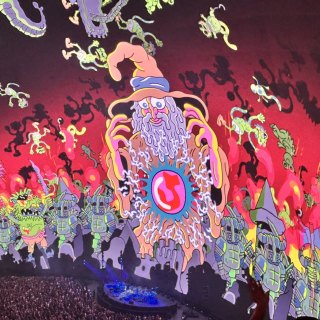
Dancing and live music are quite literally the two components of human existence wherein we get closest to our most potent, collective unconditionalism, outside of our bonds with our animals. All the rest of our arts, including our literature, are limited by their era-specific contexts and their culturally shaped minds....except for music. Music is the long game for human culture. If there will be anything humans do that might echo in the cosmos and the universe Herself, it will be our music and little else. Saw the Rolling Stones this week, Elle, and yes, same thing happened, we got caught up in the moment with 70,000 other Stones fans smack dab in the heart of Inglewood in Southern California, and danced with abandon, unfettered by the standard repressions of humanity.
That sounds absolutely incredible. Thank you so much for sharing your experience and your thoughts!

I asked a friend once why I always thought she was so much younger than her actual age - she said, “because life is about having fun and not taking yourself so seriously” and man does that stick with me!
Also a Chappell roan concert is the most fun I’ve had in a long time!

Yes! When I see people like that man on the train, I just want to take their hands and dance with them, singing badly. Your life is here, now, enjoy it. This is your chance. Eat cake, play games, make silly noises at a baby. Life isn't that complicated, loosen up and have fun.
The trouble is, we have no way of knowing what that man on the train was experiencing at that moment, and we shouldn't assume that he simply needs to stop looking like a curmudgeon and have some fun. Imagine he has a child in the hospital and is sick with worry. (I know this sounds extreme, but it's possible.) No amount of dancing or singing is going to make him "snap out of it".
I'm not against fun, btw! It's just that telling people who are affected by serious problems to dance their troubles away won't work.
I sincerely believe that we should attend to the root cause of languishing or other forms of alienation: a society based on the elevation of individuality and money.
This is certainly nothing against that man, I know nothing about him and am only using only him as a metaphor for understanding the lifeness-ness we can sometimes feel ourselves. And I am by no means suggesting we "dance our troubles away," though I do think that if we experience more fun and joy in our lives, we become less concerned with its troubles.
There are plenty of societies around the world that do not elevate individuality and money and yet still experience suffering. So reducing suffering itself won't lead to human flourishing, only experiencing human flourishing (despite the suffering) will!
Elle, I could not agree more! I'm very much on the "promote flourishing" side of the equation, as opposed to "reduce suffering".

Sure, collective fun is a gas, gas, gas. But engaging in solitary activities allows for introspection, creativity, and self-discovery without the need for external validation or social interaction. That's the strong point, particularly if you don't like crowds. Couldn't Bergson just play the laugh track at home to help him laugh out loud alone like a true mad man. It seems important to tap our intrinsic motivations and preferences. Don't we need that sense of independence and self-sufficiency?
Sure. Solitude often serves as a backdrop for introspective narratives. What if instead of screeching in a crowd in a concert unheard, we were busy exploring themes of identity or the rewards of solitude, digging into the importance of self-appreciation and self-expression? What if we could offer ourselves a sanctuary from that incessant pressure to be having fun in front of others, of proving that we too are happy?
There is no doubt there is a lot to be gained from solitude, this piece was sort of a response to having too much of it 🥰

> It’s easy to get into a routine of all the things that are supposed to be indicators of a good life, and yet that life is not good.
Very well said, Elle! And as someone from Easter Europe living in the West, I can relate to it 100%.
Incidentally, I recently took on House dance classes because regular cardio was too boring, which is why I couldn't even stick with it (so I think there's that effect too!), and because I often dreamed of doing a street dance like a kid, but was too scared to "look stupid" as an adult. Glad I listened to that inner child.
And I would even take it a step further and claim that getting more in touch with our emotions - doesn't matter positive or negative - and dialing them all the way up to 11, instead of repelling them, is what really increases our overall happiness and connection to others. I think it is our primal and most important form of communication, despite what we came to believe in the modern society. And even my therapist agrees :-)
This is so beautiful and reaffirming!!!!! Dance really is winning in the comments. I’m convinced that being able to express our emotions is key to happiness. (Though I’m not convinced yelling and screaming and crying is, even if we need space for that too. 😊)

If only once we experience an “X Factor” moment, we would be able to reproduce the moment again, otherwise we might be frustrated with our current situation as it is, not knowing if it would ever come our way again.

Yes! Finitude and transcendence. Fun is what makes the suffering bearable.

Great post! I was just reading The Culture of Narcissism and it discusses our culture losing the ability to have fun. Glad folks attending The Eras Tour don't think so!

Elle, this is so fantastic!!

Leave the guy on the subway alone. He can decide for himself how he wants to react and why. It’s mere moments in a life. Sometimes the most oppressive thing going is being thrust against your will (and in this case, trapped) into someone else’s performance, with all its expectations and judgments. That’s why I hate stunts like Kimmel’s. At its core it’s not a choice, it’s manipulative. (Whereas going to a concert is a choice.)
Of course he can. I am only using him as a metaphor to express an emotion I sometimes feel. Though I very much agree that we should be able to opt out of public spectacle. I hope they all opted in to that particular filming escapade!

Fall semester of Freshman year, we performed You're A Good Man Charlie Brown. And of course theater kids don't keep the drama in the theater, so in classes and in the cafeteria and the grocery store, we would act like the little kids in the play and be very expressive with our emotions. It was a lot of fun, and so very healing to be able to freely express emotions like a child again.
Shout out to the theater kids. It really is so fun being one and I miss those days!

So aspirational. I think I’m bad at fun…almost all of it comes from being around my child and little of it is really personal. But that’s the freaking goal — fun is part of what makes life worth living!

Aww I just love this, Elle! The first line in my about section asks “are you having enough fun?!”. So yes, I’m all about this. Let’s incorporate fun into the everyday, even the small moments!

The “good life” lives beyond those bounds. I couldn’t agree more. As someone who was raised in Asian society, I don’t completely disagree with Hofstede (although other parts of Asia are far more regimented than Malaysia, where I’m from). I didn’t rediscover fun until the pandemic, and have never looked back since.

I have a question. Did you get mistaken for Taylor Swift?
Ha! Weirdly yes every now and then. But I think it’s just the hair…
Haha! Amazing! :-D

What a great article! This is a wonderful reminder to keep engaging with things that bring up that joyous, contagious energy. Thank you for sharing!

I'd be curious how fun can combine with flow states, for a peak experience.
We typically think of flow (essential to flourishing) in terms of a meditative or creative state.
But flow + fun is amazing cocktail. It may be why "dancing" is at the top of the list.
Examples...
- dancing at a wedding
- engaged at a sporting event
- playing a video game w/ friends
- and so on

This essay is a joy to read. I loved it from the jump but I subscribed as of this paragraph:
"It was so fucking fun."
Over the past week I've realized that having more fun in my life is not just a nice idea, it may be critical to the survival of my marriage and to breaking me out of the crust of my natural inwardness.
And also: it's fun. I have two kids, I'm 45, I work a job, but I'm not dead. Thanks for the life-giving reminder. I'm going to look for Mitch at the top of that slide now...
Right! Life should be fun! We should be at the top of that waterslide! 😆

I was just saying to a friend the other night that I want to have fun again.
Here's something fun, btw, coming next week: tweetspeakpoetry.com › take your poet to work day

Great pic btw, what is the source?
I make all of my newsletter photos using Midjourney!
Nice !
Ok Elle. I'm going dancing right away ! btw - the guy standing next to the band looks like a bodyguard to me, Jason-Statham-style 😎
Ha! That very well could be the case!

We need more reflections like this, thank you so much for sharing. I think that fun not only has great value, but that we often forget that in my opinion it has many forms and is made up of many things that change depending on the person. Sometimes I talk to a friend of mine and he tells me how much fun he has in a room reading manga, and then going out with his friends for a coffee. For me, for example, having fun is in a broad sense also reading something very interesting, like a paper (I know many will think it's strange!). However, I think recognizing this deeply personal and not necessarily conformist dimension of entertainment is a fundamental step for anyone, and absolutely stimulated by this splendid issue.

Great point! 🤔Fun can definitely seem frivolous with all the suffering out there. But maybe it's like a battery recharge for the soul? If we're all burnt out and miserable, how can we even help others?
A little laughter and joy might be the fuel we need to actually make a difference. Plus, wouldn't a world full of passionate, fired-up people trying to fix things be way better than a world of sad zombies?
Yes!
I get your point and would really like to add some more fun to my life, and I understand that you're only using this guy as a metaphor, but I'm pretty sure he is a bodyguard. And he's not alone there.
Their job is to remain disconnected from this punk revelry and watch out for any lunatics who might try to make their way through the crowd - the kind of people who prematurely ended John Lennon's life.
By the way, another serious-looking man in a suit appears for a few seconds from the left edge. He scans the crowd, just like the one who caught your attention.
As George Orwell said, "People sleep peaceably in their beds at night only because rough men stand ready to do violence on their behalf."
I would personally be jumping and screaming louder than everyone else there because I'm a fan of Jimmy Fallon, and the Green Day guys are also pretty cool. But there's simply such a job - making sure everyone who's having fun is safe.
Ha! That might very well be the case…. Glad he inspired my story anyway.

I sympathize with TrainMan. I simply don't like the same things others do. I hate hockey and especially hate people screaming wooo in my ears, but but I went to a volleyball game for the first time recently and was awe-struck. I'm not fond of pop music, but if Kronos Quartet got on the train I'd be so excited! I think it's possible to enjoy humor quietly, and to enjoy quiet humor. I detest Disneyland. Joy can be still.
I love the quote “joy can be still.” That definitely seems true to me. Though I’m curious if you still feel more joy with a group? Is it still more fun to see that strong quartet in person with other people than listening to them at home by yourself?
Jean Stafford once wrote, "Happy people don't need to have fun." This I believe.