

Inside the utopian cities of Lord of the Rings: Rings of Power
A discussion with the production designer Ramsey Avery.

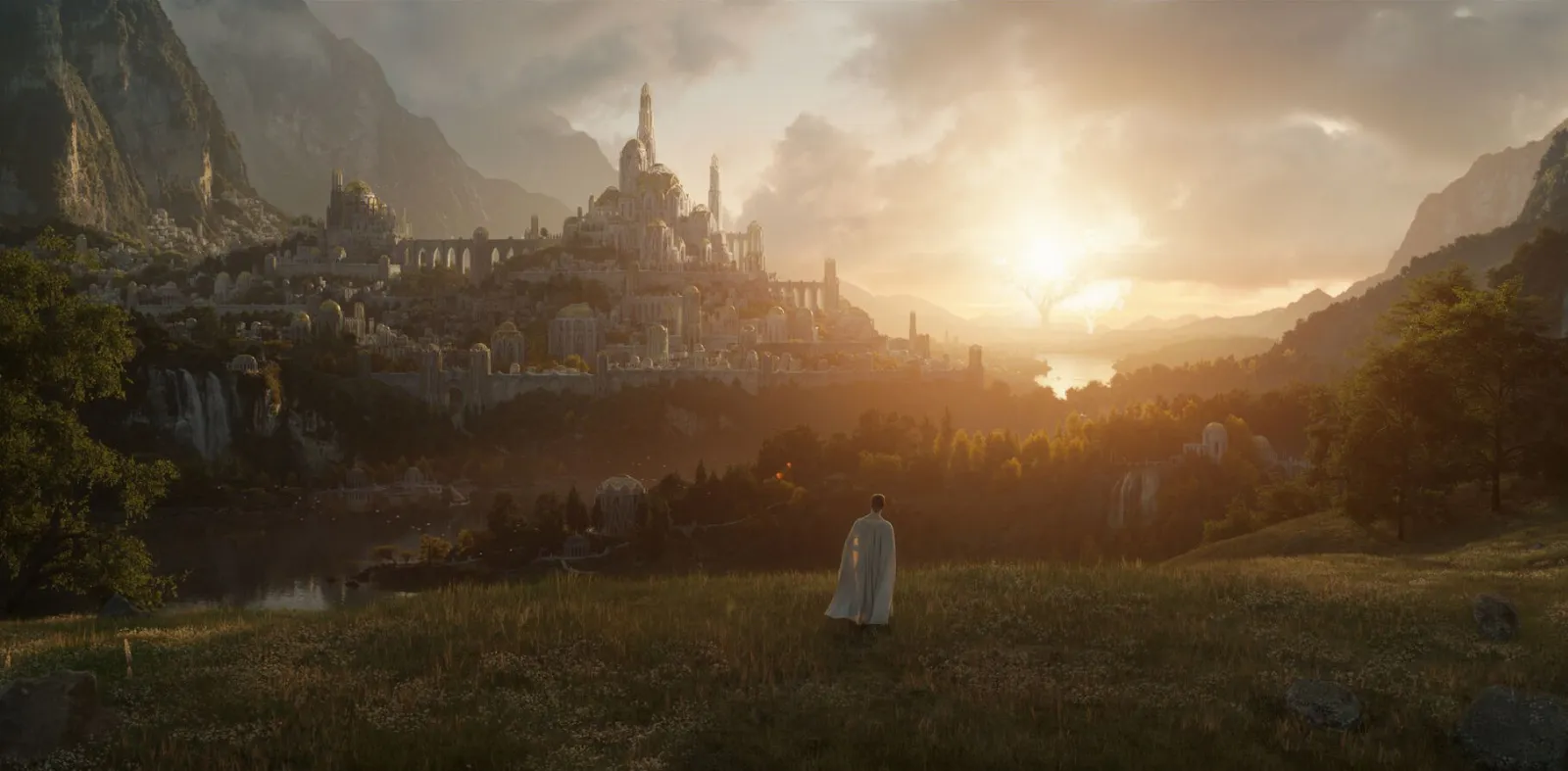
 hen I watched Lord of the Rings: Rings of Power, I was mesmerized. The story takes place when the world was still perfect, and it somehow captures that stillness, that reverence visually—the result is that the viewer is left transfixed by a moving meditation through beautiful worlds.
After watching several episodes, I fell down an internet rabbit hole looking for who created them. This, in my mind, was a true artist; this was a visionary who could imagine what the world looked like if the world was beautiful; this was someone who had created a masterpiece, a sensory utopia that somehow walks the tenuous between a perfect world and all that might topple it; this, as it turns out, was Ramsey Avery.
Avery is the production designer responsible for bringing to life the Tolkein cities of Valinor, Lindon, Númenor, Eregion. But he’s also the designer behind the worlds found in Minority Report, Star Trek, Guardians of the Galaxy, even Disney’s Tomorrowland. If he knows what makes a world utopian, he also very much knows what makes a world dystopian. And I wanted to know about how he designs for both.
I reached out to Avery last year hoping he would tell me more about the cities he created and the state of harmony they elicit, and I literally jumped for joy when he responded early this year and agreed to meet with me for an interview. We spoke about technology for a podcast episode for The Post, and I highly recommend listening to that. But I also wanted to share our complete conversation here. Edited for clarity.
Elle Griffin: How do you design for a utopian world like Rings of Power?
Subscribe for free to keep reading.
Get every essay in your inbox
Weekly essays exploring a utopian future.



 Join 22,002 subscribers