

Or subscribe to get every pamphlet too, from $50 a year.


 Join 22,002 subscribers
 n Aesop’s fable, the grasshopper spends all summer playing games while the ant gathers food. When the winter arrives, the ants are prepared, the grasshopper dies.
The moral of the story is that work is more virtuous than play, but the philosopher Bernard Suits thought the grasshopper got it right. In his 1978 book The Grasshopper, Suits says the point of our lives is to play, not to work.
Set up just like one of Plato’s dialogues, the grasshopper lays dying as his disciples gather around him, begging him to work so he can save his own life. As in Socrates' final scene, the grasshopper sticks to his morals, imparting with his final breath that the only and highest good is to play.
…and that in the utopian world of his dreams everyone in the world would be playing, even if they think they are working.
This last message is cryptic to the ants. “Working is doing things you have to do and playing is doing things for the fun of it,” they say. How could someone who’s working be unknowingly playing?
Imagine, like many utopian philosophers do, that all of our survival and financial needs are thoroughly met and we don’t need to work if we don’t want to. What would we do?
Many have assumed the answer is enjoy more leisure. In 1930, John Maynard Keynes worried we would become bored with so much free time. “There is no country and no people, I think, who can look forward to the age of leisure and of abundance without a dread,” he said. “For we have been trained too long to strive and not to enjoy.”
One hundred years later, Nick Bostrom says we’ll have to learn how to enjoy. “The answer, I think, is that we’d need to develop a culture that is better suited for a life of leisure,” he says. In his book Deep Utopia he gives us a list called “what to do when there’s nothing to do,” reminding us that we could always go to the gym, take a walk, or write in our diaries.
But a world without work does not imply a world without the need to work for something. We would only idle for so long, traveling the world and loafing in the sun before we become bored and listless. Eventually, we would need some challenge to occupy us. Or as the grasshopper puts it: We would need to find some game to play.
This is something the anti-work movement has neglected. If you are anti-work, what are you for? What activities do you wish to engage in instead? And if you had the ultimate freedom to do those things, might some of them look like work today?
Might someone decide to build his own house, the grasshopper wonders, even in a world where houses are cheap and easily 3D printed?
“Just as a golfer could get balls into holes much more efficiently by dropping them in with his hand, so John could obtain a house simply by pressing a telepathic button,” the grasshopper says. “But it is clear that John is no more interested in simply having a house than the golfer is in having ball-filled holes. It is the bringing about of these results which is important to John and to the golfer rather than the results themselves.”
Even if we take up mountain climbing, we would accept some limitations or “rules to the game” so that we might feel a sense of accomplishment upon achieving some challenge. A mountain climber wouldn’t, for instance, take an elevator to the top of Everest if he could. The challenge is the point. It is what gives us purpose.
It’s what makes the game fun to play.
It’s also what makes it look a little bit like work.
The grasshopper’s disciple concludes: “What you seem to be saying is that a Utopian could engage in all of the achieving activities that normally occupy people in the non-Utopian world, but that the quality, so to speak, of such endeavours would be quite different.”
Precisely. The grasshopper calls this the “lusory attitude.”
In his mind, the end of work is actually just going back to work, but this time with a better attitude about it. With the spirit of playing a game you have chosen to play.
With a lusory attitude.
We saw some of that attitude during the pandemic, when leisure time increased and we saw a corresponding increase in personal hobbies. As I documented in my essay “Will we return to craftwork?” Collette Bice started making candles during the pandemic only to start selling them and make it her job. Why would she make candles by hand when she could purchase all of the candles she wanted inexpensively on Amazon?
But her personal hobby proved a challenge: To see if she could make them by hand, to see if she could make something slowly but beautifully, even to see if she could turn candlemaking into a business. This is much more difficult than purchasing candles, and more rewarding. It gives her purpose.
Bostrom agrees that something has more purpose when it’s more difficult. “Suppose that one day some men in suits place a briefcase in front of you on your desk. They open it, and inside there is a device with two buttons. One button is labeled ‘devastate the world,’ the other is labeled ‘bring about utopia.’ The choice is yours. In this scenario, your life clearly has enormous impact; yet it might be largely devoid of purpose—something which may require a more ongoing engagement and exertion.”
But if we can find a game we want to play—some challenge that requires our ongoing engagement and exertion—we find purpose.
“We will then be able to talk about a Utopia which embodies that ideal,” the grasshopper says, “that is, a state of affairs where people are engaged only in those activities which they value intrinsically.”
And the things we intrinsically value might prove valuable to society too. In a world where all of the houses can be 3D printed for a dollar, might you prefer to buy a unique handcrafted one? In a world where you can purchase anything on Amazon, might you still prefer a handcrafted candle from an artisan?
If so, you might even be willing to work more in order to buy them. And more people might go to work to make them. Everyone would be working on something they value so that they can have a life that they value. They would be playing a game without even realizing it.
The grasshopper’s dream realized.
Of course, the utopian world the grasshopper speaks of does not exist. We do not have full freedom to do whatever we want without financial consideration, and we do not have our every need met so that we can pursue them, but we do have much more of that freedom than we used to.
“In developed countries, we have already come a long way toward realizing this type of abundance—say, more than halfway toward a post-scarcity utopia,” Bostrom says. “Shall we say that wealthy countries are something like between a third and half of the way toward a leisure society? We have long childhoods and retirements, as well as weekends and holidays. If and when we get to Keynes’ 15-hour work week, then maybe we would be eighty percent of the way there.”
What are we doing with that extra leisure? We are finding our “dream jobs.”
We ask “what do you want to be when you grow up?” because we believe the thing we want to do could also be our work. We ask: “what would you do for free?” and use the question to inform what we should do for money. In America, we ask people about their jobs because there is an inherent belief that they are at least somewhat aligned with something we want to do. At least, much more so than when we were all farmers or industrial workers.
“The American dream” is being able to do the thing you are most passionate about, and have that be your job. As countries develop economically, they have more work that they enjoy too—many are already better able to achieve the American dream than America. As we continue to develop AI and super intelligence, that will only continue. More of the grunt work will be taken by the robots and that will allow us to choose from an even wider buffet of professional options.
We will be able to choose work that is more in line with our interests. We will be able to choose the games we want to play.
The thought exercise of imagining what we would do if we didn’t have to do anything, is a good one. Not because we might one day have that, though I expect we will get close, but because we already have sufficient agency to achieve it.
It’s not that we don’t want to work, it’s that we want to play.
And this is why I think we should replace the “anti-work” movement with a “pro-play” movement.
As the grasshopper says, “We thus call games ‘pastimes,’ and regard them as trifling fillers of the interstices in our lives. But they are much more important than that. They are clues to the future. And their serious cultivation now is perhaps our only salvation.”
I tend to agree: It is games that give us meaning in life. “Life for most people will not be worth living if they cannot believe that they are doing something useful, whether it is providing for their families or formulating a theory of relativity.’”
As the grasshopper says: “It is games which give us something to do when there is nothing to do.”
I hope you’ll join me in the comments to continue the discussion.
Thank you so much for reading!
Elle Griffin
P.S. If you enjoyed this piece, please consider sharing it. That’s how I meet new readers and earn a living from my writing!
Get every essay in your inbox
Weekly essays exploring a utopian future.
Join 22,002 subscribers
But do we want raising family or providing care to be classified as *work*? I think many acknowledge women's contributions to those tasks as extremely valuable and important to society, even as they are freely given (and thus more lusory?) than work that is for economic gain?
As in, the grasshopper's point? That even when we are playing we are working?
I wonder if he already had the lusory attitude at work then?
Of course unpaid work is still work. And there are plenty of people who still enjoy cooking, growing vegetables, caring for children, and would think about those things both as play and as work!
As you may know, I disagree that the western world became more of a utopia by turning the rest of the world into a dystopia. Sure, there have been a lot of wrongs along the way (slavery, as a big one), but by and large the west has grown richer because they industrialized and created jobs and economies, and countries around the world are becoming richer as they create jobs and economies too. Everyone's going at a different pace, and everyone has different setbacks. But I do believe that trend will continue.
For the most part, work is how you feed your belly, while play is how you feed your heart, mind, and soul. The trouble is when you try to make your "play" into your work, it can become work instead of play. The joy (the playing) is easy to lose when money is involved.
If the fantasy of not having to work for a living came true, I would certainly continue to write and make music because they are what I love to do and require effort (work) to achieve good results. But they are also play to me. I enjoy them. They don't feel like work, unless I try to make money from them.
Another interesting observation is artists, musicians, writers, etc. often call their efforts "works." A work of art. Because it takes effort or work to acheive. When AI creates an image or music, it is no longer work. It is generated. It is achieved too easily to be called work. Generated Art is a suitable term, in my opinion. I am not convinced "Art" even applies. AI has no soul. No heart. It is just software. Is it really art?
I think musician have the correct idea when they call making music "playing music." I play guitar. I play in a band. Our band played a gig last night. But when they get to the practice room or studio they say "let's get to work." 🤓
BINGO !!!
{...But when they get to the practice room or studio they say "let's get to work."...}
They SAY, but still PLAY the guitar, piano, trumpet or what else ...
Yes, because it is fun! Even when it is work. 🤓
The way I think about it is: Interest + Impact.
Combining the two is powerful.
Interest without Impact is selfish. Impact without Interest is self-sacrifice.

Oh man, it might be time for me to revisit my work series next! This is so right up my alley, as you know. Turning work into play is the goal. How I see it, that means money's gotta go. But what that actually looks like is another question. It's fun to imagine the possibilities!
I would love to read a work series by you! (Especially one in which money is gone?)

Great points. It reminds me of Huxley’s discussions of work in his utopian novel, “Island.” Having just spent two weeks traveling Finland, I’d say that country comes close to a realistic utopia in so many ways. One thing we did observe is that usually the food delivery guys and cleaners were recent immigrants. Some work that needs doing isn’t likely to be confused with play.
I wonder if one day it could be? If eventually those jobs were paid more highly because they need to be paid highly to attract bike courriers, might some become bike courriers because they want to be?

I love the concept that humans are “challenge creatures,” and that we crave the satisfaction of completion. It’s why video games and puzzles are such a popular mediums for hobbyists of all ages and types.
Exactly!
Nitpicky, but I've been starting to be more intentional with labeling activities "work" vs. "labor" according to Lewis Hyde's definition from "The Gift." Both are activities, both take effort, but "work" is by definition transactional, with a very specific result in mind, and often done for money. "Labor" less bounded and more akin to play, but it's not necessarily pleasant--it could involve the labor of cleaning the house, navigating difficult relationships, etc.
So under this, I def would not work if I didn't have to, but there will always be labor in life. In fact, antiwork in my mind is about liberating as much time as possible for life's necessary labors.
Shameless plug to elaborate on this: bigquitenergy.com › labor vs work vs jobs
Hmmm, I could see the need for distinction, though I prefer to use the words interchangeably. There will always be work (how you are using the word ‘labour’) but whether or not it feels transactional will shift.

I love that word 'lusory'. I adopted another nice word after I retired, a number of years ago - flaneur. It's a French term for am urban male stroller, a saunterer, experiencing and enjoying life, open to everything, committing to nothing. It often was applied with a sneer by those rushing past to a hated 9-5 job.
I always tried to enjoy my various careers, perhaps at the expense of promotions for the workaholics. No regrets. After retirement I 'discovered' I could write, and that I liked it. Luckily I don't really have to slave at it to survive, so I can enjoy working at it as a pleasure. I suppose I could use AI for much of the process now, but that would take the fun out of it. Same with the various simulation games I play, such as farming or trucking. There are 'cheats' to finish faster, but that's not the point.
Like is about the journey, not the destination.
I love the flaneur term!!!!! Definitely one I apply to myself as well!
That would be flaneuse ;-)
Great essay! I love this concept and what a great reframe for the days I bemoan a good 40-50 hour per week Jon that also affords me time to do the writing I want to do, and the potential to have many long weekends and time off.
Alan Watts talked about how the universe is inherently playful, and how we really can see our whole lives as play to some extent. Thanks for the reminder!
It's easy to forget how good we have it compared to the past!
If I don't play I can't concentrate and I can't create and if I can't create there is no point to live. I think I agree with the grasshopper.
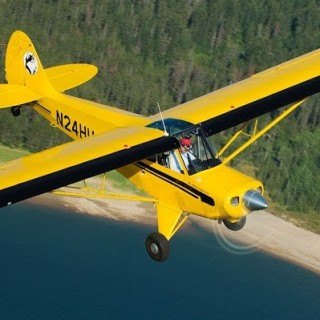
Thoughtful.....I've always been an advocate for working AND playing....or, working and developing interest and hobbies. I am passionate about flying, so most of the time I worked, I flew small private planes to meetings. I am passionate about sailing and most of the time I worked, I would find time to be on the water and take friends and associates along. So, when the time came to end full-time employment, it wasn't like flipping a switch. I just had more time to do things I always enjoyed along the way.
I've had too many friends who reach the point where they are going to retire with the question, "now what?"
Honestly, I never really have had to ask. My challenge is fitting it all in!
Of course, one passion was always writing and that just never seems to stop!
Thanks for giving us all a moment to reflect.
In the book The Second Machine Age, the authors conclude with a concern that in a utopian world of AI, where abundance has become so great that UBI can satisfy all material needs, most people would lead lives devoid of meaning.
For that reason, they suggest a Negative Income Tax instead of UBI, to keep people working and “busy.”
As I discuss in an upcoming essay, I tend not to agree with their conclusion. First, an NIT is just another form of UBI and would still probably leave many idle in the same way a UBI would. Second, I don't think that a world of abundance would have no meaning. It could have more meaning, freeing us to explore passions.
To these future utopians, we would appear to live lives devoid of meaning, spending the best years of our lives chasing greenbacks.
Totally, I don't understand why so many assume that we would idle? By and large we don't do that now!
Another, more personal, way of phrasing this problem - which we've created for ourselves - is:
"What am I going to do when I retire?"
In many cases, the answer is "Don't retire".
Maybe... certainly if what you're doing after you retire is worse than what you did before you retire, then yeah, it will be worse.
But many people haven't developed muscles around engaging in activities/community/meaning outside of work. And their identity is overwhelming about work.
So when they hit retirement, no wonder they have no idea what to do.
Or maybe, retire and then start a new job you're more passionate about? (As in, find a game to play?)
That's exactly what I've been doing - well spotted! ☺️
The path is the goal; a fact, Eastern societies understood a long time ago ...
But that needs conscious people who cultivate patience and abhor immediate satisfaction purchasing crappy and entirely unsustainable produce permanently advertised by globalist corporations ...
"Home is Where the Unpaid Labor Is," about a history of the Wages for Housework movement started in the 1970s.
Exactly! Even play feels like work if you are being forced to do it, either through fear of deprivation or through bribery. Look up Alfie Kohn's work on intrinsic vs extrinsically motivated play. ("Punished by Rewards" is one of his many good books)And a UBI Universal Basic Income would go a long ways towards giving everyone the freedom to choose. A permanent safety net that moderates the existential dread underlying the capitalistic game we all are compelled to play. For example, if you pay kids to play video games they will loose interest in the game itself and once the rewards stop being given, they no longer care to play the game for free!
That's so fascinating!
Love the chemtrails on this photo illustration... not.
Excellent article. My Mom passed away from cancer at age 62 after battling it for five years. As someone that was always into fitness and health my goal then became; retire at age 60 and live past 62.
At age 55 I remarried and now 8 years in I now want to be around as long as possible for my wife. I did retire at 60 and then a friend dragged me back into to the work environment doing consulting. I am also passionate about muscle cars and restoring two right now. Exercising 5-6 days a week as well as traveling with my wife mainly during the summer.
Goals shift and what you want to leave behind changes. Now the focus is to build a house for her parents who live in Poland. Not easy but important for me because I feel they deserve it. They had lived the majority of their lives under communism.
As far as retirement and goals. Lance Armstrong who won 7 tours has said what he enjoyed most was the training, the process of preparing for the tour. As an athlete I can understand that mindset.
As pointed out in the article it’s about finding those projects, those areas of life that you are passionate about. Things don’t hold the same value to me without a story. This is why I find vintage muscle cars so interesting. It’s the history, it’s the restoration of returning back to what they looked and felt like as they rolled out of the factory.
Oh thank you for sharing this example of your lusory work!!!! That sounds like such fun and passionate work!
This puts me in mind of a couple of tangentially relevant science fiction stories. One, "Business As Usual, During Alterations," by Ralph Williams concerns a group of aliens who are concerned with the ambitious nature of the human race. They decide to put us on hold for a while, until we learn some manners I suppose, by resetting our global economy. Being benevolent, busybodies, the aliens accomplish this by flooding the world with "duplicators." Which are small machines that will duplicate any object, sort of like Star Trek replicators. After a brief period of panic over the loss of a scarcity economy, we human adapt, and incorporate the duplicators into our societies. Soon, we are back to normal. Now the aliens are really worried.
The second story tells of a future world where robots handle all manual tasks, and people are almost exclusively employed in endless, remote-work, planning meetings. In the midst of one such meeting, the main character is called upon to carry out a rare job a robot can't handle. Warmed by the jealousy of his co-"workers", the MC eagerly hurries to complete the task before a robot can be programmed to handle it. done, he 'accidentally" knocks a robot off of a high catwalk on his way out. Sorry I can't remember the name of the second story. But, you get the idea.
These sound like great reads!
I'm really enjoying your writing these days! I've been applying to jobs and I was surprised when an interviewer asked me "What would you do if money was not an issue?" And I thought... Well, what I stated my plan is 5 to 10 years from now. And that's when I realised my plan was a good plan.
(Maybe not such a good plan if your plan is to make money 😅😂).
Wow, you are aligned!!!!!! And thank you so much Sabrina, I really appreciate the kind note!
Wonderful !

Realizing what ‘play’ even means is a huge mystery to most people. Majority of the population, even in the developed world is so caught up in the rat race that ‘work’ is the only reality that know and can realistically afford to know. Play, as you rightly categorize, becomes utopia.
But as we move towards a world where most tasks are progressively automated, where upskilling cannot keep pace with advancing machines capabilities, Purpose Anxiety will be a raging pandemic.
Finding one’s identity and one’s purpose will no longer be a spiritual pursuit, but a necessary lifeskill.
The education system, whatever that would look like, will have to teach students how to learn about themselves before teaching them about the outside world.

Interesting note -- Wengrow and Graeber, in "The Dawn of Everything," describe one society in particular which reminds me of this. It's not that work was absent from the society -- it's that nobody in the society had the ability to compel anyone else to do work that they did not want to do.
That particular society was the Huron-Wendat society and it was discussed at length in the opening chapters of TDoE. The leaders of that society were distinguished by their rhetoric and their mastery of persuasion -- in order to get anybody in their society to do anything at all they had to persuade them of its value and get their voluntary contribution.
I didn't look into it, too deeply, but if you're looking for other areas to study along this line, you might consider checking out what Graeber and Wengrow say in The Dawn of Everything, and then use some of their sources to look further into the Huron-Wendat.
Best,
J
I love Graeber's work, thank you so much for reminding me of this passage!
There are a number of things I would be doing instead of "working" if I didn't have to worry about paying for food and shelter.
If those needs were fulfilled, I'd certainly have a different approach to my life. I'd have more to do than ever, but it wouldn't be the "make work" career I'm currently engaged in 9-5.
I read this from the perspective of a creative facing what may be an existential threat—AI—and deciding to carry on in spite of it.
As long as I may survive and provide for my family somehow, I can’t see myself stopping creative work just because a machine can do it cheaper, faster, and perhaps even better.
In fact, persisting in the presence of AI feels like its own particular type of challenge, one I relish as much as the builder would in making his own home in spite of technological advancements making building seemingly obsolete.
In other words, I am the grasshopper.
Yes! Because even in a world where all of the writing is AI: would you still want to write? And wouldn't you still want to read something written by a human?
Yes I very much would!

Work is often just that, “work”. But not for everyone and certainly not for me. Yeah, I’d work even if I didn’t have to, although it doesn’t feel like play all the time. But definitely most of the time, which is why I keep doing what I do. Thanks for writing this, Elle!
Elle, this piece is wonderfully thought-provoking! I love how you weave Aesop’s fable with Bernard Suits’ philosophy to explore the idea of work as play. Quality.
Thank you! I really loved this book.
I am retired and am fortunate to be able to do what I want to do. I divide my time with playing golf, writing, travel, and grandchildren. Those things make life fulfilling for me.

Exactly, more like play and way more creative!
I understand why so many people see the fact that machines can do much of the work that people (and animals) used to do as a threat. But, especially given that so much of what our present society considers to be work is unnecessary or harmful to our wellbeing, it's great to see someone imagining the opportunities our technological advances allow us to live freer, more fulfilling lives. Thank you.
No, I wouldn’t.
People would still work if they didn't have to, but I doubt they *immediately* would if the option suddenly came available. First things first: Many would need a nice long vacation from the years/decades' worth of inescapable daily grind, and enough time to pay off a sleep debt 10, 20, 30+ years in the making. Next (and after establishing that full-time entertainment and hedonism do eventually wear out their welcome), many would be confronted with a major and necessary paradigm shift. E.g., they'd have to 1. re-set their sense of self-worth and usefulness to others outside of a (familiar) setting in which they're told what to do, 2. give themselves permission to experience guilt-free pleasure as serious fun rubs elbows with serious productivity for the first time, 3. make various other adjustments, and 4. ultimately come to a slightly different sense of their identity and place in the world. We're looking at very real growing pains here.
How many people have spent decades Working for the Man™ because "that's just the way it is," because that's what their parents did before them, and their parents before them? It's no small challenge to re-evaluate one's default/dysfunctional relationship to work, even if one gets to do that through some stroke of good fortune for the first time ever. Many people, generally through no fault of their own, see and treat work as Slavery Lite (sometimes accurately so, to be fair, given certain employers' imposition of horrendous working conditions and/or other harsh realities such as being saddled with a crushing debt load). I might further posit that this is true across socioeconomic classes due to cultural messaging and peer pressure. (A bigger paycheck = a bigger debt load + more pressure to consume in order to project status.)
Anyway, again, I think that most (healthy) people would still work even if they didn't have to... That said, we'd probably see some sort of mass, years-long existential crisis unfold before things came back into balance post-major reset of people’s idea of/relationship to work. Better circumstances (in this case, the removal of the average person’s financial obligation to work) can be notoriously difficult to accept if one’s been brought up to feel undeserving of them. This is true across the socioeconomic spectrum.
I'm not sure it would be a "years long" existential crisis, just because we do have some examples of what this could look like in retirees, children that come into a trust fund, and entrepreneurs who sell their business. Though there are no statistics on these populations, anecdotally it seems like each have about a one year period of leisure, followed by the beginning of some kind of play they want to devote themselves to. So maybe a year long?
Indeed, I'm sure it would play out as you describe it in many cases. However, I think you may not be accounting for the widespread issues Western adults experience in regards to play. For many, it’s really not just a simple question of time/resources.
There are legions of people whose relationship to play isn't only hindered by the practical obligation to work (or a history of existing in survival mode), but truly stifled by any number of other social/relational factors. Here, I speak from my experience as an art educator having given music lessons to any number of adult beginners. The stories I could tell you. Oh dear.
People with issues rooted in shame (there are many, this is common) are very likely to have issues around play. This is true regardless of socioeconomic status. An adult human's basic capacity to play turns on things like their sense of agency, their sense of permission (am I allowed to play?), their sense of trust and safety (internal and external), and more. All of these elements will color their relationship to exploration and risk, which are fundamental to play and playfulness. If any of these emotional competencies are compromised, there's a high likelihood that the person will have a hard time playing freely, and that their issues are going to take more than a year to work out—assuming they’re given time, space, emotional support, and the right kind of guidance.
Do you know a perfectionist? An alcoholic? A successful child of dysfunctional parents? Someone who's got all the new gadgets and has seen all the new releases on Netflix, but has no hobbies to speak of? It's not guaranteed, but very likely, to take these segments more than a year to come back around to a playful life. There's something in the way that runs much deeper than their paycheck, and might warrant 2, 3, 4 years of intentional readjustment (therapy, apprenticeship, etc.).
Anyway, I could go on... It's a hard conversation to have in vague blanket statements, to be sure, but my experience tells me that play is an incredibly fraught proposition for many adults, often for reasons having very little to do with their financial situation.
To be clear, finding one's way back to playfulness is part of recovering one's health after years spent suffering in sub-optimal conditions. It's always worth it, however long it takes. I'm only commenting here on how this process realistically plays out for a substantial subset of the population, based on what I've witnessed firsthand as a musician and music educator. Cheers :)
Every creative longs for this utopia. Writers want time to write, painters to paint, musicians to compose… we already know the ‘jobs’ we’d have if a day job to afford our needs were no longer required.
The big question is how do we as a society get to that point? Do we bring back the patron of the arts model of the Renaissance? How would that work in today’s society? Could it even work? And what of those that aren’t creative? How do we prevent a disconnect and resentment between the creative that can ‘play’ and the noncreative that must ‘work’?
Well we already have to a good extent, that we have the leisure time to write outside of work hours is definitely an improvement from years past! I definitely see no reason why that couldn't continue. I think the next frontier will be shorter workweeks. Or lighter workloads! I know several people who have "salary jobs" but only work 10-20 hours a week because they've managed to mostly automate things for themselves. Maybe that's the future?

How much do we really "have" to work now? I'm a software engineer - if I quit tomorrow no one would die or sicken, including myself. The utopian thought experiment you mention presupposes everyone's financial and survival needs taken care of. Take survival - our farm system is so much more efficient now than it was 100 years ago. We've gone from a society where nearly everyone farms to one where nearly no one does. So here's a different thought experiment: how much would an individual have to work if everyone's work was either farming, maintaining our water system, or building and maintaining housing? Let's add in caring jobs - child care, elder care, health care, teachers. Is that keeping everyone employed full-time? (I'd be curious what other functions people would lump into survival needs). I'm of the opinion that AI won't get us to a point where NO one has to work, so I prefer a collectivist vision that just gets us closer. Share the work, share the rewards, get money out of the equation. I find that when I daydream about escaping my white collar job it's not to a world where I don't have to work, it's to a world where my work is directed by me and more immediately useful to me.
Financial needs - that's such a huge magic wand to wave. I don't think there is a single version of "meeting financial needs" that would seem utopian to everyone. If you gave everyone enough money to vacation to Bali, they wouldn't even be able to go at once, they'd overrun the place.
This probably isn't the spirit with which one should engage with the thought experiment, but I just think we could get closer to a world of less BS work (busy work, work with no autonomy, work with no purpose) with social innovations, not technological ones that may never come to pass.
So, what I'd do with my time if I didn't have to work - probably much the same things I do now when I'm off work: water color, read, write, walk my dogs, plant a garden, hang out with friends. I often wish I had more time to do house projects.
I am a failed music performance major so know first-hand that passion, play, and work are usually intertwined. It's not play to do scales in a windowless practice room for two hours, but that time spent is necessary to get to the part where you play music with friends.
I tend to agree, we'll always have to work, but I love the kind of play you would do instead. And I love this --> "I find that when I daydream about escaping my white collar job it's not to a world where I don't have to work, it's to a world where my work is directed by me and more immediately useful to me."
If I won the lottery, I’d get up every morning and work at having fun giving it all away. The main thing I’d do is pay for everybody’s stuff in line behind me. And I’d tip 150%. And I’d walk around parking lots looking at car tires so I could leave vouchers for new ones at a local dealer. I’d look for a million little miracles I could connect to rather than a couple big donations that were a proxy for being kind.
Reading this, I was reminded of something Sebastian Junger writes in his book "In My Time of Dying":
"Situations that have intense consequences are exceedingly meaningful – childbirth, combat, natural disasters – and safer situations are usually not. A round of golf is pleasant (or not) but has very little meaning because almost nothing is at stake. In that context, adrenaline junkies are actually 'meaning junkies'."
I don't think this is a rebuttal to the notion of work-as-play, but it sharpens a key aspect of it: that not all games are equal. Some fun is merely a pastime in the most literal sense of making time (and your life) pass more pleasantly; other forms of fun offer deep meaning in tandem with joy. You allude to this at the end of the essay, and I'd love to read more about how you think we might go about choosing which "games" to play in life. Maybe a future essay?
I do think that's true, to an extent, but maybe not for everyone? My father-in-law retired and chose to play golf every single day and he loves it and gets so much meaning from that. He truly doesn't need anything more from life than that. My dad retired and chose to run nonprofits, right now he heads up a film festival in the town where he lives, and he gets a lot of meaning from that. Personally, I need to do something that is societally beneficial, not just personally beneficial. But perhaps that's because I'm a humanist and I derive a lot of value from that. Maybe it depends on the person?
I think you’re right that it depends on the person, and I think that’s largely because what we mean by “meaning” differs from person to person. The way I think of meaning makes it hard to see how it can be found in a hobby, but I’m also not prescriptive about it - if someone else defines meaning in such a way that they find it in places I wouldn’t, I’m happy for them.

I love work. At seven and a half I followed the hay loader on the dairy farm and picked up baby skunks. I washed teats ahead of the milking machines. When the farmer realized I liked working the next summer I was carrying 5 and ten gallon cans of milk from the barn to the milk house for pasteurizing. I began running the bottle washing machine, cleaning manure out from behind the cows into a pile outside the barn. I was helping shock sheaves of wheat into round stacks to dry before they were put on the wagon to take to the thrashing machine. I did all this without one red cent of pay because I loved being there working and sweating. When I was eleven I started getting 25 cents an hour for my work on the farm. Except for churning the butter - I got paid with a loaf of bread and a pound of butter. To this day bread is just a vehicle to pile my butter on. The most I ever made up until I graduated high school was 75 cents an hour.
After college I was going to get rich selling real estate. Hah! Eventually moved to southern CA from Ohio and met a construction superintendent whom I got along with very well. We ended up building houses and condos until the market took a dive. We had switched roles. I became the field superintendent and he did the business end in sales. So with the market collapse, I started doing remodeling for people and room additions. Ended up moving to CO to build ski condos, then to SC where I hooked up with a large builder doing commercial work. My favorite was tenant improvement for Victoria Secret. Eventually I was back on my own. Designing and hands-on building was a dream and I was my happiest. Las Vegas provided me with jobs doing strip shopping centers for larger builders, but eventually I drifted back to doing my own contracting. Working was in my blood and it was hard to get me to take a week off for a vacation. Why? I was 'like a pig in slop' happy. So everyone is different and in this USA we have so many opportunities to do whatever we want.
Wow, sounds like you found the spirit of play in your work long ago!
I agree. As ideas of Post-Work via Universal Basic Income (UBI) have been tossed around, I've wondered why we aren't considering much more basic, obvious steps that would make things a lot better. E.g. universal healthcare, childcare support, more investment in science/R&D/arts, etc. Do these first before a post-work utopia.
Well, I would argue that we *are* considering these, and many countries already have them, but we struggle to make more progress there for various democracy reasons. This is why I would be curious what happens in an open borders situation. Would all the parents move where they could get free childcare? Would other countries have to provide that to attract citizens?
You're right, I should have clarified... I meant the dialogue around AI impacting work = discussing UBI, exclusively, as a solution.
I've read a lot about AI > UBI, but not sure I've seen anything on AI > healthcare, childcare, etc.
For example, Elon is supposedly pro UBI, but is he pro universal healthcare?
Your "open borders" idea is interesting, although not something I've considered.
You’re totally right. And I’d be curious to know your thoughts! Here’s my essay on the topic: elysian.press › how could country capitalism work
I would say, no, that wouldn't happen - it didn't happen in Europe. There are more important things attaching people to their homes than free childcare and even that free health care. There is often a lot of panic around this and just doesn't happen to the extent predicted.
*than
*it
The EU coordinates benefits, so if you move from Switzerland to Norway, you still have access to similar levels of heatlhcare, childcare, social security, etc.
If we look at places that have very different levels of benefits, there are many migrants trying to move from one country to another which is proof many would move for a better life elsewhere if they could!
I wrote more about that here if you're interested: elysian.press › how could country capitalism work
Thank you, I’ll take a look!
I was just remembering the amount of times there has been a massive panic in the media - and the “influx” was always lower than expected.
It surpises me that it’s coordinated because the difference in pricing for childcare is insane - I remember talking to someone Netherlands a few years ago and, financially, it wasn’t worthwhile going back to work at all. In Austria (where I live), you pay well under €100 per month if you’re on a low income.
Did you just mean the Schengen area rather than the EU?
Ikigai minus the "What you can get paid for" circle.
(and maybe also minus the "What you are good at" circle, depending on need for excellence)
I loved your exploration of Bernard Suits' philosophy and the concept of play in our lives. The way you intertwined Aesop’s fable with modern perspectives was fascinating. Your insights on how leisure and work can blend into purposeful play are thought-provoking. The idea of a “pro-play” movement is brilliant! As a class teacher you really made me think, thank you.
Thank you so much Jon, I really appreciate that!
So beautiful! My dad has always had a playful outlook on life and I feel so lucky to have inherited that from him. I am currently home with my one month old baby and have been exploring a lot about what I want to do with my time home and what I want to teach her as she grows. Loved this :)
That's beautiful. Have a wonderful time with your new baby!!!!!!!
I love this essay because I also realized a few years ago that the goal isn’t zero work, all leisure the goal is enjoyable work
It's strange how we go from "all work" immediately to "no work" (i.e. retirement/death).
Do we? I think most people who retire find some kind of play (to the point of this essay?)?
We do.
The standard model = work at a fixed rate, through entire adulthood, without breaks. Then, stop working altogether.
This plays out in the data. People in retirement spend their time: watching TV and reading (sources below).
They don't do encore careers, volunteering, new creative pursuits, (much) physical activity, etc.
I'm not sure we are progressing toward more play. Sure, as people get financial independence, they could move progressively toward more play, but the data and my direct experience (e.g. seeing early retirees) is that they don't do that. They keep working at the same work!
wsj.com › in retirement a life of inexpensive leisure…
moneyweb.co.za › how retirees spend their days

There are two solutions. If you're a fan of capitalism and the class hierarchy, there's Basic Income. If you're not a fan of hierarchy, there's this:
"For as soon as the distribution of labor comes into being, each man has a particular, exclusive sphere of activity, which is forced upon him and from which he cannot escape. He is a hunter, a fisherman, a shepherd, or a critical critic, and must remain so if he does not want to lose his means of livelihood; while in communist society, where nobody has one exclusive sphere of activity but each can become accomplished in any branch he wishes, society regulates the general production and thus makes it possible for me to do one thing today and another tomorrow, to hunt in the morning, fish in the afternoon, rear cattle in the evening, criticise after dinner, just as I have a mind, without ever becoming hunter, fisherman, shepherd or critic.” —Karl Marx, The German Ideology
I'll be very curious to know your thoughts about an upcoming piece I'm writing about Mondragon. The company still requires labor, but that labor is used for the greater good of their society. Marx thought of labor as forced upon him, but what if you're giving it willingly?
I look forward to it. Marx believed people liked to work for many reasons, including for the good of their community. His objection was to having a world in which some people got great passive income for doing nothing but owning things and others had no choice but to work to provide the passive income for the owning class.
Sloth is noted in some religions as one of the 7 deadly sins for good reason. Through hard work, you find the answers to the big questions such as "the meaning of life." You learn all of life's lessons such as how to make and keep friends, how to do the right thing regardless of self-enrichment, the power of forgiveness, the value of discipline, how to handle heart-breaking trials, knowing and trusting your own self-worth in a cold and calculating world, etc., etc. Now retired, I can look back at my 7 careers, (wildlife biologist, professional musician, landscape designer, graphic artist/website designer, publisher/journalist, international marketer and beef cattle/grain crop farm manager). But here's the valuable observation - without 80 hour work weeks and crappy jobs of sacrifice to do what you truly want to do in life, you will never deeply appreciate gratitude, which is learning how to be happy with little or a lot. The key is to navel gaze less and give more. You'll be happier.
100%
To my mind, the biggest barriers to a so-called "ludic" approach to work are structural--dominance hierarchies, exploitive demands of capitalism, inequitable resource distribution. The anti-work movement aims to be liberatory. It's not opposed to work per se, but alienated, compulsory, exploitive labour that those without economic privilege accept on threat of starvation. At its root are the same dreams of creative and social emancipation as the ones you describe. In that sense, perhaps we could say that it, too, is a utopian project.
Trading time for money, and paid work to defer passions. But work, effort, helps us value what we earn.
If it's hard is it worth more? Not necessarily.
I'd feel guilty if I wasn't working.
Even when I'm on vacation at Society for American Baseball Research events, I volunteer to help out...I judge presentations...act as a guide to help people get from the hotel to the stadium for the game...hand out giveaways.
My father said I "suffer from terminal conscientiousness." Actually, I'm trying to prove to my late mother, dead teachers, living bosses that I am NOT LAZY.
In addition, my hobbies can draw ridicule...
"You're fascinated with baseball? Basketball is cooler! You like riding subways? What are you, nuts? You study World War II? Let's see....who was the fourth man from the right on Utah Beach?"
Makes you want to punch someone.
I taught this book in a course on the ethics of video games! It’s amazing that most people think what you would do if you had money and leisure was help make sure that everyone else had a subsistence living. But when you enter the grasshopper’s utopia, you can’t make that argument anymore, and you have to face the question, what is actually worth doing in life for its own sake?
No way! That's so cool! This was such a good book, and the first time I saw my own philosophy reflected back at me so beautifully. (And in such a fun manner, I love how he makes fun of philosophers for their own games!)