

The Scottish island that bought itself
100 residents now own the island they live on—not some billionaire.
Or subscribe to get every pamphlet too, from $50 a year.


 Join 23,259 subscribers
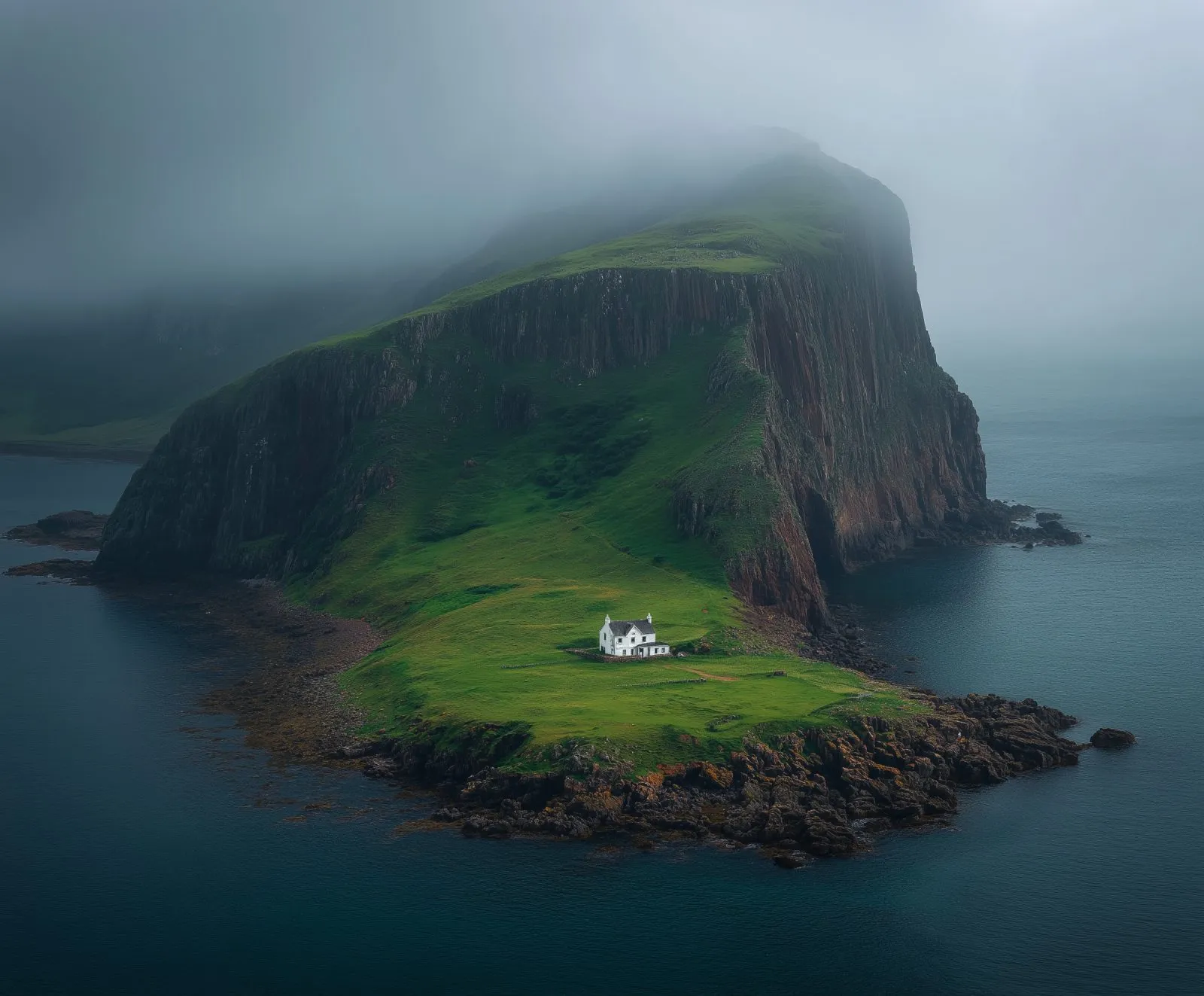
 n 1997, 65 people living on the Scottish island of Eigg purchased the island together.
For centuries, the island had been owned by landlords who didn’t live on the island, much less invest in its improvement. Rents were extracted, infrastructure decayed, populations collapsed. Residents relied on diesel generators and fuel shipped in from the mainland, which made energy expensive and unreliable.
When a wealthy artist bought the island as his own personal lifestyle retreat in the 1980s, that was the final straw. He refused to improve roads and infrastructure and tried to evict the island’s residents when they objected.
Islanders united against him, so did the press and media, and wider public opinion. Scottish authorities intervened, stopping the island’s owner from evicting residents and forcing him to provide at least minimum habitability. Meanwhile, the owner struggled financially and was forced to put the island up for sale in 1997. By then, the island had organized, raised public and charitable funding, and formed the Eigg Heritage Trust, which purchased the island on behalf of residents.
Islanders bought the island they lived on.
And the trust formed a micro government.
To this day, the trust is run by three entities: The Isle of Eigg Residents Association (representing island residents), the Highland Council (representing the local government), and the Scottish Wildlife Trust (which ensures long-term environmental stewardship of the island). Board members are appointed by their communities and serve staggered three-year terms, ensuring the island runs in the interest of all three stakeholders.
In other words: The trust works like a tiny country, running the island in the interest of its residents.
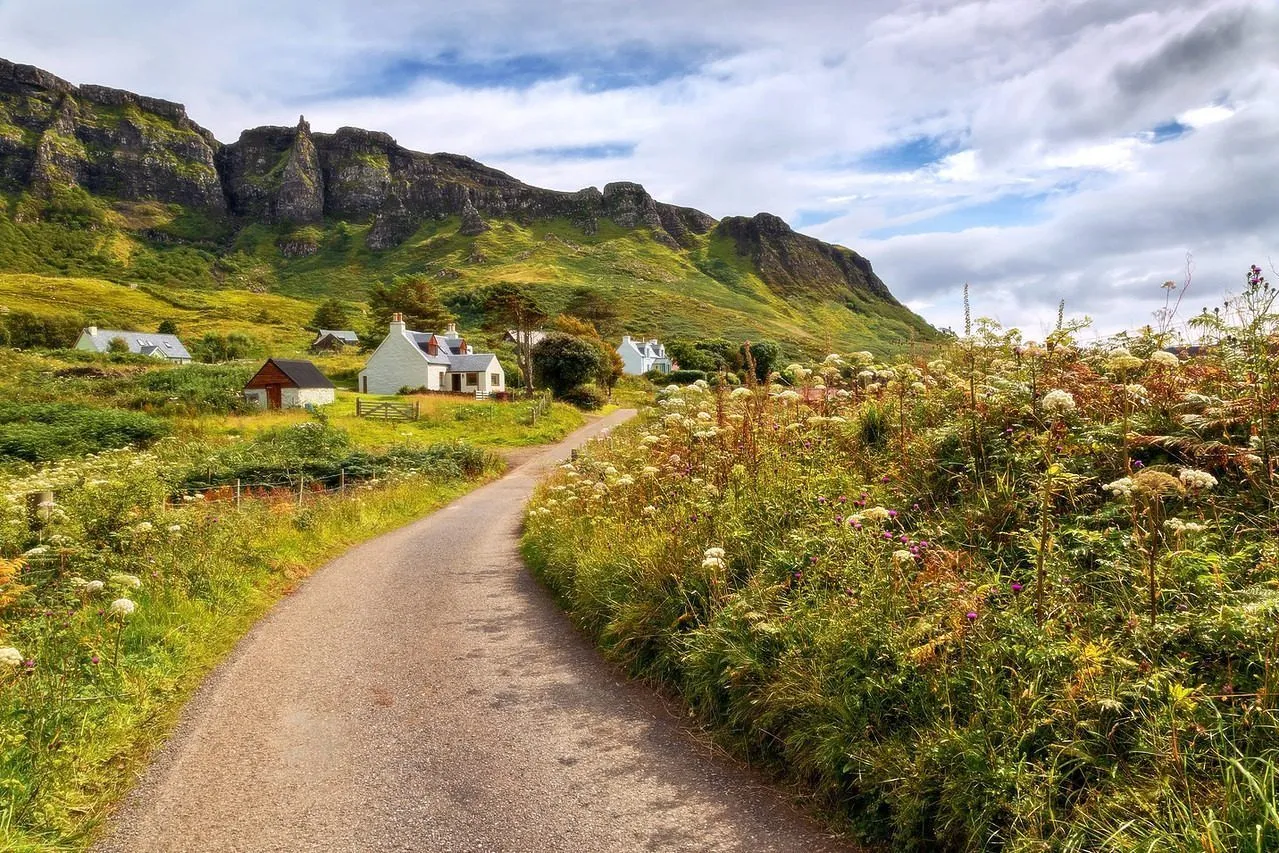
Because the community owns the land, private individuals do not. Residents purchase 99-year leases for their homes, farms, and businesses, and that money goes to the trust—not some eccentric billionaire. The trust earns about £200,000 per year and uses those profits to reinvest in the island, building roads, piers, and commercial buildings. It even built Eigg Electric—a renewable energy grid with wind, solar, and hydro power—providing affordable and reliable power to the island for the very first time.
This created a circular system where residents and businesses pay for land leases and energy, and that money goes directly to the trust, which reinvests it back in the community.
The island even built an intentional tourism sector. Today, it is home to just 110 people and sees 10,000 tourists a year, but it has avoided the hollowing out effect of Airbnb as revenue goes to trust-owned campsites and guest accommodations, or privately owned guest accommodations on trust-owned land. As a result, all tourist activities benefit island residents rather than absent private developers and hotel chains.
Eigg is tiny, and its innovative approach has largely been overlooked by modern thinkers ready to worship autonomous cities like Hong Kong, Chinese special economic zones like Shenzhen, corporate developments like California Forever, and charter cities like Próspera. These cities have master-planned communities and created enormous economies, and they are worth studying for those gains, but they are not creating utopian cities that provide a better life for residents.
Eigg is.
After Scotland gained its own parliament in 1999, it quickly passed land reform that would create more Eiggs across the country. First, it created the Scottish Land Fund, which provides public funds to communities interested in buying their own land. Then in 2003, the Land Reform Act gave communities first rights to rural land—any group can now register interest in a property and have the first right to purchase it when it goes up for sale. In 2015 and 2016, the reform was expanded to include urban areas, and even granted communities the right to compel a sale if land was abandoned, neglected, or otherwise harming the community or the environment.
As a result, more than 500 communities across Scotland have taken ownership of more than 563,000 acres of land and buildings. That’s more than twice the area of Glasgow, Edinburgh, and Dundee combined. The largest and oldest project is on the Isle of Lewis, where the Stornoway Trust owns 40 townships on 69,000 acres, on behalf of the 11,000 residents who live there. Here, commercial development makes up a large portion of the trust’s income, earning commercial and industrial ground rents from their harbor, marina, and waterfront development, as well as surrounding agricultural lands and the island’s historic Lews Castle Grounds.
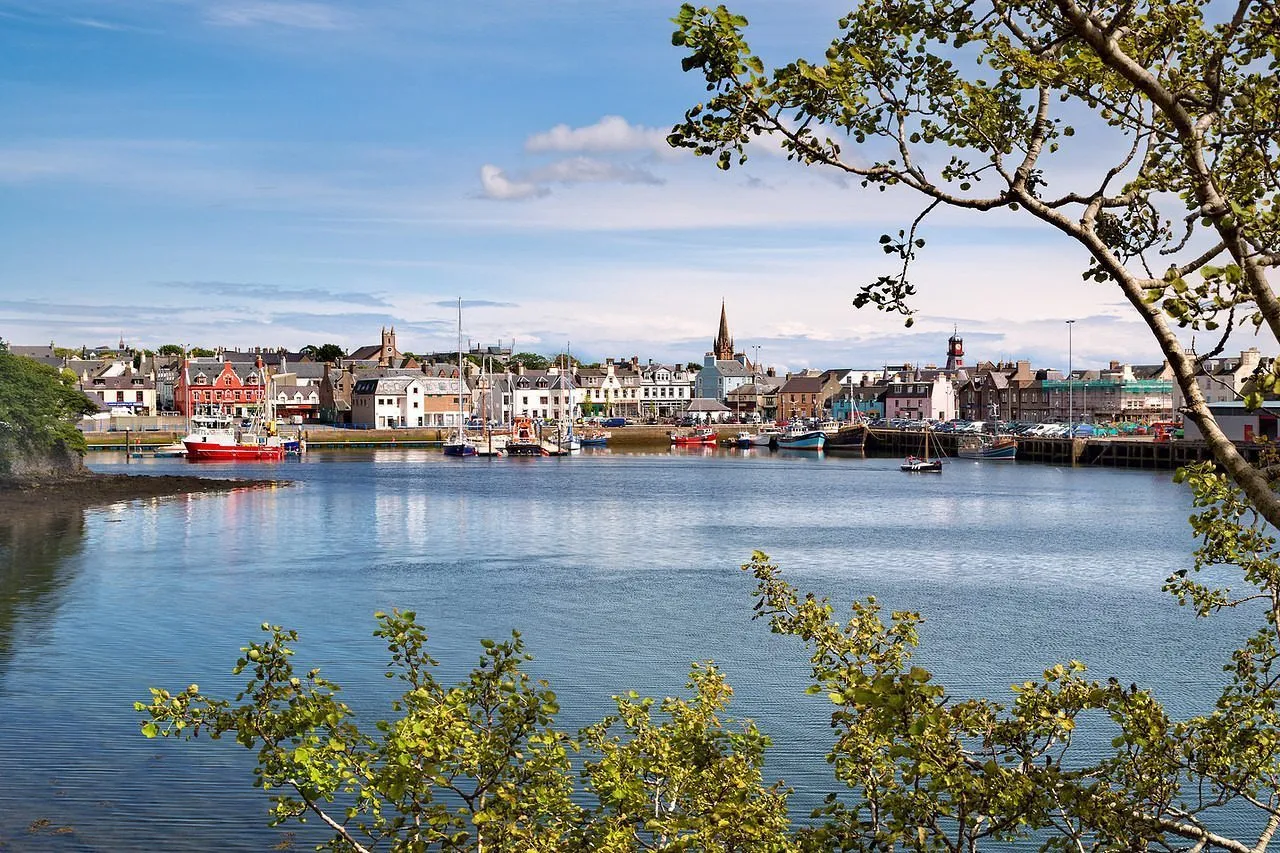
In this way, Stornoway functions like a tiny version of Singapore—both islands own their own land, earn commercial and residential rents from it, and use those earnings for the good of the residents who live there. Singapore was able to do it because it is also its own country, but Scotland was able to do it by creating hundreds of micro-sovereignties that exist inside a larger nation. That might make it one of the best places in the world to build utopian cities and villages in the future!
If we want to create better cities—more specifically, if we want to create the most utopian cities on Earth—we need much better case studies, like Eigg, and that is the subject of my research here. Throughout the past century, companies have built more beautiful cities than Hong Kong. Investors have funded a better quality of life than Shenzhen. Islands and counties have carved out autonomy for residents, not governments. Tribes are building more prosperous cities than Próspera, and new city projects on the horizon aspire to create the happiest place to live.
If we want to create utopia, we should learn from their examples and create a new vision for what the city of the future could be.
Not just an autonomous city, but a self-supporting city.
Not just a wealthy city, but a flourishing city.
Not just a bunch of skyscrapers, but a utopia.
This is part two of an essay series titled “Let Cities Build Utopia.”
« Click to read the previous installment // Click to read the next installment »
Special thanks to the Center for Land Economics who supported this series as a patron. I highly recommend their newsletter “Progress & Poverty,” which was invaluable to my research.
Get every essay in your inbox
Weekly essays exploring a utopian future.
Join 23,259 subscribers
Really, really, really cool! Thanks for unearthing this nugget!

It’s seriously an amazing program!

I don't think any of this is as unique as you think.
I only wish some of your visions could be relied upon. Hing Kong was largely self-sufficient while Great Britain controlled it. Now, China controls it, and freedoms are being eviscerated.
In America, cities are self-sufficient to a large degree. So far as governments go, the local government is generally a much greater presences in a citizen's life than the state or federal government. So, American cities at least resemble you ideal. The trouble is, those local governments, more often than not, treat citizens like just so much chattel. So, now what?
Keep in mind that, in America, two parties control all governments at all levels. It wasn't meant to be that way, but it's the way it is. With almost no exceptions, a city council member or other city official, is more concerned with serving his party than with serving citizens. If a developer wants to deface a neighborhood with inappropriate construction, they bypass the citizens and go straight to the party in power. They make their deals, and the citizen can protest to their heart's content, but it will make no difference. Trust me, I am quite knowledgeable in this regard.
If you have viable solutions to this, I am all ears.
It's pretty unique. Not very many places own their own land and can turn their own profit from it. American cities are certainly not self-sufficient (well, except one of them). They have little to no control over how much money they make and certainly can't turn a profit, they rely on state and federal jurisdictions to do anything including taxation and zoning, and they don't own any land which makes it near impossible to build or do anything. Budgets and regulations all come from above them. But we'll get to all of that in the series—hold your horses!
First, why should cities own land, but not citizens?
Second, yes, cities can own land. Can and do. They own schools and parks and are not generally restricted from buying any land that they care to buy. Public/private partnerships are a thing, theses days, with governments owning the real estate, and businesses running whatever it is that they're running there.
Zoning within a municipality is almost entirely under the authority of the municipality. The municipality can levy income taxes and property taxes (depends on the state).
And who should be in charge of all this? I would say it should be primarily up to the citizens of the municipality, and it mostly is. They vote either directly or indirectly thru their elected council to levy taxes for schools, police, fire, parks or anything else they want to levy a tax for. One little problem: Citizens tend to disagree with each other. What some want, others reject. That's where Utopia goes straight to hell.
I think we might agree that the federal government should be involved in none of this, and state government only a little. I'd be glad to discuss THAT.
I think you’re just going to have to wait and read the series. Because I discuss a lot of this coming up…..
Can't wait!

My best friend grew up on Eigg, and the campaign for the buy out is something I’ll never forget (I was 12 years old at the time).
I feel very very fortunate to have grown up in the idyllic and optimistic era of the 90s in Scotland. I was born into the sadness and pain of the AIDS crisis in Edinburgh (known as the AIDS capital of Europe), but managed to experience the coalescing around positive political change that (at least for me and the people around me) resulted in autonomy for Eigg and the beginnings of independence for Scotland in the successful devolution from the UK govt in 1999.
Eigg is in some ways, even better than you’ve written about. Because it is a real place, with tension and contrast and difficulty. There’s a lot that remains constrained and harsh about living off the west of coast of Scotland and struggles with the same problems that all islands face (employment, climate change, ferry links) but I couldn’t agree more that it points to a real, tangible alternative to the majority trajectories of how we can assemble, organise and live.
Sadly, much of the rest of Scotland remains in private lands, opaquely held far from anyone’s understandings. Held as a rich man’s playground. But Eigg does act as a map to a different future. The Pollok Free State was another such point on the map.
Thanks for writing and sharing the story of Eigg!
Wow, thank you so much for sharing your experience! I’m so glad Eigg was as wonderful on the ground as it appears on paper! I know that community-purchased lands are slowing down in Scotland, but there is still so much opportunity. I particularly enjoyed the maps showing the viable land available for community purchase. Hopefully communities take heed! (And are inspired by series like this one!) whoownsscotland.org.uk

❤️
Thank you for writing about Eigg. The story is so inspiring!
It really is!

I really love this idea of starting with these smaller communities that have the space and some prior sense of community that enable them to become self-sustaining in this way. They help us see the necessary fundamentals, and I think examining the building blocks in this way allows us to see how it could work better on a larger scale.

Wow this is so cool, Elle. Where's the best place to find more cities and cities in development like this one?
There are 500 of them in Scotland. You can read about a lot of them here: www.communitylandscotland.org.uk/
Thanks!

So inspiring to read about Eigg, the island where its resident decided to purchase all the land together. It sounds an interesting and, frankly, thought-provoking case study. On the other hand, I am cautious to which extent this could work in practice. I come from a country, where in the 1940s much of the big land estates have been confiscated by the state and transferred to joint, communal property of the village (the so-called PGR, Państwowe Gospodarstwo Rolne). The villages were expected to pull the resources together and join forces on farming the land, based on the idea introduced in the Soviet Union two decades earlier. The result was a complete disaster: a bankrupt, highly corrupt, inefficient system that instead of promoting cooperation and innovation, conserved backwardness and alcoholism. It imploded and collapsed forty years later.
I think today we see revival of socialism on small, controlled scale. I have cautious optimism that at least some of those experiments have chances of survival. I also think that the smaller the scale, the higher the chances of success. Good luck!
You bring up a good point. There is a big difference between traditional socialism and a land lease model. Looking up the PGR project, it looks like the state owned the property and the farmers of that property were employees of the state. This is top-town, with the top owning and extracting all of the benefits from local resources, and the local population having no control and receiving no benefit from it.
That is extremely different from the community ownership models in Scotland where the land is actually owned by the people who live on that land through a trust, and the trust is governed by a board of directors that is made up of stakeholders in that land and territory. Here it's bottom-up, where the local population owns the land and benefits from it, and has full control over it!

In the classic WWII trilogy Swords of Honour (1952-61), by Evelyn Waugh, the soldiers are training on a fictional island that is probably meant to be Eigg or Rum. Waugh writes about some absentee wealthy owner of the local hotel, if I recall, and has negative words about the Laird of the island. He based his novels on his own experiences in the war, although I'm not sure if he really trained up there--but it sounds like he knew the ins and outs of the area. Good on them for making their own destiny! Great article.
Oh how cool!!!! The author probably researched these models!!! Maybe even Stornoway, which already existed as a trust at that time!

How very, very cool!
Would love to hear more about this!
I highly recommend Community Land Scotland, I spent hours reading this website in research, and there are so many incredible case studies!
ttps://www.communitylandscotland.org.uk/

Good for them! My Scottish ancestors would be most pleased.