

We could return three continents of land to the wild
And create an interspecies future that benefits humans and ecologies alike.

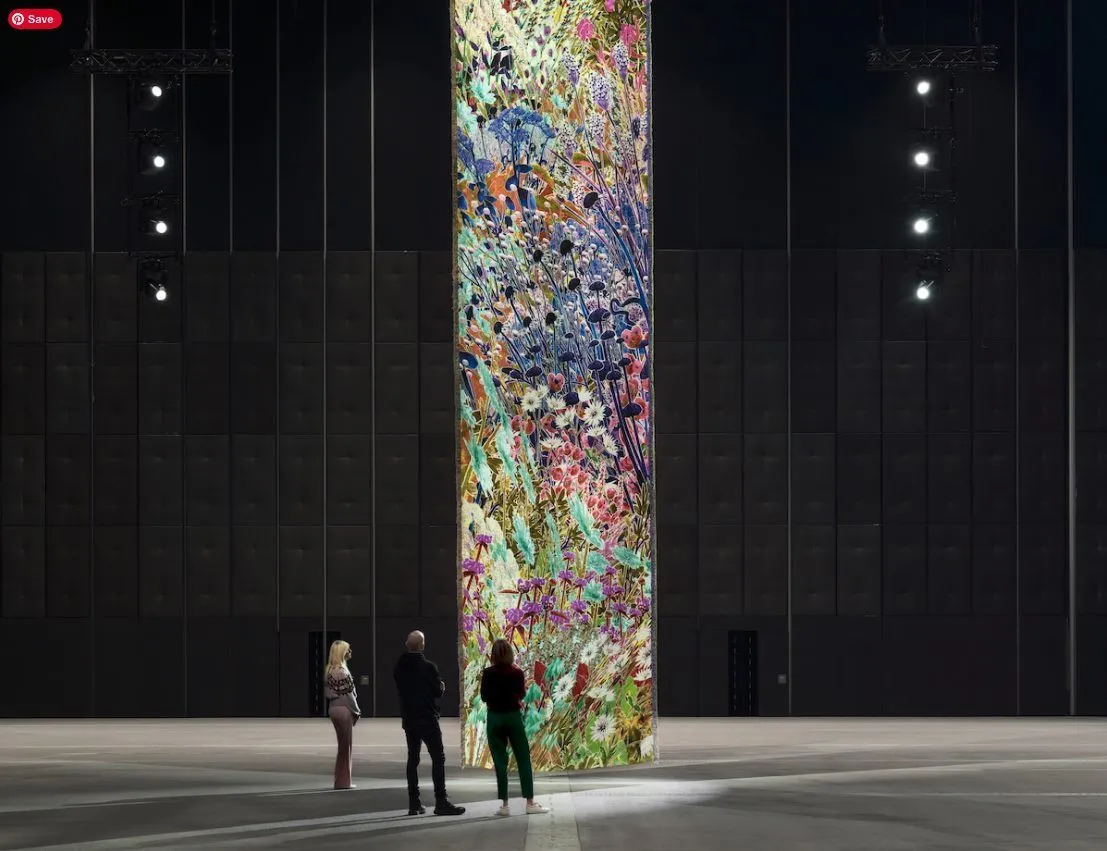
 magine walking through grasses as tall as trees, with flowers towering above you. There’s barely a path to meander through the abundant, ultraviolet meadow.
This is the goal of “Four Epochs of Paradise,” Alexandra Daisy Ginsberg’s four-story art installation that shrinks humans to the size of ants and invites us to participate in the natural world as insects do.
She wants humans to feel empathy for the natural world—for the insects and animals who live in the ecologies we destroy for our own wellbeing.
“The tapestry itself is a utopia, and it's an unrealizable utopia, although it could be realized,” Ginsberg tells me. “Imagine if we recreated this huge public space to prioritize other species.”
I first fell in love with Ginsberg’s work through “Pollinator Pathmaker,” an art installation she designed, not for humans, but for endangered bees, butterflies, and other pollinators. Gardens designed for people focus on aesthetic beauty, but bees desire certain UV patterns, and plants with nectar and protein-rich pollen. Hummingbirds look for red plants and flowers that dangle.
Subscribe for free to keep reading.
Get every essay in your inbox
Weekly essays exploring a utopian future.



 Join 23,254 subscribers