

We should all participate in scientific research
So we can study the Earth at scale.

Or subscribe to get every pamphlet too, from $50 a year.



 Join 23,259 subscribers
 n the 1990s, air quality was a major public health concern for Taiwan. In response, the government of Taiwan took swift regulatory action. To understand where air quality levels were the worst, Taiwan’s Environmental Protection Administration established official air-quality monitoring stations. In addition, it set strict limits on industrial as well as vehicle emissions. The results of these efforts were mixed at best. Compliance with the emission standards was variable and the centralized network of monitoring stations lacked sufficient geographic coverage.
Chen Ling-jyh and Hsu Wuulong, two residents of Taipei, tried a different approach. They built an open-source air quality sensor they called the Airbox and released the directions for how to make and install the hardware on social media. While adoption of this movement was slow to start, it eventually took off. Since 2018, due the culmination of these and other efforts, Taiwan’s annual average PM2.5 concentration dropped by 38% and the city of Taipei has become one of the most breathable large cities in Eastern Asia.
How were Chen Ling-jyh and Hsu Wuulong and their Airbox initiative able to start a movement that addressed a national emergency in a way the federal government alone was unable to do? Well, the Airbox initiative was a bottom-up participatory strategy, while the federal government took a hierarchical top-down approach to the issue. In a hierarchical top-down approach, leaders of a community make decisions on the behalf of the communities they lead. In a participatory bottom-up approach, leaders don’t solve problems on behalf of members of the community, but instead members of a community are empowered to be part of that solution.
With the former approach, the federal government had to work within a determined budget to set up air-quality monitoring stations. With the latter approach, concerned citizens built Airboxes at their own expense. This collaborative positive sum strategy is what allowed for abundant localized geographic coverage. As citizen engagement grew, the Airbox initiative got the attention of the local government, which added this project to its Smart City project. It also helped the project garner support from Edimax Technology, the corporation handling the AirBox’s system integration, which decided to donate AirBoxes to several of Taiwan’s municipalities.
Since the Airbox and related smart sensor projects provided a pathway for citizens to contribute to the solution, they created a self-reinforcing network effect of participation and vigilance that resulted in the creation of over 500 pollution reports, resulting in regulatory penalties totaling more than NT$100 million and the recovery of approximately NT$280 million in air pollution fees. It was this community driven enforcement, supported by the federal enforcement of regulations that made intervention effective.
Chen Ling-jyh, Hsu Wuulong and their Airbox initiative demonstrate a new story of change. One where everyone is involved in the scientific process and in the resulting intervention. Through their example, we can see how individuals don’t have to be great to make great change if they get others involved.
Today, we too often default to a top-down leadership driven approach to solving complex problems. CEOs make executive decisions that reverberate through markets. Government officials pass down federal laws changing the very landscape of their countries. Research in the United States is also conducted in this top-down hierarchical approach. Federal agencies like the National Science Foundation (NSF) decide which universities and research projects deserve funding. Experts in prestigious journals like Nature, Science, and Cell decide which research findings are worthy of recognition and dissemination.
While the scientific community has made key breakthroughs through this model, this approach has also been shown to have significant structural limitations. Universities artificially constrain admit rates to keep their prestige. Funding from the NSF then disproportionately goes to these high prestige schools, creating a self-reinforcing feedback loop of funding and scientific output. It is, in part, due to this approach of creating artificial scarcity that roles for academic researchers are dwindling, despite the increasing need for research in areas such as climate change.
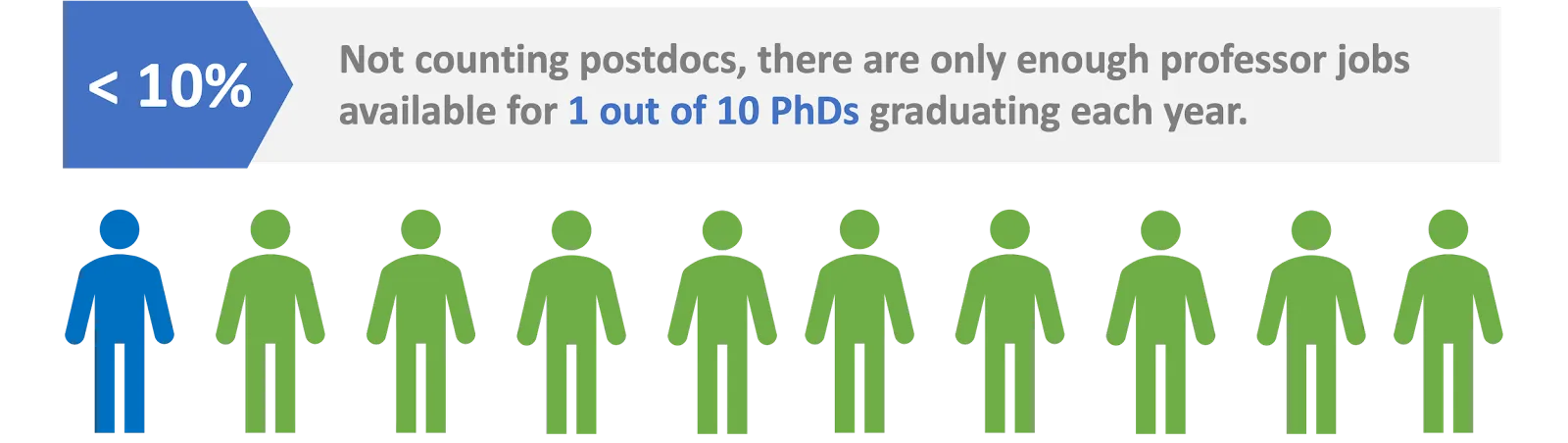
Since researchers have to compete for limited funding that has to trickle its way down to them, getting the resources to even start collecting data can be a timely and cumbersome process. This has resulted in a critical lack of the localized climate data needed by federal agencies for informed decision-making on issues like flood insurance and resilient infrastructure.
Within academic publishing, top journals have leveraged their influence in order to buy smaller journals, thereby turning into a powerful oligopoly that puts publicly-funded research behind exorbitant paywalls. Since publication in elite journals has become the most crucial credential for researchers competing in a tough job market, there is little incentive for scientists to spend time recreating the results of another scientific study, leading to a reproducibility crisis that has been exploited politically to fuel climate denial. This lack of accessibility and incentive to cater to journals as opposed to real world impact have played a big role in the lack of translation of research findings into policy and federal inaction.
While one response to these short-comings has been to enforce further scarcity through cut-backs, participatory research can create an abundance of data, research opportunities, reproducibility, and most importantly timely intervention for everyone.
The Airbox initiative is far from the only example of how collaboration with citizens can enable the collection of the highly localized data that we need. In the wake of the deadly Spring Creek flash flood, Meteorologist Nolan Doesken was able to help scientists identify where flooding was the worst and the most help was needed through precipitation measurements collected by local citizens. When cyclist Trisalyn Nelson had a near-miss with a car, she created BikeMaps.org, which was able to crowdsource thousands of reports on cycling incidents to help inform local governments on how to improve cycling infrastructure. Where centralized institutions would have to spend a lot of resources to collect data from every community, participatory research can effectively amass abundant data.
In addition to citizens, private companies can be another instrumental collaborator in data collection. Former academic Eric Lo leveraged this strategy to create Krado, which crowdsources data about plants through the leaflet® sensors they sell to consumers. These sensors allow consumers to monitor the health of their plants, generating valuable data for ongoing botanical research that also helps improve the product to drive further sales and a competitive edge. Oura, 23andMe, Google Nest, and several others have fostered similar collaborations, showcasing how innovative participatory methods of research can generate powerful data-gathering flywheels.
While research expertise goes a long way, finding creative ways to leverage the wisdom of the commons is another key element that makes participatory research methods so powerful. For example, after confiding in an online community that shared her rare and untreatable disease, former law student Amy Farber and her team had the idea for LAMsight, a secure website where patients generate research hypotheses informed by patterns in “everyday experiments” such as a new diet or exercise routine.
Mathematician Tim Gowers similarly crowdsourced a solution to a math problem through his blog called The Polymath Project after it had stumped academics for 80 years. Gamers playing an online game called Foldit solved an AIDS-related enzyme structure in 3 weeks after scientists had repeatedly failed to do so. As Ken Blanchard aptly summarizes, “None of us is as smart as all of us.”, and so getting everyone involved, not just in data collection, but also in problem solving and hypothesis generation can make all the difference.
Taken even further, the philosophy of inclusion can be used to re-invent the very systems of how scientific work is valued and disseminated. Editorial review processes can be replaced with more transparent initiatives such as the Open Science Framework (OSF). A simple example of this idea is the Group on Earth Observations (GEO), which established a freely accessible standardized format for climate data, enabling multiple parties to easily compare data as well as double check if overlapping data collection results match. Initiatives such as decentralized science (DeSci) take this a step further. DeSci platforms like ResearchCoin, for example, allow scientists to earn digital tokens when they successfully replicate another researcher's experiment or provide detailed peer reviews, paying researchers for the quality control work that traditional academic publishing expects them to do for free.
Lastly, participatory research has a distinct edge in leading to intervention since it inherently builds political momentum. FixMyStreet is a UK website that, within six months of operation got 3,000 problem reports from citizens on issues such as potholes, broken street lamps, and street debris. This data has made a great amount of research possible, but equally powerful was the public awareness, which led to local highway authorities receiving a significant increase in funding to repair roads and fix infrastructure. Similarly, efforts such as British Trust for Ornithology's Nest Record Scheme led to the international political willpower needed to pass the Kyoto Protocol, an influential global treaty committing 84 countries to reducing greenhouse gas emissions.
Grassroots advocacy has always been a powerful strategy for change. When the federal government refused to take action on climate change, states were able to pick up the slack. Outside of progress in climate reform, same-sex marriage, women’s suffrage, and interracial marriage were all first legalized in state court rulings before becoming federal law. Change often starts bottom-up with ordinary citizens before it bubbles up to the state and finally federal level.
As a researcher, taking a participatory methodology to how research is conducted is a powerful way to create a greater abundance of data, crowdsource more intelligent and context aware hypotheses, address the reproducibility crisis, and fuel intervention from the research.
Despite its potential for transformation, participatory research does have inherent challenges — untrained participants may collect inconsistent or biased data, participation bias can skew results, and projects that don’t properly give back to participants can be downright exploitative. There are also broader trends — most Americans (72%) cannot name a living scientist and only 57% of Americans said that science has a mostly positive effect on society. While this lack of awareness and mistrust provides researchers with an uphill battle when it comes to involving the public in science, it also speaks to the short-comings that an exclusive top-down approach has resulted in.
Public trust in science matters. Public skepticism of climate change has delayed crucial policy action for decades, though intentional climate denial campaigns were also a big contributing factor. Furthermore, since most research is still funded through taxes, when tax-payers begin to lose trust in scientific inquiry, then political will for science also declines and this threat can be existential to academia. Participatory research is structurally designed to address these problems. When more people work with scientific institutions, trust in these institutions grows, and so does public will to fund ambitious scientific projects.
Even more importantly, a culture of participation breeds a sense of dignity in letting community members solve their own problems over a dependence on someone else. As entrepreneur Magatte Wade powerfully illustrates through her words, “When people work and create value, they gain pride. They don’t feel like passive recipients. They feel like equals.” While Wade is making this point in relation to Africa’s dependence on foreign aid, the same feeling applies when it comes to how change is made in science. Change made through participatory approaches grows a shared understanding, trust, and dignity in ways a top-down hierarchical approach simply doesn’t.
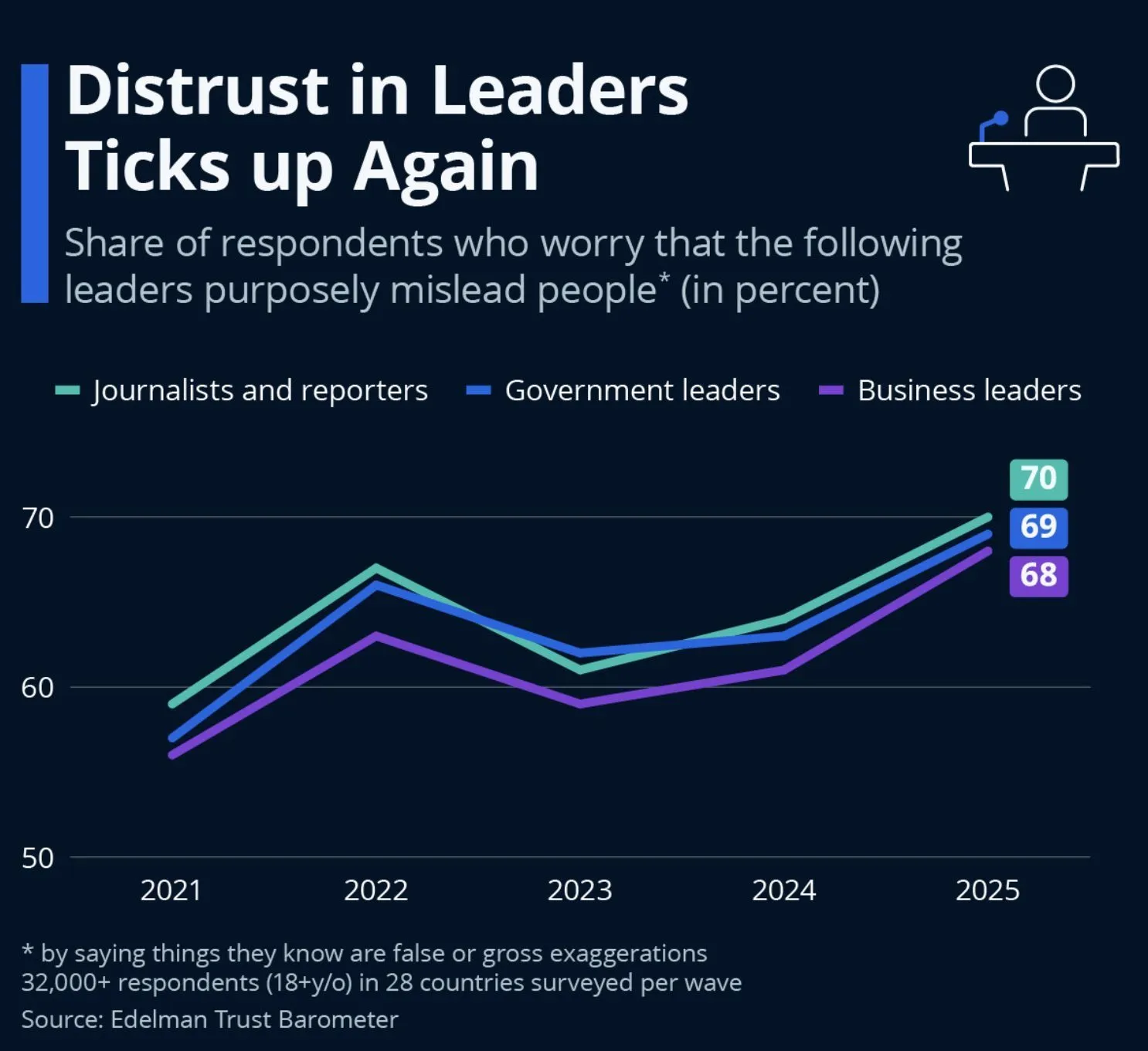
Today, we face a societal decline of trust in our leaders. In the last three presidential elections in the United States, incumbent presidents have been replaced with new leaders. In the U.K., this has happened in the last four elections. Trust in corporate leadership has similarly been in decline. It can seem like today we are stuck in a loop of trying to replace leaders unable to fulfill the promises they made us. With each new leader who disappoints us, we slowly begin to lose hope in the entire system. But perhaps it isn’t our leaders that are the problem, but we who have relegated our responsibility to bring about change over to our leaders, forsaking our own agency.
Imagine a world where data from every local community is easily accessible by everyone and always up to date. Any community, corporation, local government, or organization can raise a concern and mobilize a community to help address this concern. All findings are publicly available and can be leveraged to spot higher level patterns and improve predictions on how climate change will impact certain areas. Households in those areas can use these predictions to make proactive decisions like investing in disaster insurance or choosing safer residential locations. Governments can use these predictions to prioritize climate-resilient infrastructure and inform policy. As policy levers shape outcomes in a community, those learnings can create a feedback loop to inform policy in other areas. Equity in access can also be used to provide oversight to ensure that ratings agencies, insurers, government agencies, and others are not discriminating against any people or places through higher insurance rates or strategic underinvestment.
Now, let’s think even bigger. What if, just as Jim Whitehurst of Red Hat describes in the Open Organization, all company employees could raise issues and help dictate priorities instead of management simply sending orders from above? What if, just as Seattle did with its Community Police Commission, residents of neighborhoods were involved in reviewing use-of-force policies, recommending reforms, and monitoring their implementation? Citizens are not just a constituency to be served, but a powerful force for their own betterment, not just when it comes to research, but in how we can rethink the very assumptions around how all our institutions work.
Through getting everyone involved in science, we can achieve this vision of an adaptive bottom-up nervous system protecting us against the world’s most complex issues. This approach is already alive and well in Taiwan, where it is still used today to fight all kinds of complex problems like air pollution. It is used by local heroes such as Nolan Doesken to fight the next deadly floods. Amy Farber and her patient-network use it to fight the world’s rarest diseases. Thirty years ago it led to the passage of the Kyoto Protocols and today it’s being used to fix potholes. We don’t need to find the perfect leaders or become the perfect leaders. We need to get the community involved in being part of the solution. Only then can we solve our greatest challenges for everyone, which is the only long-term way to solve these problems for anyone.
Get every essay in your inbox
Weekly essays exploring a utopian future.
Join 23,259 subscribers

Thanks for the shout out!

Well deserved Eric, really excited about what you and the team are doing at Krado! It was actually Elle that notified me about your work.
Thank you! I'll be writing a 3-part series exploring. What solarpunk really means, how capitalism fits in, and how crypto will power it.

Our governance here in the USA has never been worse with local participation (voting) rates falling due to people’s real perceptions that no one is listening or caring what they truly want. How do we enact desperately needed political system reform when our leaders don’t actually listen and are directly benefiting from the current money corrupted political system which enables them to get reelected time & time again without ever actually representing their constituents?
Many of us believe campaign finance reform is desperately needed. Citizens United needs to be overturned, and all campaigns should be publicly financed. Open election primaries, RCV in general elections, 10 year term limits at every level, annual grading of all elected officials based on what they committed to when elected, and mandatory retirement at age 75 like most public companies would be welcome changes. The Electoral College system should be abolished. This would take the power back from the affluent, corporations, political parties, and international bad actors + keep extremists out on the edges where they belong in any well functioning society.

I am definitely using this article with my neuroscience class this fall. Thanks!
I agree with the points in this article, and a lot of the projects mentioned here I've never even heard of (such as the Airbox project and Fix My Street).
I'll shout out a couple of other projects that I take part in now, or have taken part in the past, that use citizen resources:
* Globe at Night - relies on people looking up in the night skies to use certain constellations to measure the effect light pollution has on us
* BOINC - the Berkeley Open Infrastructure of Networked Computers - uses PC's to work on problems in science, math, medicine and more
* Zooniverse - a large repository of citizen science project in a wide variety of disciplines
One of the things I like about these projects is that they tend to be open source, meaning, the data and the code used for these are available for the people to see, analyze, and potentially improve.
Now, one thing I'd like to see is a citizen-run radar system for weather prediction. We have plenty of weather sensors running (Weather Underground says that there is at least 250,000, mostly in the Western world), so I wonder if it would be feasible for radar capabilities to be added?
Hi Dylan, thanks for sharing this comment. These are all great examples, I actually wasn't familiar with the BOINC example that you mentioned.

I fully support the approach to participatory and collaborative science. I currently work with many who share a similar vision through NASA's Science Activation program. Collaboration is incentivized and the program impact is transformative both locally and nationally. Check it out here: science.nasa.gov › about science activation
Love this! Lots of room for private sector companies to build tools that enable people to partake in participatory science – love the Krado model. Kinsa is another similar one (they’re a smart thermometer that was used as a real-time outbreak tracker during COVID by local public health groups).
Kinsa is a great example! Thanks for the comment Shobha.

I took a class on this recently. I study at the TU Berlin. It is something the Berlin University Alliance is aware of, and the German public university systems try and implement such projects through student initiatives and particular speculative branches within. The class was called Blue Science or Blue Engineering, and we learned about transformative science. The theory, process, and implementation of the idea of including a complex, integrated system of academic and non-academic actors into the research being done.
Anyway, I think the two texts we read in there could interest you. One of them is Ten Reflective Steps for Rendering Research Societally Relevant by Pohl et al, the other is Principles for Designing Transdisciplinary Research by Pohl et al.
The first one has a table of steps to follow when conducting transdisciplinary transformative science research, which we also had to try and follow to simulate a research we had to decide on. It was very interesting.
Thanks for sharing those resources melis and taking the time to read the post. I’ll definitely check them out.
Outside of this post, I definitely agree that there are a lot more models of research that we should explore. A few resources that your comment reminded me of that I found helpful were Caren Cooper and her book Citizen Science: How Ordinary People are Changing the Face of Discovery by as well as some of the experiments in research being done by Michael Crow and his work at Arizona State University.

Agree. Science shouldn't just be done to people—it should be done with them.
I wasn't aware of Taiwan’s Airbox project, and while the reference to the Colorado-based initiative was helpful, I found myself wondering if such projects can be initiated (or are already underway) in other regions, from Nigeria to Kenya, from Indonesia to India. Perhaps an online directory of such projects will serve as both a powerful resource for science researchers and an inspiration to other scientifically oriented communities.

100% agree on the power of citizen advocacy and engagement to make meaningful, sustainable change - especially when working on climate change. For action on climate change in the US, could be the only path forward.
(Re-posting here): Hi Beth, I just wanted to say thanks for reading the piece and I’m glad that it resonated with you! I completely agree, climate change is an especially compelling case for citizen science since it’s so clear how complex and interrelated the challenges each community faces.
You may find this resource interesting: youtube.com › watch. It discusses how centralization can be systematically poor at addressing the needs of certain communities and how bottom-up place-based economies could be successful in these communities.
Thank you!

“Despite its potential for transformation, participatory research does have inherent challenges — untrained participants may collect inconsistent or biased data, participation bias can skew results, and projects that don’t properly give back to participants can be downright exploitative.” - This sentence is carrying a LOT of weight in this article. I agree with the merits of participatory research, but I have yet to see a formula that addresses these challenges systematically. Privacy is another major hurdle participatory research needs to overcome to become more widespread. Please reply in the comments if you have ideas on how these challenges can be structurally addressed.
Hi Kumar, thanks for your comment. You are completely right, participatory research can be pretty difficult to pull off. However, I believe that, with the right design, it can be even more robust than traditional research. For example, the eBird citizen science project created cross validation and reproducibility by having multiple bird-watchers independently submitted bird sightings from the same geographic location. A resource that covers this well is the Field Guide to Citizen Science by Catherine Hoffman.
Definitely privacy is still be a concern, but there are many methods for participant anonymization that can be helpful in open access data. To me, the biggest concern is participatory bias. Getting those already inclined to get involved can leave out communities that are in the most need of help and where the least research exists out of the picture. Deliberate effort to counteract this bias can be effective, but there needs to be ways to make this easier and more widespread.
Thank you for the reference. Placing that on my reading list. I understand why you see participation bias as the more difficult hurdle. There is the issue of outreach and science literacy, but also the issue of incentives and, let’s be real, people’s time. I wonder if companies give employees time off to participate in such research similar to the time off they give for voting or charity work.

Open source software is another interesting example where the community build the tools they need themselves. The largest mersennes prime was found in this crowd source way and the beast beaver problem was solved this way.
Definitely, that's a topic with a very similar underlying philosophy. I actually wrote another post that touches on how to build without a reliance on major centralized institutions: anantagrawal.substack.com › freedom from masters and the next.
I will check that one out

Biohacking.

This is such a fascinating piece! I think it’s vital to the current trajectory of our world that we give all a slice of the work- but also the reward- that science can bring. 10/10
Localize, Localize, Localize. Whenever it's possible, it's better.