

The future used to be better
How contemporary art reflects our waning belief in progress.
Or subscribe to get every pamphlet too, from $50 a year.


 Join 23,259 subscribers
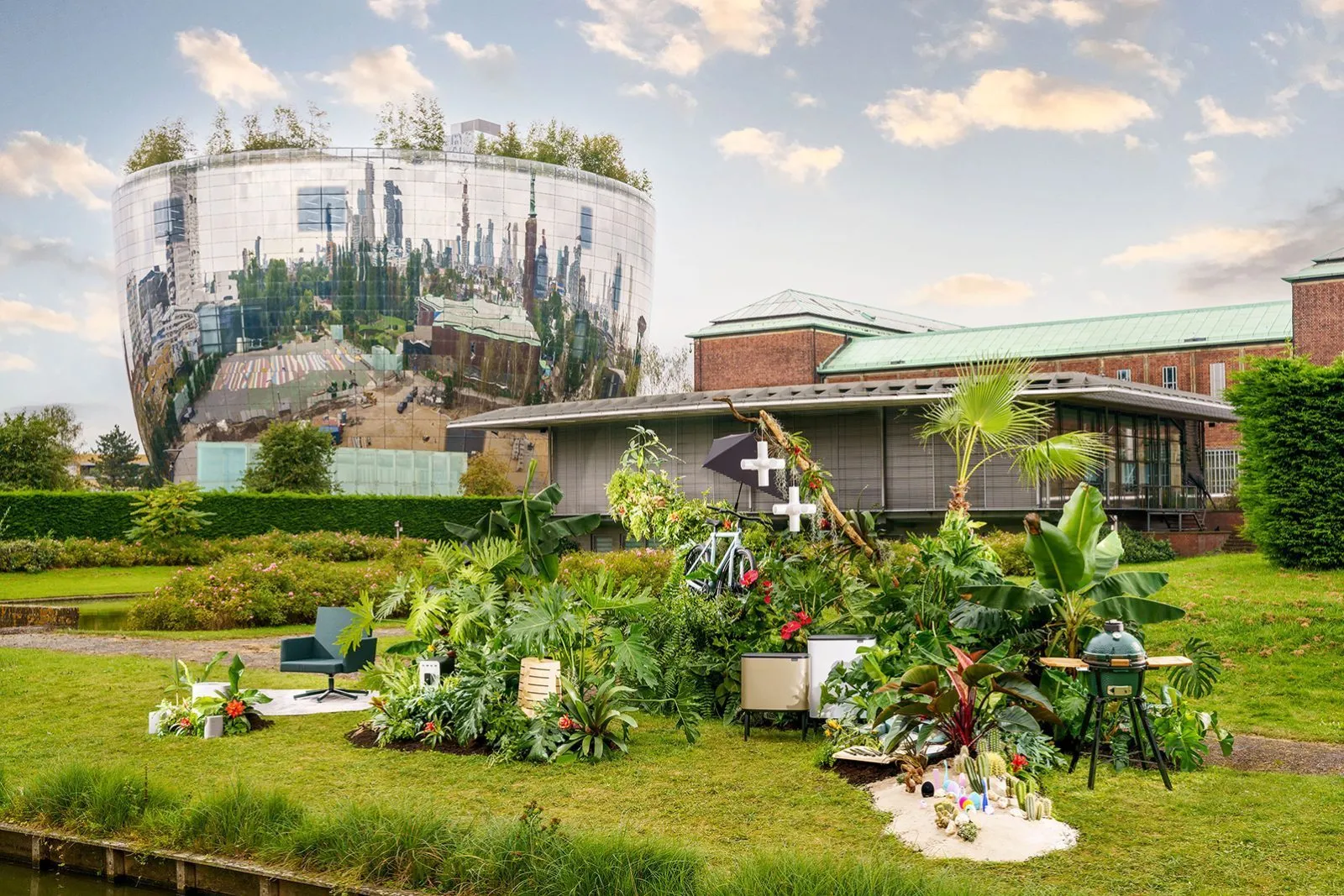
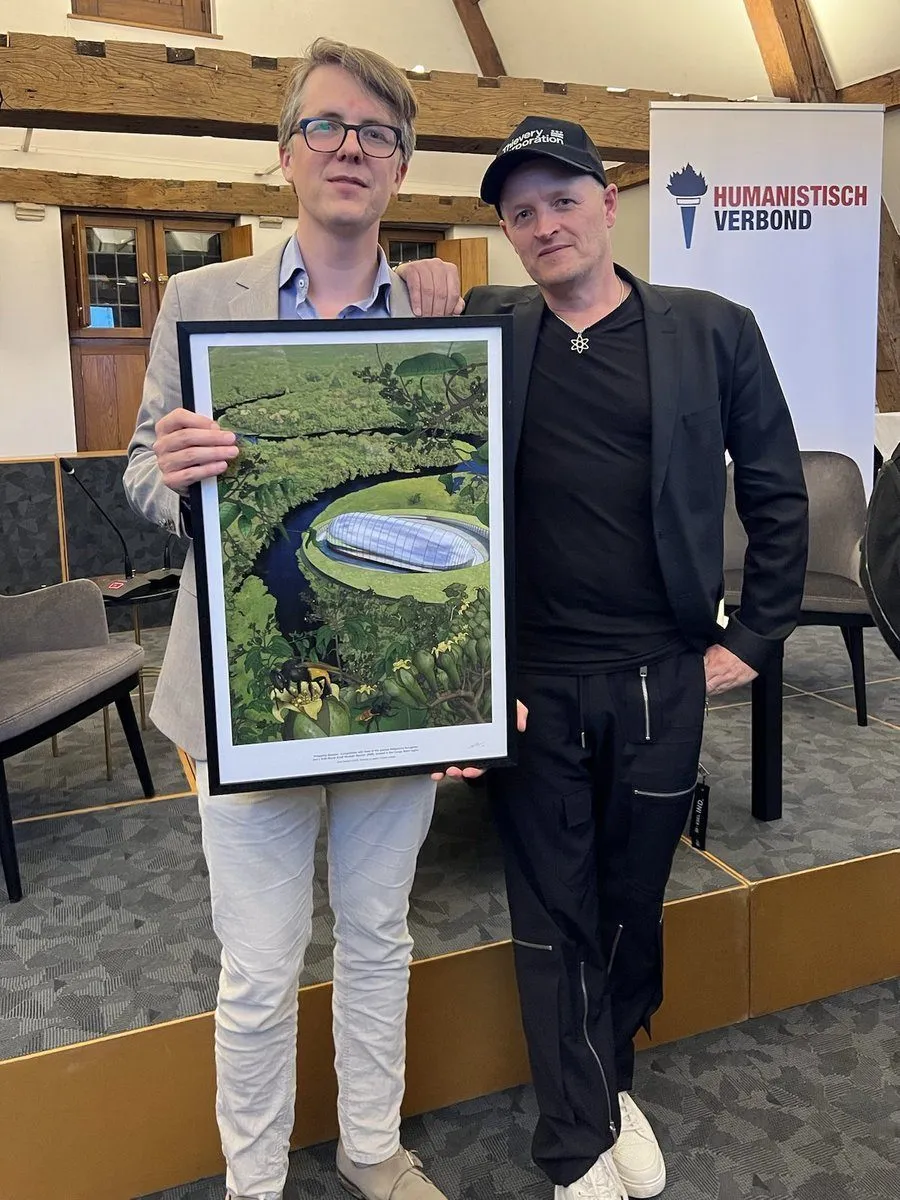
 he Dutch artist Daan Samson has created a series of art installations he calls “prosperity biotopes”. These works are made in various mediums but share a common thread: The seemingly incongruous pairing of pristine nature and modern technology.
At his exhibition in Amsterdam, I spotted ants scuttling on an ant plant alongside a sleek steel Nespresso milk frother. It reminded me of the enigmatic black monolith from 2001: A Space Odyssey. Then there was a drawing on the wall showing a shiny electric dream car from Mercedes-Benz created by the African American designer Virgil Abloh, parked diagonally on a wild Bolivian salt flat, and flanked by sturdy cacti.
As an unabashed nuclear bro, however, I have to say my favourite prosperity biotope showcased a small modular nuclear reactor (SMR) from Rolls-Royce nestled right in the heart of the Congo Basin rainforest. Its sleek, hulking form resembles a steel caterpillar, its glistening scales half-buried in the earth, like a metallic version of the giant sandworms from Frank Herbert's Dune. It's the kind of utopian vision you often find in ecomodernist circles: High-density human tech—a single SMR cranks out more energy than dozens of square kilometres of solar panels—surrounded by pristine natural beauty.
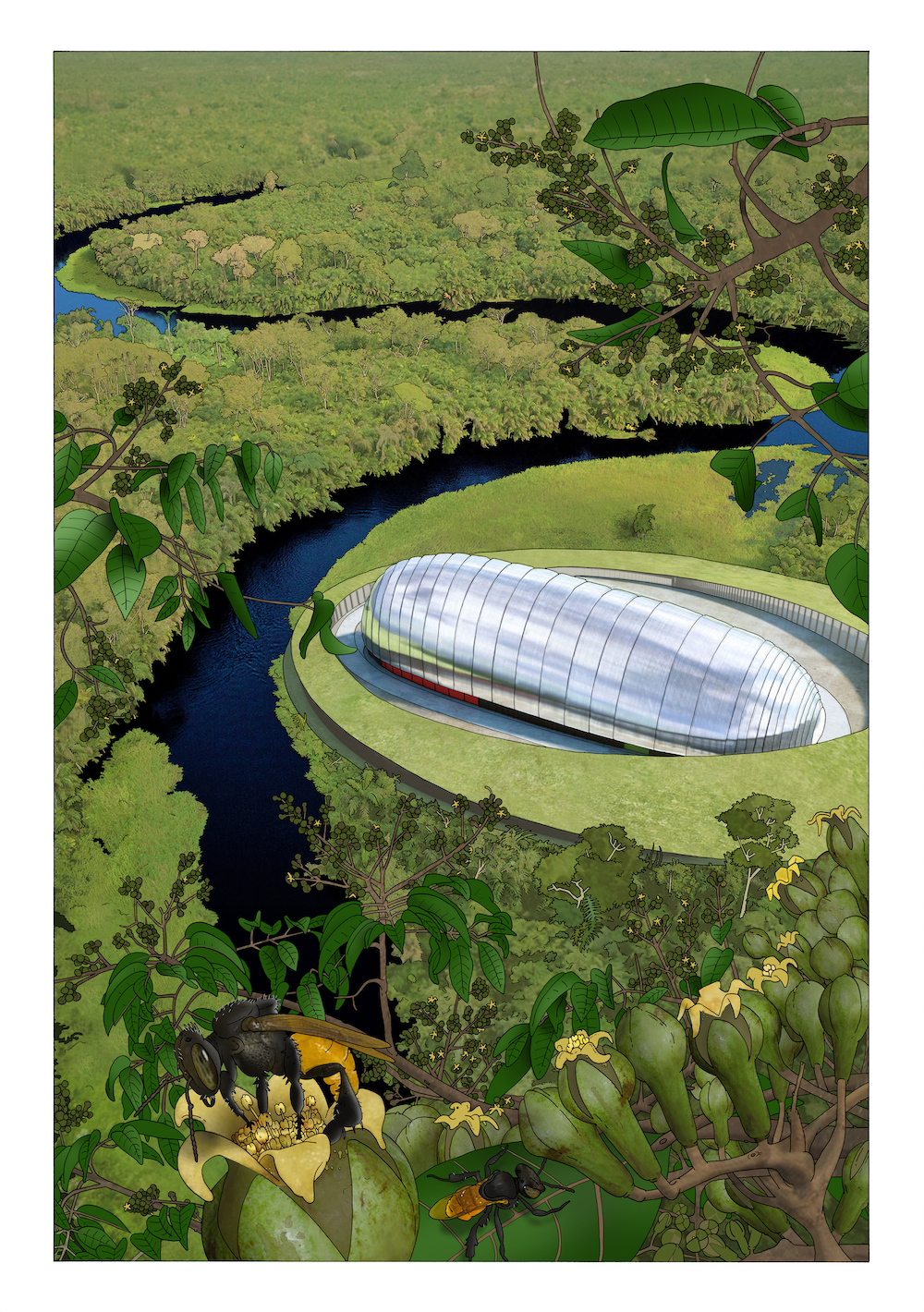
By fusing the natural and the artificial, Samson invites us to think about the relationship between civilization and wilderness. Do we really have to choose between the splendor of untouched nature and cutting-edge technology, between majestic redwoods and towering skyscrapers? Or can we have our cake and eat it too?
Even more striking than Samson's welfare biotopes were the reactions from the art world. Some curators and art critics assumed his art had to be ironic and subversive. Was he slyly mocking our consumer culture and its tacky product placement? Or was he calling out the encroachment of human tech on Mother Nature? And wasn't there a hint of capitalism critique, lurking just beneath the surface? Art experts couldn't wrap their heads around the idea that Samson's work was genuine and carried a sincere, non-ironic message: We don't have to choose between nature and comfort—we can totally have both.
When Samson applied for subsidies from the city of Rotterdam, he received an unintentionally hilarious response. The city's cultural committee had decided that his art project was "preposterous." Why? The esteemed committee felt that the artworks "lacked critical reflection" and would have much preferred a "socially critical perspective on welfare." Loosely translated: If you want to make art in a 21st-century European welfare state, your work had better challenge modern welfare, mass consumerism, and neoliberalism. And if you're hoping to snag some government subsidies (a.k.a. milk from the capitalist cash cow), then you’d better be an enemy of capitalism.
For those who belong to the intellectual elite of a capitalist country, Joseph Schumpeter once noted, openly denouncing and condemning capitalism is “almost a requirement of the etiquette of discussion.” In the art world, it’s de rigueur to ungratefully bite the hand that feeds you. What’s that, an insolent artist celebrating modern luxuries and consumption? No dosh for this buffoon!
As a believer in progress, I’m loath to admit that anything was better in the past. After all, as the American journalist Franklin P. Adams once said, “Nothing is more responsible for the good old days than a bad memory.” But in recent years, I’ve reluctantly started to recognize that something has really changed for the worse. Pessimism and doom-mongering have always been with us, but over the past half century we seem to have completely soured on the idea of progress. Even so-called “progressives”, as I write in my new book The Betrayal of Enlightenment, have turned their backs on progress. Socialists like Karl Marx and Sylvia Pankhurst dreamed of a world of abundance for all and infinite growth, celebrating plentiful energy and denouncing the scarcity mindset. By contrast, many progressives today warn that economic growth is a dangerous fetish that heightens inequality and wrecks the climate, and constantly repeat the mantra that “the best energy is the energy not consumed.”
Plotting the evolution of the Zeitgeist is no easy task, but if you dive into the art and popular culture of the past, it seems our (near) ancestors were genuinely more optimistic about the future and more confident in modernity. The belief in progress—the continual betterment of the human condition—started to take shape in Europe from the eighteenth century onwards, when the steady accumulation of knowledge and innovation first became noticeable within the span of a single generation. For the first time, history felt like an arrow pointing forward toward the future: new innovations built on the old ones, and the old ones were never lost again.
This sensation of progress naturally led to a question that writers and artists raised almost immediately: if we follow the arrow‘s trajectory into the future, what will the world look like? The first futurists were, not coincidentally, also pioneers of the scientific revolution. If human knowledge continues to expand, they speculated, our descendants will surely live in a world of abundant prosperity, freedom, and beauty. The English philosopher Francis Bacon sketches such a society in his 1626 book New Atlantis. In this short story, published posthumously, Bacon describes a society on the fictional island of Bensalem in the Pacific Ocean. The harmonious community on this island is centered around the House of Solomon—a kind of research institution dedicated to investigating the world to obtain useful knowledge that can improve the lives of its inhabitants. The Bensalem islanders excel in "generosity and enlightenment, dignity and splendor, piety and public spirit."
The most famous title in this genre, from which we derive its name, is, of course, Utopia by the English philosopher and humanist Thomas More. Once again, we hear about a mythical island far away bearing the name Utopia, which can be read as a Greek pun. Literally, it means "the good place" (eu-topia), but it also means "no place" (ou-topia)—so, nowhere. If you want to be pedantic, the utopian books by More and Bacon aren't strictly about the future but about an ideal society in the present. Still, they describe a blueprint for a different and better society that we can bring into existence if we put our minds to it.
In the 19th century, when the Industrial Revolution was gaining momentum and socialism arrived on the scene, a whole cottage industry of utopian novels popped up, envisioning societies of technological perfection, universal prosperity, and brotherhood or sisterhood. The most popular title in that genre was Looking Backward by the American writer Edward Bellamy, published in 1888. The main character falls into a hypnotic sleep and wakes up 113 years later, in the year 2000, to find the society of his dreams. No one has to work anymore, everything is free, and hunger and poverty have been eradicated. 19th-century Europeans were thrilled by all of this: Bellamy’s utopian novel became one of the best-selling books of the century.
Partly in response to all these sublime dreams, the 20th century saw the arrival of the dystopia, the dark twin of utopia. If you try to create heaven on earth, the message seems to be, you’ll inevitably end up with a hellscape. It’s no coincidence that, unlike Bellamy’s forgotten reveries, the classics in this category are household names to pretty much everyone . You can make a fun quiz question about Looking Backward, but the authors of Brave New World and 1984 are dead giveaways for every educated person.
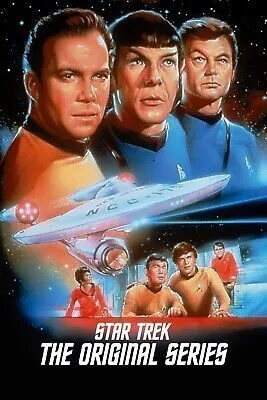
For a couple of decades, the utopian and dystopian traditions seemed to coexist more or less in balance, each feeding off the other. Up until the 1960s, you could still find optimistic visions of the future in popular culture and sci-fi. In the high-tech future of the iconic TV series Star Trek, which first aired in 1966, problems on Earth like poverty and war had been solved for good, making them unsuitable for plot material. The storylines in the original Star Trek seasons are mainly driven by curiosity and a thirst for adventure, with the universe as an endless new frontier beckoning intrepid space travelers. As the famous tagline of the starship Enterprise puts it: "To boldly go where no man has gone before!" Star Trek exudes the prevailing belief of the time in a bright future and a positive attitude toward technology.
In the same decade, millions of people tuned into The Jetsons, a futuristic TV series where folks zip around in flying cars and float on hovering platforms. Work was a thing of the past, every family had a robot housekeeper, and if you were hungry, you just pressed a button for a delicious meal! In 1967, CBS aired The 21st Century, a series where the iconic news anchor Walter Cronkite takes viewers on a tour of a twenty-first-century home. We see shiny kitchen robots, devices for medical self-diagnosis, and picture phones for video conversations. (Moral progress proceeded at a somewhat slower pace, as women were still confined to the kitchen.)
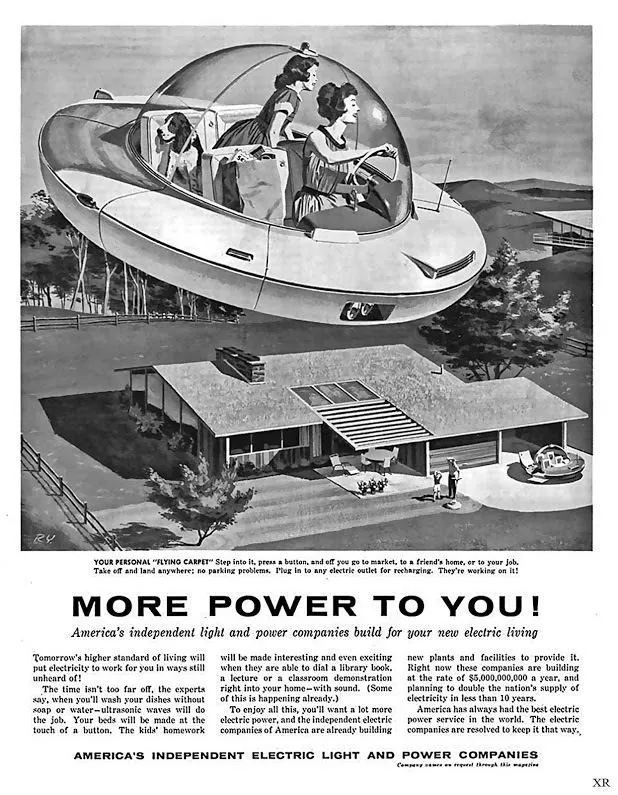
Newspaper ads from electric utility companies promised a “higher standard of living” tomorrow, all thanks to abundant power generation. Soon, we’d be gliding through the skies on “flying carpets,” powered by batteries. Just hop on, push a button, and off you go—no more parking problems! “They’re working on it,” the ad boasted. In a 1966 New York Times article titled “A Glimpse of the Twenty-First Century,” leading scientists predicted a world without deserts, dirty smog, or industrial noise. The human population was expected to swell to 25 to 50 billion, living in unprecedented luxury thanks to nuclear power and other futuristic technologies. Incredibly, this tenfold increase in global population was seen as a hopeful vision, not the impending catastrophe that later environmentalists would make it out to be. Stanley Kubrick's 1968 classic, 2001: A Space Odyssey, also captured that belief in the uplifting power of modern technology. Sure, the spaceship's computer, HAL-9000, goes haywire and tries to kill off the crew, but in the end human intellect prevails.
Fast forward half a century, and we can confidently say: Dystopia has eclipsed utopia. Twenty-first-century science fiction reads like a tale of a thousand-and-one nightmares. If we’re not wiped out by AI, then maybe it’ll be those predatory aliens. If nuclear war isn’t laying waste to the planet, then climate catastrophe will finish the job. And if, by some miracle, a few of us survive all this mayhem, we’ll probably wake up in a totalitarian hellscape—either trapped in a world of miserable enslavement (1984’s tradition) or stuck in a soulless, hedonic culture where every desire is fulfilled with a pill or the push of a button (Brave New World’s tradition).
In The Hunger Games, a totalitarian world government forces people to fight to the death in sports arenas by way of entertainment. In The Handmaid’s Tale, women are enslaved as breeding machines under a fundamentalist Christian theocracy. In The Matrix, a race of super-intelligent robots have enslaved humans and are literally sucking us dry as living batteries. The popular sci-fi series Black Mirror is the most inventive, as it presents a completely different future in every episode. I haven’t finished the latest season yet, but I’ve just tallied up the previous six seasons. Out of the 27 episodes, at most one belongs in the utopian category, with a straightforward happy ending. All the other episodes are pure nightmare fuel, usually involving some novel technology—from virtual reality to killer drones, from brain chips to surveillance cameras.
And how about other art forms? Up until the twentieth century, it wasn't unusual for artists to sing the praises of modern technology. The eighteenth-century poet and Enlightenment thinker Erasmus Darwin—grandfather of Charles—wrote epic poems in tribute to steam engines, grain mills, and blast furnaces. The elder Darwin even predicted the invention of locomotives and airplanes—and was quite chuffed about the prospect. In the 19th century, Rudyard Kipling wrote an ode to the steamboat, likening its mighty machines to a symphonic orchestra. Jason Crawford from Roots of Progress has collected such progressive poetry from days of yore on his website. You can read paeans to the Panama Canal, hymns to mighty hydro dams, and tributes to the telegraph and its inventor, Samuel Morse. After all, why shouldn’t there be beauty in human ingenuity? As the British journalist and philosopher G.K. Chesterton wrote in 1908, "Poetical," are "things going right."
Our digestions, for instance, going sacredly and silently right, that is the foundation of all poetry. Yes, the most poetical thing, more poetical than the flowers, more poetical than the stars—the most poetical thing in the world is not being sick.
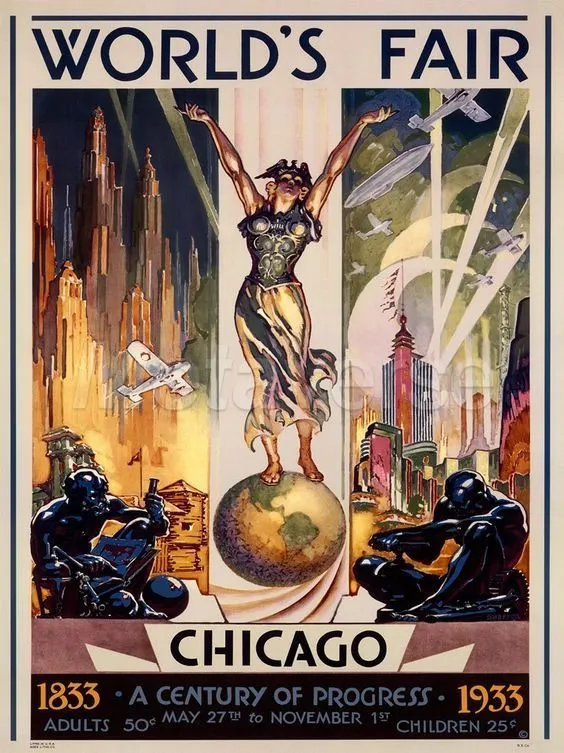
Here too, this upbeat spirit persisted well into the 20th century. Some readers might still have childhood memories of it. In the visual arts, we had movements like Art Deco, Futurism, and Pop Art, all of which embraced a generally positive attitude toward technological progress and industrialization. Millions of people flocked to World Fairs to be wowed by the latest gadgets and industrial innovations. Even in the 1930s, when stormy clouds were gathering over the world, the World Fairs in Chicago and New York still projected hopeful visions of the future. In 1933, the exhibition in Chicago was dubbed A Century of Progress, with the tagline: “Science Finds, Industry Applies, Man Conforms.” In New York in 1939, visitors left the fair sporting cheerful blue-and-white pins on their shirts that read, “I have seen the future,” apparently without feeling ridiculous. Even after the Second World War, that sense of optimism rebounded quickly. In 1955, Walt Disney opened his theme park Tomorrowland with these stirring words:
Tomorrow can be a wonderful age. Our scientists today are opening the doors of the Space Age to achievements that will benefit our children and generations to come. The Tomorrowland attractions have been designed to give you an opportunity to participate in adventures that are a living blueprint of our future.
The American musician Donald Fagen—that oddball from Steely Dan—sang about that radiant optimism during the International Geophysical Year in 1957 on his 1982 album The Nightfly. The Cold War was experiencing its first thaw, and the East and West were set to work together to build a bright future for all of humanity, with a little help from science:
The future looks bright
On that train all graphite and glitter
Undersea by rail
90 minutes from New York to Paris
What a beautiful world this will be
What a glorious time to be free, oh
Yes, I know we should be careful to avoid the temptation to cherry-pick in this walk through modern history. Even in the glorious 19th century, as Jason Crawford admits, you could definitely find poems about the inevitable downfall of the West and the horrors of the "dark satanic mills," as the English poet William Blake described those coal factories. Likewise, there was no shortage of technophobic art during the Golden Years after World War II, or critics who abhorred consumerism.
And yet, something tells me that a century ago, a cultural committee might have been less surprised and dismayed by Daan Samson’s cheerful prosperity biotopes. As the Bavarian comedian Karl Valentin once said, “The future used to be better, too, in the old days.” Sometimes it feels like the best future we can imagine is one where we just avert some catastrophe or another. Or as Crawford put it with a sigh: “Today we hope, at best, to avoid disaster: to stop climate change, to prevent pandemics, to stave off the collapse of democracy.” A great example of this is The Ministry for the Future by Kim Stanley Robinson, one of the most popular sci-fi novels of recent years about the threat of global warming. Robinson's book stands out because, rare among climate novels, it has a happy ending of sorts. But don't get too excited: Robinson’s optimism mainly involves staving off total catastrophe. First, we suffer a few tens of millions of climate deaths and a series of gruesome attacks by climate terrorists. But just when things are about to turn apocalyptic, we're saved in the nick of time, after which the planet's thermostat is dialed back to the “stable” climate of the pre-industrial era. All's well that ends well. That's how stilted the imagination of even our "utopian" science fiction has become these days.
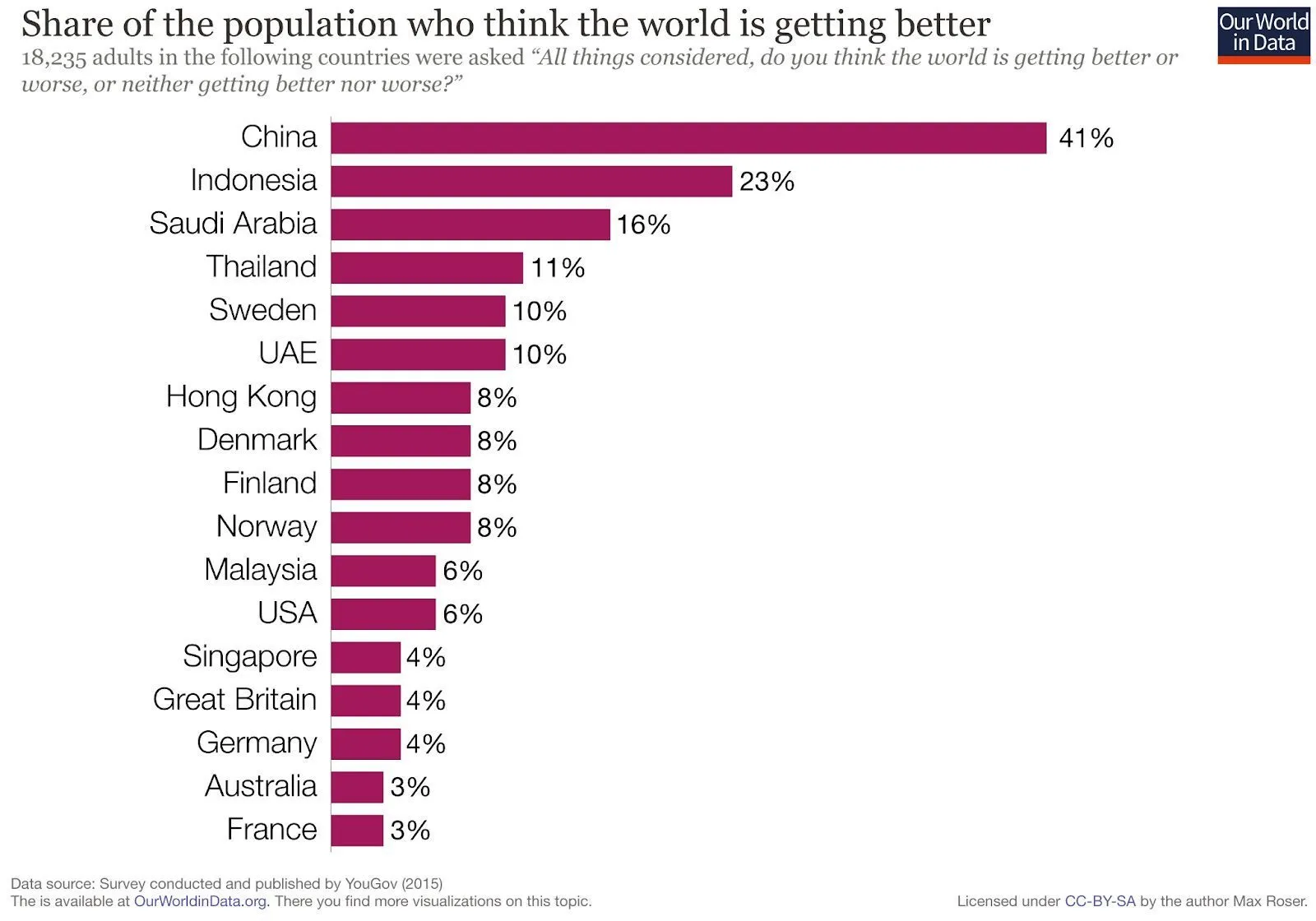
Losing faith in progress—and in ourselves—might come with dire consequences. Public surveys show something that should alarm anyone rooting for progress: in most Western democracies, less than 10% of people think the world is on the right track. And this was about a decade ago, when things arguably looked a bit brighter. What’s even more startling is that, in developing countries like China and Indonesia, the optimists make up a solid 41% and 23% of the population. A Pew survey from 2014 confirms that people in emerging economies are much more optimistic about the future of their children than in rich countries. I couldn’t dig up reliable historical data, but my gut tells me that belief in progress was at similarly high levels in the West around a century ago.
So, what happens to a civilization that gives up on its faith in progress? One theory is that we fall into the trap of a self-fulfilling prophecy. As the French-German polymath Albert Schweitzer once said: “Real progress is closely linked to the faith of a society who considers this progress possible.” It’s tough to measure the Zeitgeist over time, but if you just look at metrics like GDP growth, economic productivity, and innovation rates, you start to notice some pretty clear signs of stagnation. The economy is still growing, but it’s moving at a slower pace than in previous decades—especially in Europe. We’ve got more PhDs than ever, yet fewer groundbreaking discoveries.
If people lose their belief in progress and no longer see technological innovation as something worth striving for, then stagnation is what you’ll get. People will oppose new construction projects, governments will stop planning for rising energy consumption, companies will no longer invest in research and development— and art committees will snort at anyone who tells a positive story about technology and human prosperity.
To accelerate progress and innovation again, we don’t just need scientists, engineers and innovators. We also need a society that values progress. We need more artists like Daan Samson, who can show us the beauty and poetry in our modern industrial world, and who have the imagination to dream up even better futures. Seriously, can someone give this guy a grant to create more prosperity biotopes, please?
Get every essay in your inbox
Weekly essays exploring a utopian future.
Join 23,259 subscribers

Very cool ideas here, thank you! I wonder if the loss of hope is linked to the greater availability of news and social media, which tends to skew negative. So we all get the impression that things are going downhill when they're really not, and then we project that image to our expectations for the future.

What a lively history of futurism. Thank you also for introducing me to Daan Samson's work. It speaks to me of a utopia perhaps disassociated from the Enlightenment. In his art, nature and artifact seem to find their extremes in an Edenic past without humanity's influence and a futuristic perfection through humanity. This pairing suggests to me modernity’s false binary of humanity and nature. Real nature is artificial, I think, the work of both creation and humanity. The desire to recreate a past located in "untouched" nature or to construct a future in technology made impervious to nature seems to avoid the kind of longstanding artifice (in the old sense of the word) that many indigenous cultures mastered. So his art strikes me as a means of suggesting how these two desires may stem from the same broken worldview but point to a particular utopia--the new expression of an artificial nature.

I have to ask, was the utopian Black Mirror episode San Junipero? Hands down, San Junipero is my favorite Black Mirror episode. It’s the total opposite of the Matrix and suggests that it is possible to write a story that portrays the future in a positive light.
We do need to promote a more optimistic vision of the future in the media, but let’s face it, that’s an uphill battle. We naturally give greater emotional weight to negativity (hence why almost all news in negative), but tend to suppress negative memories over time.
Thus, the present always appears worse than the past is remembered, suggesting a downhill trajectory.
Yes, it's San Junipero, arguably the best episode of the whole series! Incredibly moving. Having said that, I'm an admitted "apocaholic", with a serious addiction to disasters and dystopias. ;-) So I like the dark episodes as well, like the terrifyingly simple "Metalhead".
I agree with your psychological explanation, but then it's puzzling why that negativity bias was less prominent in earlier eras. Our psychological make-up didn't change, so it must have been something about our culture.

Absolutely the best episode. I can't even watch any of the others haha
I love it when movies and TV shows keep you guessing. San Junipero is great in the sense that there are these odd time jumps, you have no idea what is going on, the music changes, the clothing changes...etc.
But then, suddenly it makes sense, it's the chosen time period of the user.
Nobody ever talks about San Junipero, but it really shines as the best
Thanks for today's thoughtful post by Maarten Boudry !!! 👍👍👍
Progress in itself is neutral, not aimed in a specific direction (exactly as Naturebehaves too):
In Palaeolithic times people culled each other with wooden clubs, a tiresome adventure that could backlash at any moment and bear totally unintended, highly personal consequences ...
Today we have Pfizer, Moderna, Raytheon, Boeing, Northrop, Lockheed, BAE, DARPA, Nestle, LU, Mondelez, Kraft, so-called politicians of any kind, etc., etc.
Millions are being culled 24/7
- silently, by myocarditis, rubbery clots, pregnancies gone awry, etc.,
- with a lot of blunt lies but quickly by stealth-jets, bunker-busters, drones, mines, etc.,
- slowly by starving people in front of full platters with "food" devoid of any nutitional value and
- some currently starving an entire population to death by preventing any food-intake
(after already having undergone the two previous lethal "treatments")
on a global scale,
whereas the evil perpetrators, mainly in the US, UK, DoD, CDC, Wuhan, Zioland, etc., etc. comfortably relax in air-conditioned luxury offices, having been promoted in revolving-doors, granted more funds or medals, made hundreds of billions with fraudulent contracts without ever having to face any kind of accountability.
What a progress in comparison to our poor troglodytes !!!
How about a total PARADIGM-SHIFT ???
HIGH - TIME !!!
Isn't it ??? ... 🤔🤔🤔

I always love the posts on this newsletter, but I am stuck on the comfort with convention and status quo. Of note, referring to “climate terrorists” in “The Ministry of the Future.” Using the terminology of terror is inherently status quo, even when those agents in the book are critical for the survival of the species.
I think we stop believing in progress not because of a failure of the polity to have optimism, but because of the success of the political system in creating epistemological traps where we simply cannot conceive of anything being different than it is.
I know that confronting this is in many ways the purpose of this newsletter, and I deeply respect it. But I also wanted to observe the status quo bias that even you are not immune to. The machine future is a dead future, but the machine age has only been around 250 years, so who really cares. It had a good run.
What we need is different thinking, and in a world that is so powerfully oriented to conformity this is insanely hard. We cannot imagine even well-trodden alternatives like Democratic Socialism, which makes us incapable of conceiving truly new ideas that will meet the situation.

Thanks for this great trip through the history of how we view progress. I do wonder, though, if the tech-skepticism of our time isn't such a bad thing after all. I feel there is an important difference between a healthy belief in progress and a blind faith in it (the idea that technology will simply solve everything).
For Bacon, science was almost a religion; he wanted to use it to return to a paradise-like state, while simultaneously achieving total dominion over nature through technology. Rather than this claim to absolute control, a much better path might be the one Daan Samson seems to be exploring—not controlling nature through technology (which our time rightfully warns against because it ends in destruction), but rather finding a harmonious fusion of the two.
While I don't agree with absolutely everything, I found the piece really thought-provoking and inspiring. Thanks again for writing this!
Thanks for the kind words, and for engaging so thoughtfully! You're absolutely right that Bacon's religious framing (science as a route back to Eden) is alien to how most of us think today, and I agree that Samson's vision is more balanced and more attractive than a fantasy of total dominion. I'd happily take the SMR-in-the-rainforest over the totalitarian society of Bensalem! But I do want to push back a little on the framing that healthy belief in progress is somehow opposed to Bacon's ambition. Historically, it was precisely the audacious version that paved the way to the industrial revolution and the Great Escape from poverty and misery. The idea that we could systematically investigate nature in order to improve the human condition was genuinely radical in the 17th century, when most people accepted disease, famine, and early death as the unalterable human condition.
Btw, I have an updated version of the essay here, with more illustrations and exampels: maartenboudry.substack.com › the future used to be better 33d
Thanks for the thoughtful reply and for sharing the updated link—I’ll definitely give it a read!
You make a very fair point about the historical necessity of that audacious ambition. Escaping the absolute misery of the 17th century required a radical shift, and it’s true that we all benefit immensely from that breakthrough today.
While researching Bacon recently for an essay, though, I couldn't help but feel a certain unease about the specific flavor of that ambition. It really shines through towards the end of New Atlantis, where the objective of science is described as "the enlarging of the bounds of Human Empire, to the effecting of all things possible." Or in the violent metaphors he explicitly uses in his Novum Organon, where nature must be "put on the rack" to force her to reveal her secrets.
It makes me wonder if this desire for dominion wasn’t just a vision for progress, but actually a kind of trauma response. Bacon’s era was anything but comfortable. Between the "Little Ice Age," widespread famines, economic collapse, and the devastation of the Thirty Years' War, nature was experienced as an unpredictable and deadly force. The scientific revolution, in its early days, seems partly driven by an existential fear—an attempt to forcefully control a world that felt completely out of control.
This might explain why modern science—which per se is a great achievement—came wrapped in such a strange philosophical package. Shortly after Bacon, Descartes provided the perfect psychological coping mechanism by declaring nature (including all animals) to be mere soulless machines. If nature is just mechanics, it’s no longer terrifying, and it can be dismantled and mastered without moral hesitation.
Of course, this is just one angle on the scientific revolution, and I completely agree with you that the scientific method itself was a triumph. I just suspect that the foundational mindset it was born into—this paradigm of extraction and domination—is exactly what we are struggling to outgrow today.

I find it interesting that you see higher optimism in China and Indonesia as a cause of their growth, rather than the other way around. Just from a personal narrative perspective, if you talk to people from these regions then they frequently frame their optimism in terms of having gone through a period where they have seen great strides across multiple generations.
The dystopian turn in the west at the start of the 21st century coincides with the emergence of a halting of improvement (or even reversal) in life quality for younger generations, measurable in terms of housing situation, social mobility, economic, political and environmental stability, and life expectancy.
The reaction to modern day aspirational artwork is very much tempered by beliefs emerging from material conditions. To me it very much seems Western people are losing faith in progressive beliefs because they aren't feeling the relative intergenerational material improvement that developing world people do.
Thanks. Excellent post from the ever optimistic Maarten Boudry. As a contemporary artist and sci-fi filmmaker I resonate strongly with Maarten's post. I often find myself disappointed by the pessimistic narratives presented to me in movies and art exhibitions. I suppose that it's much easier (and safer) to complain than to offer plausible solutions to problems.

I wonder if the origins of the disillusionment came from the 2008 bank crash which destroyed the belief in the economy. The pandemic showed the limitations of science and Russia‘s invasion of Ukraine questions the whole geopolitical world order. The thought of war has returned to Europe and countries are arming themselves. But the problem with this thought is that WWII and the cold war are bigger crises and people seemed to have been more optimistic.
The self fulfilling prophecy of the dystopian future should be taken more seriously because we build what we believe and the believes are pretty negative now.

First I have to say that I absolutely love the title of this post. Even though it was a reference, still gold.
Some really interesting points in here, a couple counterpoints:
- I would imagine the practicality of our vision of the future is closely related to how close we are to midnight on the Doomsday clock. So it makes sense that back in the fifties, the vision was a lot brighter.
- You mentioned that those in developing economies tend to be more optimistic about the future, but I would like to also point out that in a lot of developing economies, the poverty conditions force people to focus on the present, making the future less important. When it's less important, you don't pay as much attention to it, don't see all the scary stuff on the news, so it's not as scary.
That said, I absolutely believe that we will manifest what we envision, so I'm completely on board with encouraging artists to up the ante on their visions of the future.
First I have to say that I absolutely love the title of this post. Even though it was a reference, still gold.
Some really interesting points in here, a couple counterpoints:
- I would imagine the practicality of our vision of the future is closely related to how close we are to midnight on the Doomsday clock. So it makes sense that back in the fifties, the vision was a lot brighter.
- You mentioned that those in developing economies tend to be more optimistic about the future, but I would like to also point out that in a lot of developing economies, the poverty conditions force people to focus on the present, making the future less important. When it's less important, you don't pay as much attention to it, don't see all the scary stuff on the news, so it's not as scary.
That said, I absolutely believe that we will manifest what we envision, so I'm completely on board with encouraging artists to up the ante on their visions of the future.