This article was wonderfully-written and thorough as any I've seen on the subject (and I follow this subject intently). It's 1000% right. I started out the article getting inspired and vowing to myself to now start recommitting to personalizing my connection to the art and artists I like.
But...
... as the article kept going, my spirits sunk further and further. I'm not saying this as a negative about the article. But just that you exposed everything about the experience of music (and books and TV and movies) that made streaming so attractive.
Music (and all media) back in the day benefitted from the Scarcity Monoculture. We had limited selection to purchase, and limited sources that played media for free. Radio/MTV for music, Libraries for books. Network/local channels for movies and TV. We all watched and listened to the same stuff. Even if we hated a song or movie or TV show, you heard it a thousand times and had to endure everyone talking about it. How many of us have beloved favorite songs that are only that way because of Stockholm Syndrome? Hated a song the first hundred times we heard it, but on that 101st listen, that little guitar riff near the end gave us a tiny bit of delight and we started listening to that song on purpose and now it sits at the top of our playlist as our favorite song by that artist.
What modern technology has done (and I can’t blame Spotify for this) is destroyed the Scarcity Monoculture. Everyone listens/watches in their own silos at their own pace, to exactly what they want to hear. Even back in the day, “Indie music” was still funneled through the same national/global sources. Even that scene was still built on a massive scarcity foundation. Indie music had much wider exposure and adoption than anything today, even some of the big artists.
As the 90s progressed, if you were a music-head, you evolved with the technology. CDs changed everything! Then the 3-disk CD changer. Then the 200-disk changer! Oh how I loved that thing! And then.. And THEN… the ability to burn our own CD’s. Perfect-quality mixtapes! Now my 200-disk CD changer was turbrocharged with personal greatest hits compilations. All the songs I didn’t like on the individual CDs I no longer had to worry that the randomizer would land on those songs. And THEN… Napster. Napster was my introduction to mp3s. Napster helped me complete the acquisition of ALL my Holy Grail songs that I had spent years scouring used CD bins looking for. I completed my quest that very first night on Napster. And then I digitized my entire collection of CDs (more than a thousand). From that point on, I only bought mp3 players and then leveled up to smartphones and itunes, and then eventually arrived at Spotify as we all did. Spotify did not create this problem. We ALL created this. It’s the natural evolution of what we wanted forever and ever. Access to ALL our media at all times, no matter where we were, on one device. THAT was the Holy Grail. And we achieved it. Spotify. Netflix. Kindle.
We did it, ya’ll. 24/7 access to 100% of my media, in my pocket. We are no longer at the whims of the gatekeepers as to what we listen to. We have total control.
And yet… that’s the disaster. We got what we wanted and it is destroying how we discover and consume media. Turns out we won’t sample an endless string of new, indie music. We’ll listen to the same 3000 songs that we’ve lovingly curated into playlists. I LOVE my playlists. They are exactly what I want. But I’ve added maybe five new artists to my vast roster of musicians in the past twenty years. I no longer even accidentally hear 90% of the top popular songs nowadays even once, much less over and over to where my resistance fades and I realize I like that song or artist after all. The Grammy Awards are a bizarre wonderland of artists I’ve never heard of that are apparently the biggest artists in the world. Granted, I can’t stand hip-hop or rap, so I wasn’t going to discover those artists anyway. Only maybe one song a year makes it out of the silos of those fans and becomes something that I hear just out in the wild enough times to where I recognize it. “Golden” was the only song this year that fits that bill. Barely.
All that to say that the solutions you provided are EXHAUSTING.Yes, there will absolutely be fans, especially younger generations, that will embrace the rebelliousness of this plan. The DIY of it. But it is SO MUCH WORK to do something that used to be so frictionless. And even so, you’re still having to do all the work of making yourself find and listen to artists that you MIGHT like after listening tot he songs a dozen times. In all the examples you suggested, you are still alone there. Yes, you can get involved, but that’s more work on your part.
Music/media discovery is at its most delightful and powerful when it’s organic and part of natural daily rhythms and culture. People talking about it at work. People at the next table at the restaurant chatting about a new song or movie. Knowing all your friends have an opinion about the same movie or TV show right now when the episode aired, not two years from now when they finally binge the series. THAT is what we need to figure out how to replicate. Not more niche sources/silos for hearing or buying music.
I see those paragraphs of all the niche music sites and my soul drops. I don’t want more work. I want more osmosis. I want more annoying monoculture. Spotify isn’t the problem. Paying artists, yes, they are the problem. That needs to be solved. But the BIGGER problem is re-elevating music and media to where we are all experiencing the same media at the same time,
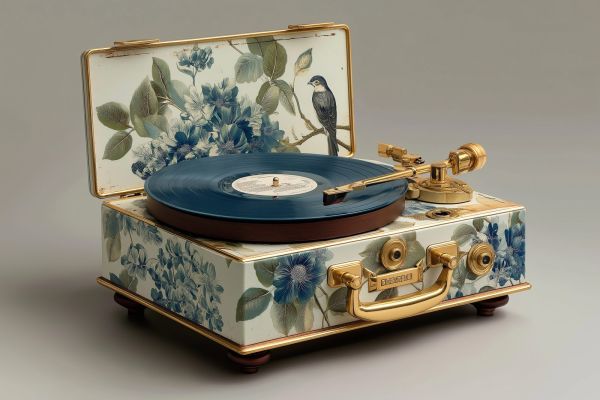
There is definitely a FEELING in the air that is fueling this return to Physical Media. We want the tactile, visceral nature of Physical Media, but I contend that it’s the Scarcity. Monculture that we are actually craving. We all want to share the experience of looking at the cover of an album and reading the liner notes or watching the same episodes of a show at the same time.
I can do the work of prioritizing buying merch from my favorite artists. I can get one hat or one shirt every year or a physical copy of one of their newer albums that I don’t like any of the songs on, but I’ll buy the physical copy to support them. But I have a couple hundred artists that I have robust playlists for. I don’t have the money to support more than a couple of them this way. But this is really the only way that Osmosis Exposure can occur. I can wear a t-shirt of an indie band I have discovered, and that’s how others will know I like them. If I start posting about them on social media, people start unfollowing me, because no one wants to be directly told about someone’s music. It only works if it’s by osmosis. If we organically discover and assimilate the music.
tldr: Niche music sites only compound the loneliness problem. The only thing that solves this problem is restoring the Scarcity Monoculture where you don’t have any choice (or very limited choice) in the media you consume.