
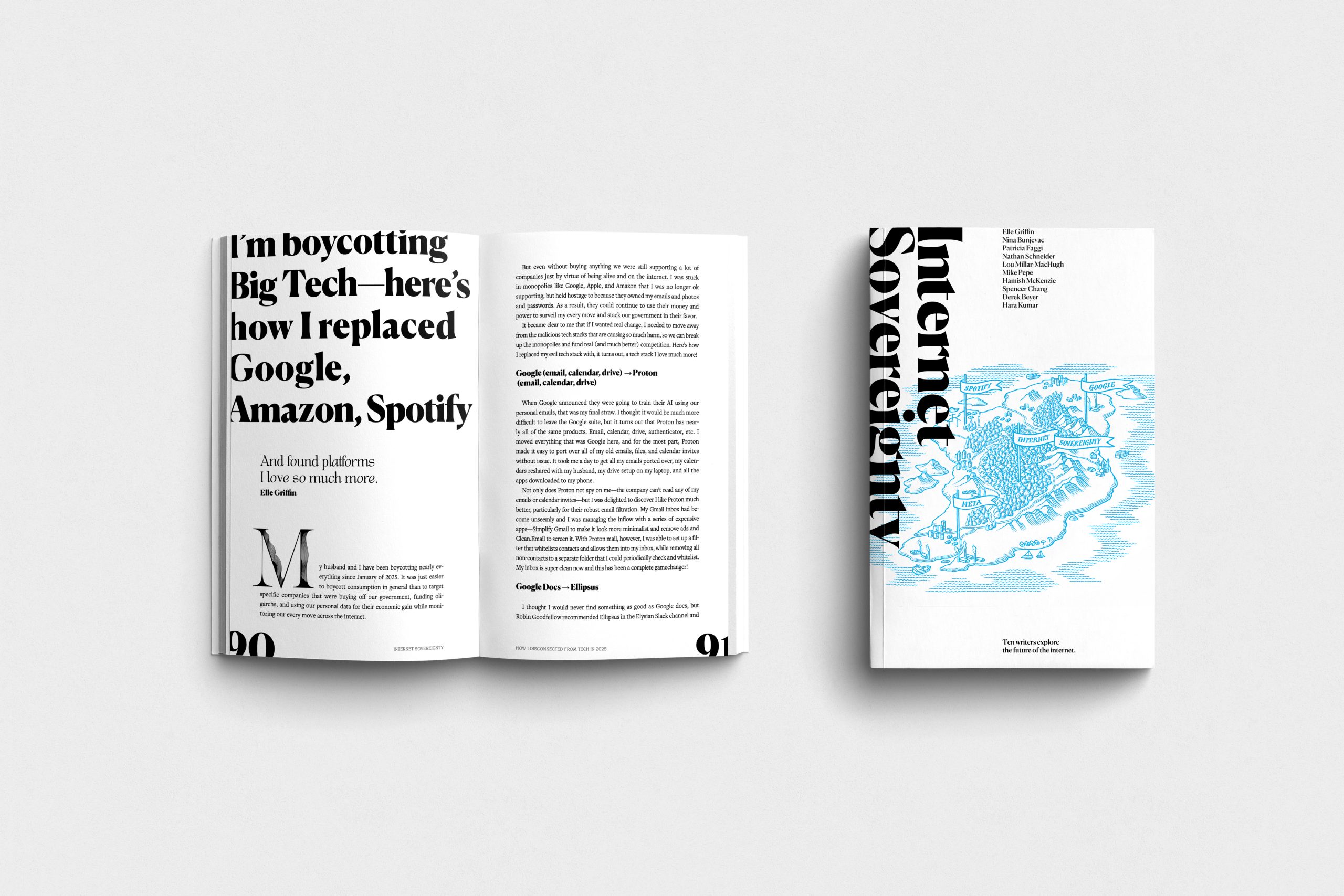
Internet Sovereignty
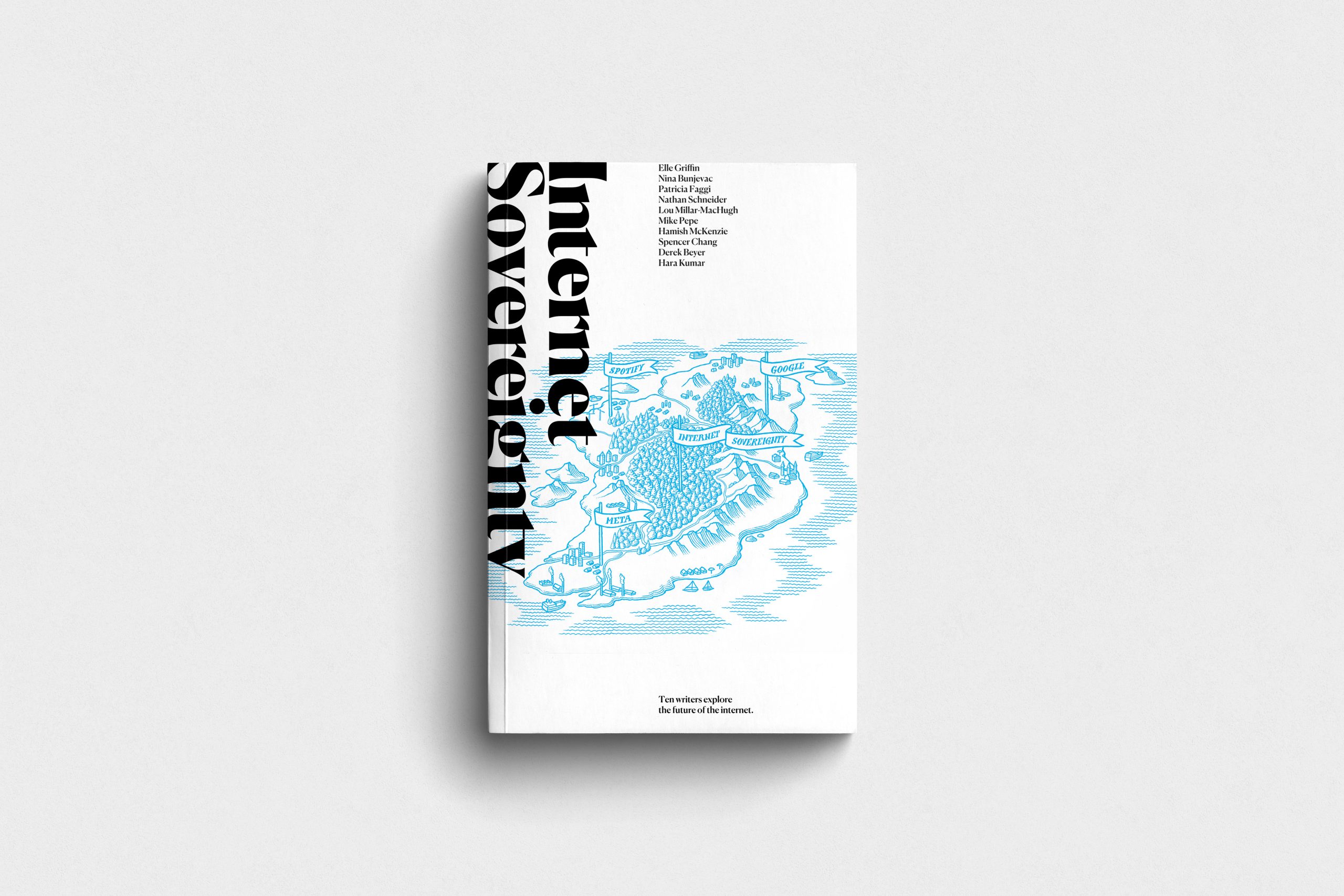
Nine writers explore the future of the internet.



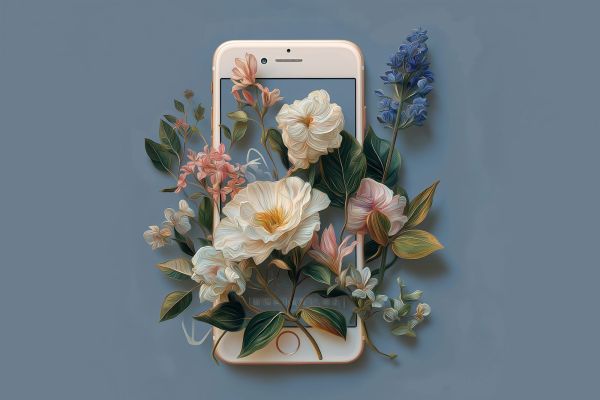 It's obvious why we hate social media
We need better internet platforms. We're already building them.
It's obvious why we hate social media
We need better internet platforms. We're already building them.
 The case for taxing AI slop
A minuscule levy on the largest AI producers can usher in a New Deal for cultural workers in the AI Age.
The case for taxing AI slop
A minuscule levy on the largest AI producers can usher in a New Deal for cultural workers in the AI Age.
 I quit Spotify—now I buy albums like it's the 90s
We're renting our music and platforms instead of owning them. New internet platforms want to change that.
Airbnb, Uber, & Meetup wanted better exit options
The SEC couldn't give it to them.
I quit Spotify—now I buy albums like it's the 90s
We're renting our music and platforms instead of owning them. New internet platforms want to change that.
Airbnb, Uber, & Meetup wanted better exit options
The SEC couldn't give it to them.
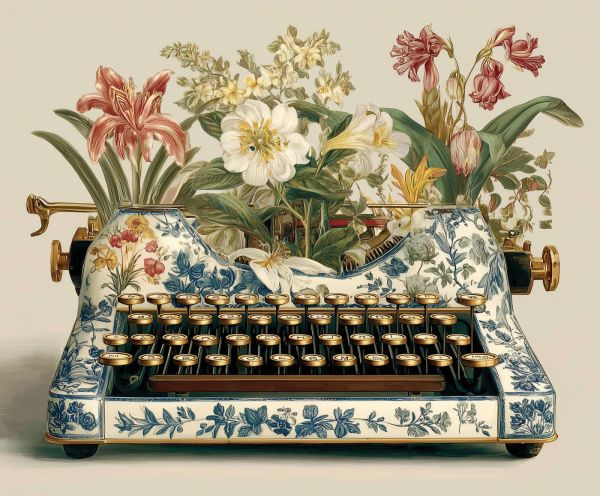 The hidden labour of the internet
And how design can bring it out into the open.
The hidden labour of the internet
And how design can bring it out into the open.
 The algorithm doesn't have to destroy us
We can build internet platforms that actually work.
The algorithm doesn't have to destroy us
We can build internet platforms that actually work.
 The Internet has no benches
The case for internet neighborhoods we can hang out in.
The Internet has no benches
The case for internet neighborhoods we can hang out in.
 The internet needs ecologists
Not just engineers.
The internet needs ecologists
Not just engineers.
I think a lot about what the internet would be like if it profited everyone who created it.
We, after all, create all of the social media posts and publish all of the web pages. And yet platforms have inserted themselves into the transaction and now earn much more as a deliverer of content, than we do as creators of that content.
Without the photos we post, Instagram wouldn't have anything to put in our feeds. Without the web pages we make, Google wouldn't have anything to point to. Without all of the information we put on the internet, OpenAI wouldn’t be able to answer a single question.
We create the labor these platforms earn money from. Why shouldn’t those platforms pay for that labor?
When we compare the internet to the brick-and-mortar world, the difference becomes particularly stark. As Glen Weyl points out in Radical Markets, “The share of income going to labor in the largest tech companies is roughly 5-15%," Weyl says. "Dramatically lower than service-sector companies like Walmart, where labor’s share is roughly 80%.”
“Facebook, for example, pays out only about 1% of its value each year to workers (programmers) because it gets the rest of its work for free from us! In contrast, Walmart pays out 40% of its value in wages.”
Translation: Tech companies use all of us who create the internet as free labor. Then they profit.
This issue is designed to think through an alternative internet. One that benefits everyone who lives on it every day.
New_Public serves as this project's patron, supporting our design and print costs, with head of editorial, Josh Kramer, writing our foreword. The cover illustration is designed by Nina Bunjevac with the print and digital editions designed by Patricia Faggi. We are joined by eight thinkers, each re-imagining a better internet through 10 essays:
- "It's obvious why we hate social media," by Josh Kramer
- "I quit Spotify—now I buy albums like it's the 90s," by Elle Griffin
- "Airbnb, Uber, and Meetup wanted better exit options," with Nathan Schneider
- "The hidden labour of the internet," by Lou Millar-MacHugh
- "The case for taxing AI slop," by Mike Pepi
- "The algorithm doesn't have to destroy us," by Hamish McKenzie
- "The internet has no benches," by Spencer Chang
- "The internet needs ecologists," by Matthew Prebeg
- "How I disconnected from tech in 2025," by Derek Beyer
- "The redemption of the digital age" by Hara Kumar
The Elysian treasury will keep 20% of pamphlet profits, with the remaining 80% split between contributors.
Thank you for continuing to support our essay collections and print pamphlets imagining a better future.
We are creating a better internet already,
Elle GriffinIt cost $2,753 to make. It has earned $3,598. It stands at +$844.
Your copy contributes in profit.