
MacKenzie Scott should have gotten Kindle in the divorce
But she can still build the e-book future we’ve been waiting for. Here's an open letter to the author.
Or subscribe to get every pamphlet too, from $50 a year.

 Join 23,238 subscribers
 ear MacKenzie,
As an author, I don’t have to tell you that books are important. Nonfiction books are full of all of our best research and knowledge. Novels are full of our dreams and ideas and visions. But despite the proliferation of online media these past decades, e-books have remained stagnant—largely unsharable and undiscoverable online.
It’s easier to follow someone’s thoughts on X, than be notified of an author’s next book on Kindle. And while online articles can go viral on social media in minutes, books require a $10 Kindle purchase, or a 12-week wait from Libby, the library app.
Online media is widely shareable and discoverable, but e-books remain locked away in walled gardens.
You could solve that. You started Amazon because of your love of books and your desire to make them more widely available. If I’m being honest, I’d hoped you’d get Kindle, Audible, and Goodreads in the divorce. I would have loved to see you combine them into the reading app of our dreams and give them to the library, with an endowment that would make books free and instantly available to everyone.
But the reality is you still can. Just as Andrew Carnegie once funded more than 2,500 libraries, you could build the e-book library we’ve long been waiting for.
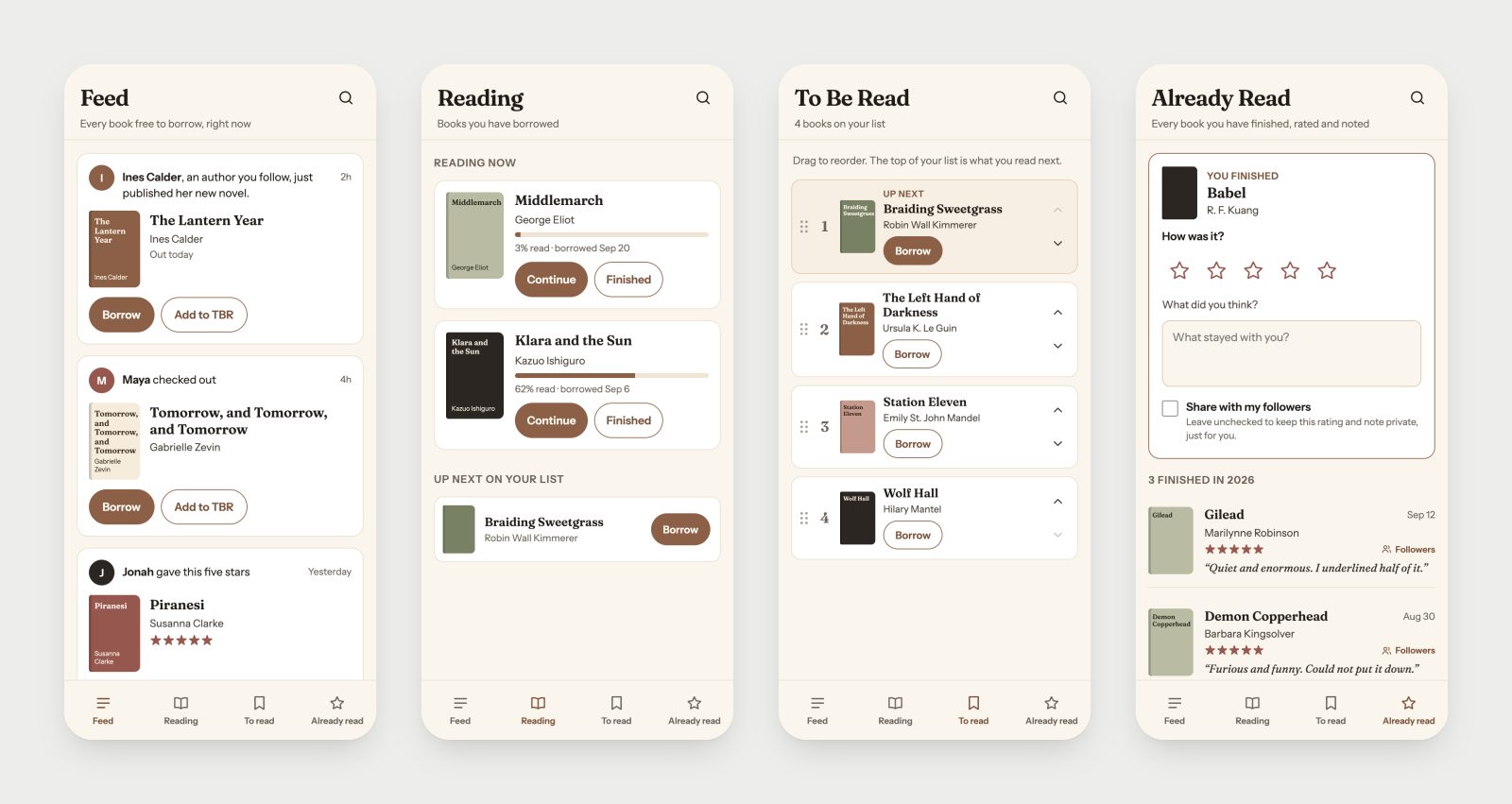
One where readers can follow the authors they like and receive notifications when they publish something new. One where we can see what our friends are reading and rating, and check out the book instantly to join them. One where books can go viral because we are all reading and talking about them and linking to them on the same library app.
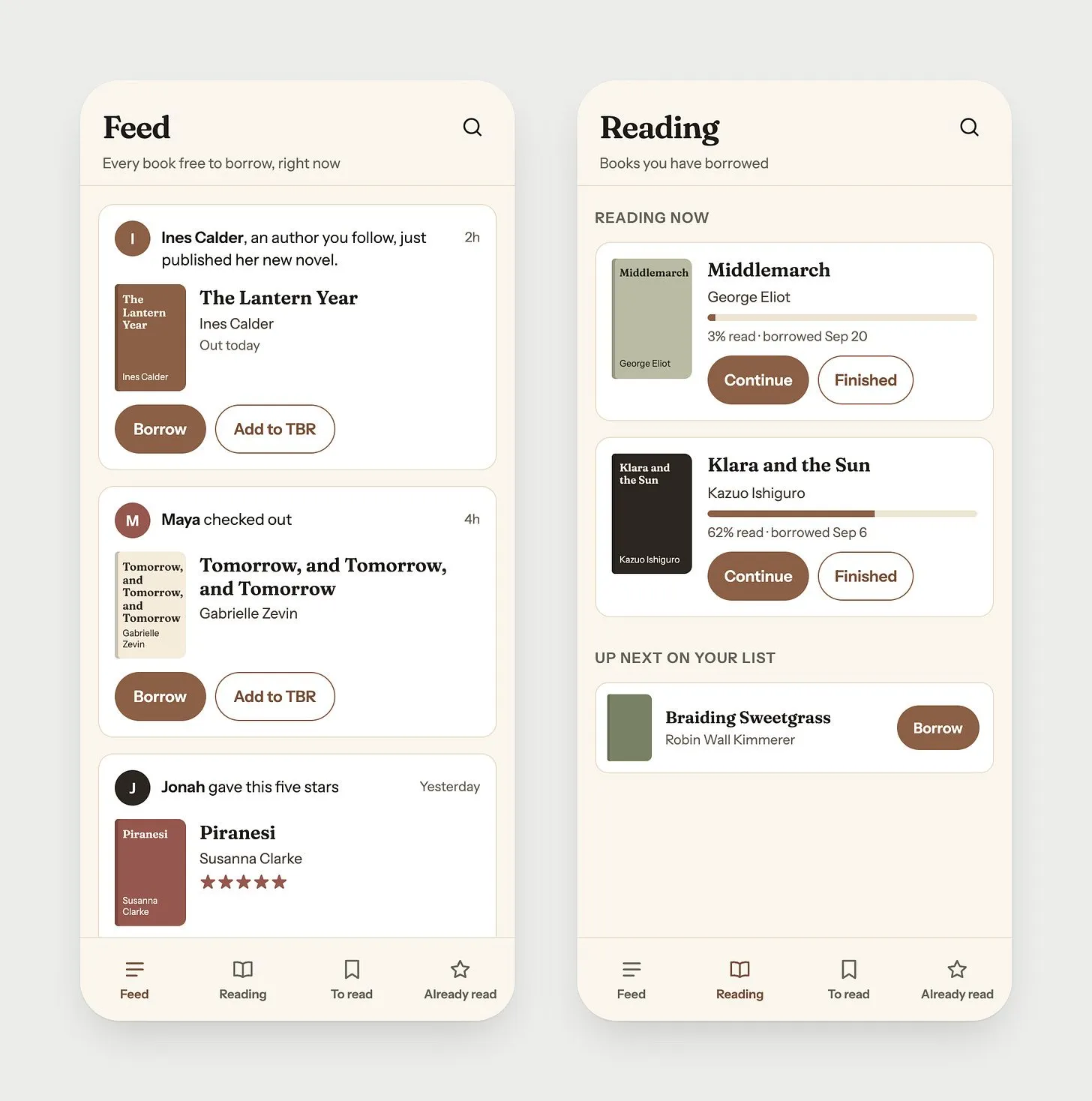
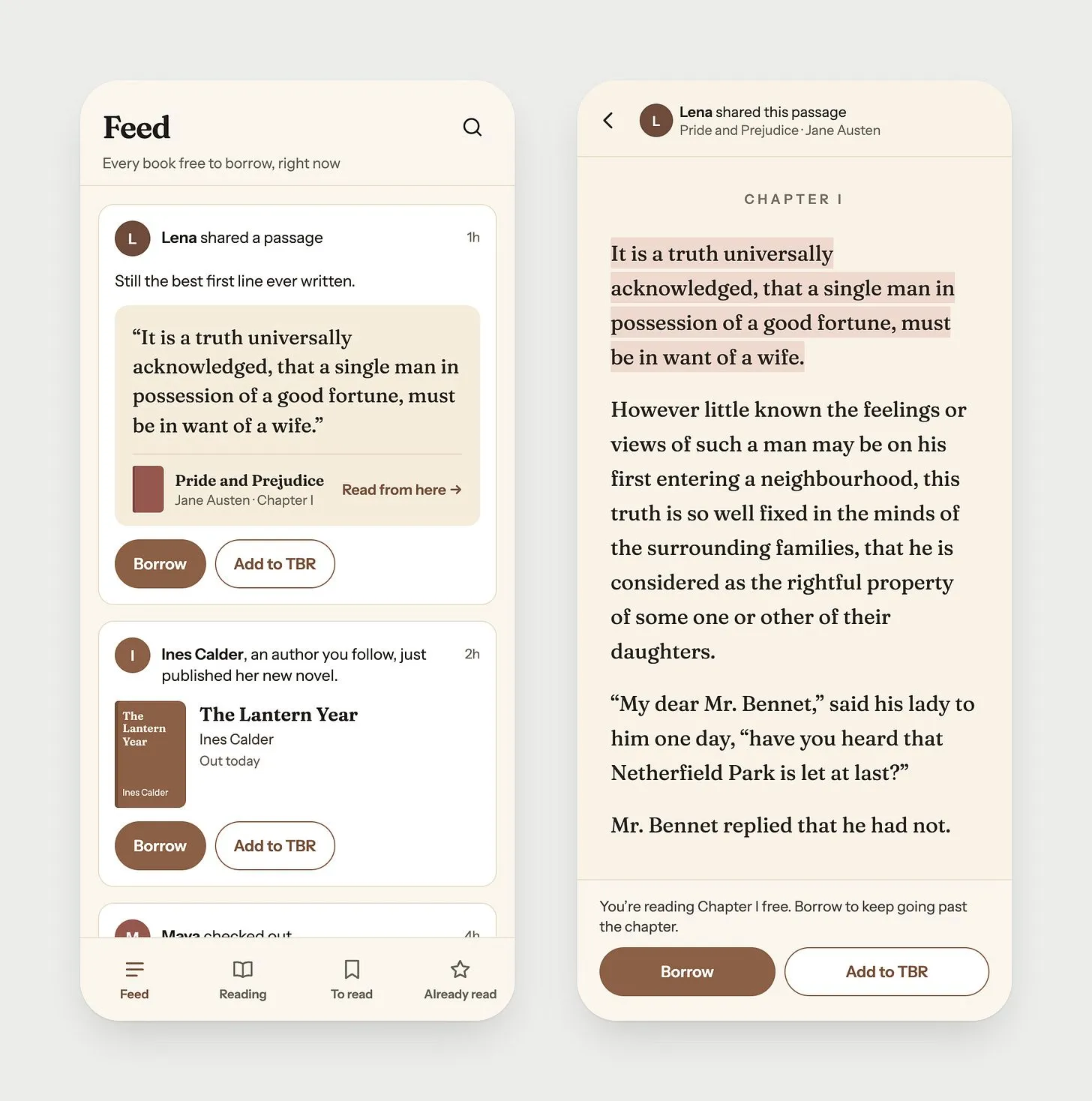
One where we can even share a highlight or quote from a book we’re reading and link right to it—with followers able to click right to that chapter in the book. The ability to share part of a book, rather than the whole thing, is something we’ve long been missing out on in the internet era. We could achieve it the way Kindle Unlimited does, by paying authors per page if readers only open a chapter, or for the book if they borrow it in full.
Readers, in turn, could enjoy a much better reading experience. They could save books from the feed right to their to-be-read list (TBR), and rate them when they’re done—keeping track of everything they’ve read so far even as they share their favorites with friends and the people who follow them. The discovery engine that is still primarily word of mouth could finally happen right in your library feed.
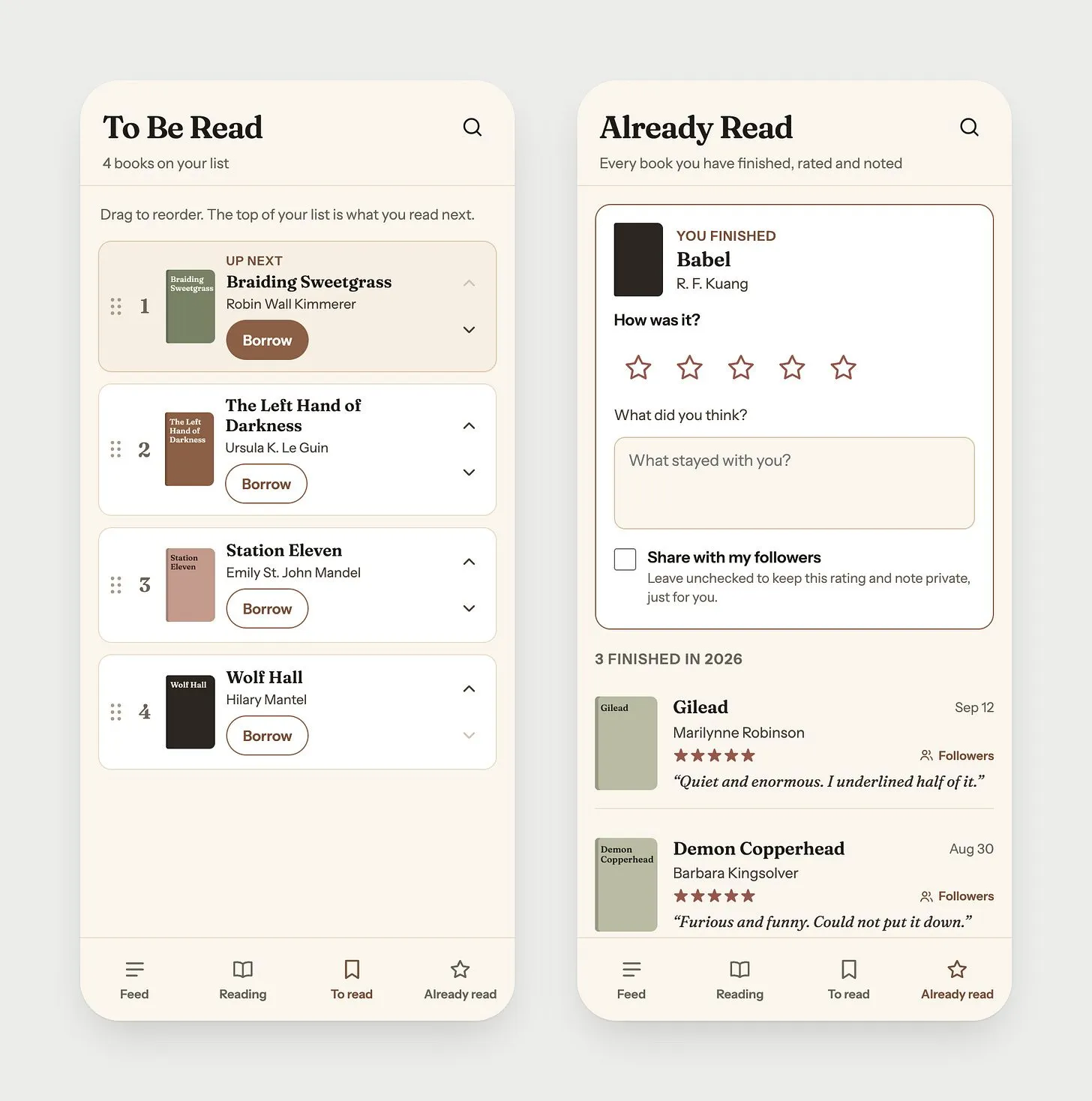
Combined, this experience would make books discoverable, the way most online media is, for the first time since the dawn of the internet.
To make this plan a reality, we need books that are free to read and able to be checked out by anyone immediately. Just as social media is. Libraries don’t need to buy one book with a limited number of checkouts, loaning it out one at a time the way they do in the United States. Instead, they could pay the publisher every time they lend it out, the way The Netherlands does. The country built a national e-book library—the first in Europe to let people borrow the same book at the same time, with no waitlist. This is more expensive than limiting the copies available, but an endowment could cover the difference.
And we need to make more books available to the library. Right now, Amazon dominates the e-book market, and many e-books never make it to the library. I recently had to purchase Penn Cole’s Everflame series on Kindle because they aren’t available on Libby. Amazon’s publishing company licenses e-books to libraries only through the Digital Public Library of America’s Palace app, which, while a laudable nonprofit, is used by only 700 libraries, a fraction of Libby’s 87,000. My library isn’t part of it, so I can’t read any of them. Amazon’s exclusivity happens because authors make more money from the platform than the library, and because the library Kindle publishes to isn’t used by anyone. Neither has to be the case with the right endowment.
Independent authors should not be locked out of this scheme. Right now, authors can’t upload their books directly to the library through OverDrive. They go through a distributor such as Draft2Digital, PublishDrive, or Kobo Writing Life, which sends the book to OverDrive, Hoopla, BorrowBox, and cloudLibrary. The book then sits in a catalog, and each library has to choose to buy it. Many never do, which means libraries don’t always have independently published books unless authors put in the work and readers request it. But there’s no reason authors couldn’t upload their books directly to the library, especially if they can even grow a following on the library app, with their readers, however niche, able to be notified of each new book, all of them able to instantly check it out on publishing day.
I could see this combination of features making the library app the primary way everyone gets and reads e-books. If readers want hardback versions too, well this becomes the premium collectable product publishers can earn a larger upside from. We’re already seeing a wave of high-end publishers entering the market, creating collector’s edition designs with gold embossing and sprayed edges, like FairyLoot, OwlCrate, and Folio Society, which sell books for upwards of $40, $60, even $100 a copy, with editions highly coveted by readers who want to add their favorite and most beautiful books to their libraries. Even Barnes & Noble has been putting out collectible covers—like the new Emily Wilde edition with rough-cut pages.
Libby is already so close to the e-book ideal—it is used by 87,000 libraries and schools in 115 countries, with readers borrowing more than 820 million titles in 2025, and 9.8 million app installs that year alone. The app just needs a social feed for discoverability, a ranking system so we can share reviews with friends and keep track of everything we’ve read, and a more robust ability to read or listen in-app, as well as the ability to upload right to the platform. Yes, I’m talking about Libby mixed with Kindle, Audible, and Goodreads. But with a much more robust discovery feed.
Right now, Libby is owned by private equity, but that only means it will be up for sale again soon, and that comes with an opportunity. As tech founders fight over social media platforms for influence, we need a champion for long-form journalism and books. For writing that debates important ideas and researches solutions to some of the world’s problems. That dares to imagine something better. We can’t let human knowledge devolve into hot takes on Twitter and Facebook because they’re the only shareable medium. Books should be read, shared, and proliferated. That means they need to be free to read, and they should be able to spread like social media, while authors are paid for their work every time their books are checked out.
You could create this future.
You are the most important philanthropist of our generation—you’ve given away more than $26 billion to ensure a better future for humanity. Not only that but you are part of the reason Amazon books exist. How much more could you do if you endowed human knowledge, funded writers to do the important work, and revived reading for the next generation, while creating a modern discovery engine that could help readers find and enjoy long-form writing rather than just attention-economy clickbait?
You could create a modern library far beyond the scale of Alexandria—a wealth of human knowledge available to anyone, anywhere.
To ensure that books, writing, and long-form journalism remain an important part of our future, here’s my proposal:
Buy OverDrive and Libby and turn them into a nonprofit ($1.5 to $3 billion). KKR paid an estimated $775 million for the company in 2020. Since then, worldwide checkouts went from 430 million in 2020 to 820 million in 2025. A fair price today is probably 2-4 times their investment at $1.5 to 3 billion. That buys the app plus relationships with tens of thousands of libraries and schools, as well as every major publisher.
Hire a real product team with a real budget ($600 million). Overdrive is a profitable company with about 500 employees. It earns a share of every e-book and audio license purchased by libraries, as well as platform fees paid for by libraries. As a nonprofit, it could continue doing that without sending profits along to KKR. An additional $100 million, plus a $500 million endowment, could increase the product team by 90 to 100 people to build out the feed, author following, ratings and reviews, and direct uploads for independent authors.
Create a lending endowment to get rid of the waitlist ($11-$13 billion). In the US, libraries pay publishers, on average, about a dollar every time an e-book is borrowed, with about 545 million digital loans each year. If libraries pay the same rate but open up to instant access, with readers able to get books immediately rather than wait for limited copies, we might expect double the library borrowing. An endowment of $11–13 billion could cover that.
For $13 billion, you could build and endow the great e-book library of our time. For $17 billion, the sky is the limit.
That’s a third of what Musk paid for Twitter for an e-book library that protects long-form writing forever, and opens it up to readers everywhere, instantly.
But that’s just the dream I have for books, and a future where they don’t lose importance just because they can’t go viral the way social media can.
Thanks for reading,
Elle Griffin
Get every essay in your inbox
Weekly essays exploring a utopian future.
Join 23,238 subscribers
Love this. All of it.
Could we ever have this as an author owned platform? Perhaps in addition to billionaires chipping in. Like the idea of workers owning the company, this could be authors buying in at a fractional price to own the platform.
I would put money in for that. Sadly I don’t have billions to put in but definitely would add my small amount.
I think that would be very cool. The hardest part would be getting the big publishing houses to agree to let their authors participate. That’s why many attempts in that direction failed—a lot of indie authors joined the platform, but that wasn’t enough to get the readers there. Libby already has the publishers, which is why I leaned into that option!

Lots of great thinking here. Brava!
Let's hope she reads this article, reflects, and responds (favorably)!

Damn I wish this existed too. Having all those features in one place is obvious but of course we had to split them up cause Capitalism said so. It shouldn't take the kindness of a billionaire to have it either.
Exactly. This is what Kindle could have been if it were in the hands of book lovers.

This was a great piece, Elle! I’ve wished for something like this too. Here in Canada, you can only send library books via OverDrive to Kobo devices (and not Kindle). This kind of lock-in is super annoying and I wish our devices could actually play along nicely so we could all enjoy great books.
This is exactly the kind of thing that drives me crazy! I'm especially annoyed by e-books that can only be read on certain apps (only Kindle, only Kobo, only Apple books, etc.) All books should be DRM-free!

Yes!! Another Canadian with the same problem I have!
"Online media is widely shareable and discoverable, but e-books remain locked away in walled gardens." This is such a frustration I feel. Reading e-books can also feel lonely. A feed like the proposed would be so meaningful for positive engagement.
"In the US, libraries pay publishers, on average, about a dollar every time an e-book is borrowed". When I went to the library a year ago, the person at the reception told me, "When you can, please borrow a physical book because e-books cost us money." I was shocked. I knew they cost them money, but it shouldn't be such a burden on libraries. Borrowing all physical books just isn't practical. But wait times on e-books through Libby can take frustratingly long.
This is also probably a Canadian/international problem, but you cannot directly use Libby with a Kindle. Canadian libraries don't have the "send to Kindle" feature. So, after already having a Kindle, I had to go and get a Kobo as well. Now I use Kobo for borrowing library books and Kindle for purchasing, but honestly I'm seeing the redundancies and realize I can purchase from Kobo, so I use my Kindle less.
Also, the recommended books on Kindle are pretty bad, so I think improving the curation through your suggested product team would be a real benefit. Could authors also add pages recommending other books?
I can so relate to reading books feeling lonely. They are not easily sharable, even when we're reading them online!
That's really odd that a librarian told you to check out physical vs e-books. I'm not sure how it works in Canada, but in the US the physical and the digital book are technically licenses for a certain number of checkouts. So that shouldn't make much of a difference! That said, I think some countries do this differently.
And that interoperability failure is something that really irks me. All books should be DRM free, and able to be read on any reading app and any reading device. And the Libby app could build that reader into the app, and even come out with its own device if needed! I recently had to get some independent publisher's app to read an e-book I purchased from them and it was a horrible reading experience. Why did I need to get a separate app for that?
And I so agree about Kindle recommendations. Curation from friends and people we follow would be much better!

Thanks for the clarification, Elle.
Hi Elle. I'm an author of traditionally published novels (9 since 1997, and still writing).Going on 80, I try to keep current with new technologies, especially in the publishing business. I'm not clear (reading your post) on how authors get paid (and make a living wage). Is it only through the # of e-book pages read?
Authors who have their books in the e-book library would get paid exactly as they do now, with publishers typically earning $1 per digital checkout in the US, and authors earning their share of that. The difference here is that books would be checked out much more often (because they are available to many people simultaneously, rather than checked out by one person at a time) and that they would also be paid for visits to a certain chapter, if they were quoted and highlighted by someone and shared online.

I love this!!
Libby is awesome but there are so many ways it could be improved. There's also Hoopla, which does already pay by the checkout, but the rates for indie authors are tiny (like 35 cents a check-out) and you have to go through an aggregator to get there, just like Overdrive. I make all my independently published books available to Hoopla and Overdrive (among other borrowing platforms), but only a fraction are actually available at any given library, which is frustrating for both my readers and me. And there's nothing you can do about it except hope a library invests in your title (via Overdrive) or Hoople lists your title, which is very hit or miss.
Thank you for this vision.
I so relate to this struggle as an author. I don't have any of my books available at libraries because the process just seems not worth it. It shouldn't be that difficult!

I would go a step further. I ran the Storya App project for two years (2021-2023) and our pitch was that stories should be multilingual and multimedia by default, to reach the widest possible audience. Technology makes that possible, and a digital platform like you suggest could really become the home for a really global community of readers, writers, as well as illustrators, translators and more. The economic model could be reliant on revenue share, but also open to crowdfunding for project. I still dream of being able to get back to building something like this...
I would love to see that as well. There's no reason something like that couldn't be built into an app like this. It's already international, a few things could open it up even more!

Hell yeah. Elle, she should hire you to run this for her.

i love this idea and hope it can reach Mackenzie

> like FairyLoot, OwlCrate, and Folio Society
Folio Society has really fallen off to be mentioned alongside these.
Some of their editions are still wonderful and definitive (the Shakespeare Box set is gorgeous) but much of their new designs seem tailored towards the BookTok crowd.
At least the books they publish are largely classics and deserve to be celebrated. If these garish designs cause more people to experience these works I suppose the tradeoff might be worth it.
I've noticed this, there are definitely still the higher-quality books, but there has also been a new generation of basic quality books with just different designs.
I think that if a few library systems got together, for under $250,000 they could piece together a system that 1) would let independent authors upload their ebooks that could then be checked out of the libraries, 2) would include a notification system that let people know when new books in their area of interest were available, and 3) would allow for some sort of management so that books could be flagged and/or removed based on certain criteria.
Hmm, that might allow independent authors to upload to specific libraries, but that would be much more challenging for them then making them available to all libraries at once, as they do through the current Overdrive/Hoopla systems. And I'm not sure how much help it would be for individuals to be able to follow certain authors only through their local libraries, or a few libraries banded together? Especially since, with e-books, they check them out through Libby. So the change would have to happen at that level?
It could start with a few libraries and then expand. No additional costs except hosting to expand.