

If we fix the phone, we fix society
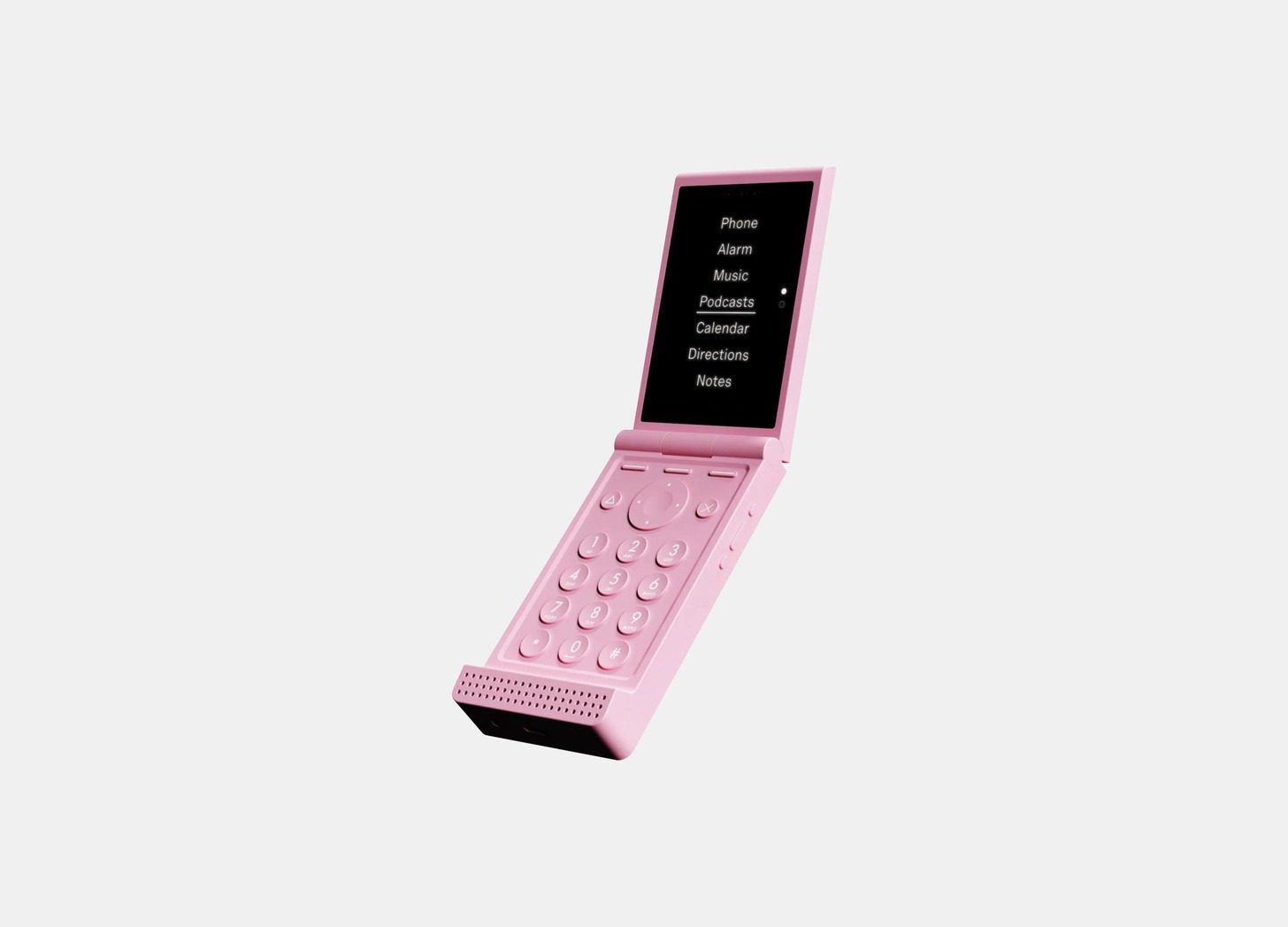
Here's how I would redesign devices for a more analog world.

 was recently visiting my family, all of us sitting by the fire, everyone on their phones. When I got up to get a drink, I peeked at everyone’s screens—my dad was doing the crossword puzzle, my sister was reading a book, and my mom was playing solitaire. This same tableau might have played out 20 years ago and my dad would have been holding the daily paper, my sister a book, and my mom a deck of cards. So why does that tranquil setting turn antisocial when we’re doing the same activities on our phones?
I asked my family. After tossing around some ideas, we came to the conclusion that, with phones, we don’t know what each person is doing. One might be answering texts or scrolling social media, perhaps paying attention to the happenings of far-away friends or relatives rather than the ones in the room. But if that person were sitting with a deck of cards playing solitaire, we would know they were still present with us, we would still talk to one another. It would be a Norman Rockwell painting, all of us enjoying quiet solitude together. Instead, it’s as if each person is in their own world.
Not only do we lack context, but there’s a sense of distraction. I happened to be reading a fantasy novel at the time, but that doesn’t mean I didn’t also see texts scroll by. I might look something up from my book, and follow it down a Wikipedia rabbit hole. I might suddenly remember to add something to my grocery list, and shift over to my Notion app. I might send myself an email reminder of something I need to do during the work week. At any given moment, I might be pulled away from my book, which means we’re not purely sitting together in peaceful idleness, but partially here and partially pulled elsewhere. We can hide the distraction amidst other activities, but we’re multitasking no matter how much we try to single-task, increasing the sensation that we are all living in isolated microcosms.
This has led me to the conclusion that the “one device for everything” concept has serious drawbacks. It’s great when you can use your phone as a plane ticket as easily as your credit card or your camera or Uber hailer. But when you can do everything in one place—the good things like read and listen to music and do the crossword, as well as the social things like texting and social media and YouTube, as well as the work things like email and Slack and calendars—we’re constantly code-switching in a way that leaves our inner worlds scattered, and our exterior worlds looking like a bunch of shells staring down at our phones.
And because there is always the possibility of some new notification, we twitch toward our phones as if they are cigarettes we can’t quit. We tap the phone idly to see if there’s something new, then continue to do so all day. If I’m standing in line, I might as well look at my phone. A quick trip to the bathroom, might as well check my phone. I don't even have any social media accounts, or even the Substack app installed on my phone, but I still have texting and email and a browser and that means the constant possibility that there might be something to grab my attention. How much more difficult must it be with TikTok and Instagram and Facebook and YouTube, among the most popular apps by usage?
Subscribe for free to keep reading.
Get every essay in your inbox
Weekly essays exploring a utopian future.



 Join 23,254 subscribers