

Why do I romanticize 18th-century chores?
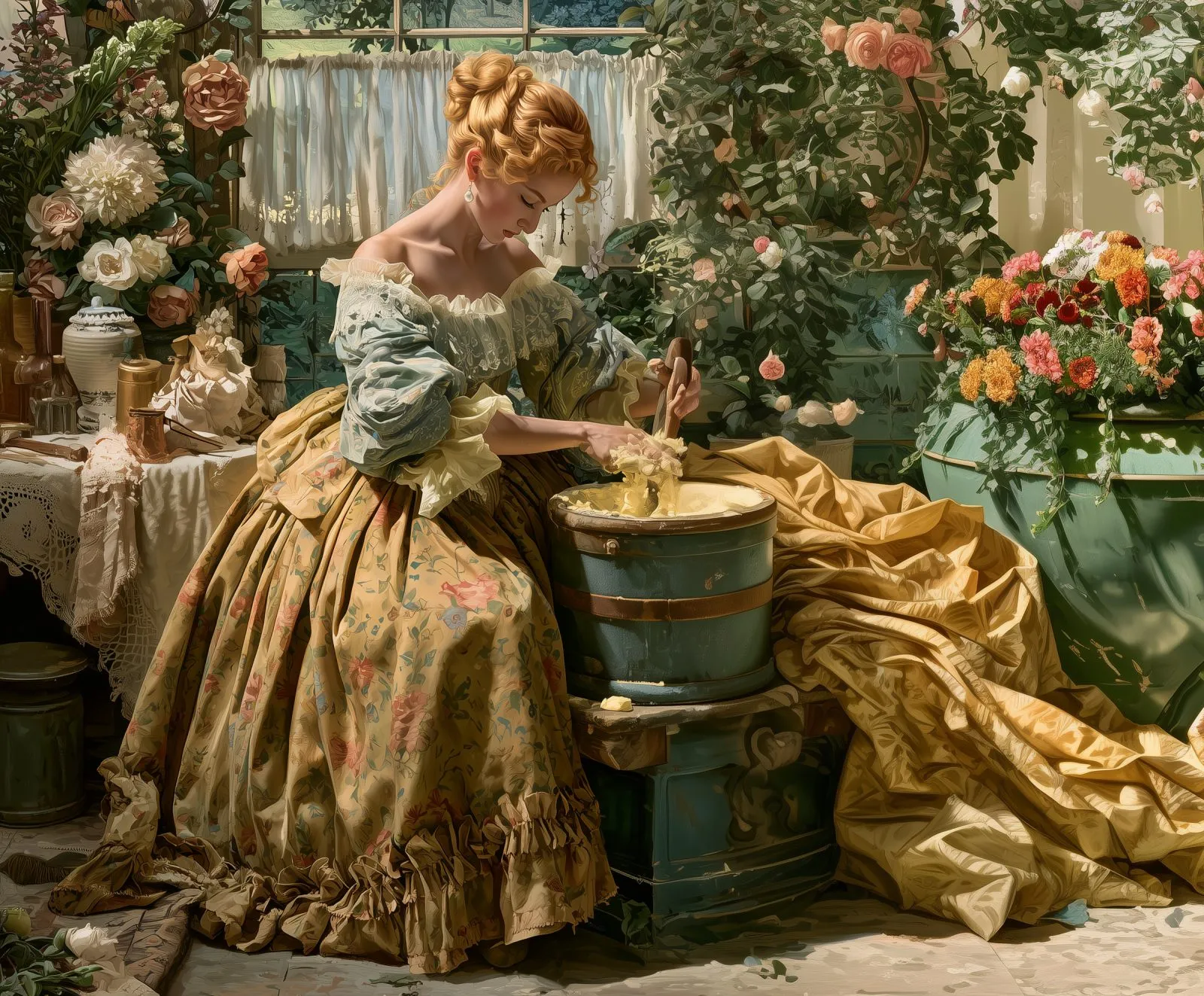
Was churning butter a beautiful way to spend the day or a chore to be automated away?

Or subscribe to get every pamphlet too, from $50 a year.


 Join 23,254 subscribers
 ometimes I watch Outlander and wish I lived in the 1700s. The book and series follow a time-traveling woman from the 20th century into the 18th, where she finds a rich life beekeeping and homesteading. When the sheep have been shorn, she gathers with friends to dye the yarn and knit it into blankets and clothing. Washing clothes is an afternoon spent by the river, raking cloth over washboards with friends.
How beautiful her existence is, I think. Perhaps I even crave it.
In the 18th century, we had to do these things to survive. Now we don’t. I purchase honey and vegetables from the store. My clothes are made by a machine, and cleaned by a machine. There is nothing I have to do with my day apart from sit in front of a computer for part of it, and assemble a few meals throughout it. At least in the developed world, leisure is abundant compared to any other time in history. What do we use it for? Social media and television, hours each day on screens.
Some have eschewed the modern world, trying to get some of the old one back.
Martijn Doolaard, for one, purchased an abandoned hamlet in the Italian Alps, and now my husband and I watch him build it back on YouTube. He wears suspenders and a wool hat as he mortars stone walls and slates his roof. His girlfriend bakes bread and tends to the chickens, wearing traditional wool skirts preserved by the old ladies who still wander through the Alps to chapel each Sunday. They walk to the neighbor’s house for dinner—he’s a Catholic priest living in a hermitage. At night, she tends to the fire, and he paints by the firelight.
As we watch, I feel jealous of their life. But it’s the same misplaced kind I feel watching Outlander—a romanticism for chores I don’t actually want to do. Because I could very well spend my day baking bread. I could tend to chickens or bees in my backyard if I wanted to. I could paint with my evenings, and even build my own house if I wanted to. I do some of these things—I knit sweaters and bake pies, and renovate my own house—but I don’t have to do them to survive so I often don’t. Some weeks I can barely motivate myself to weed my lawn, and I’ve abandoned every gardening attempt to the bugs. Unless I have friends to cook for on a Saturday night, cooking feels like ceaseless toil.
Instead I watch Martijn do it, and imagine that I would want to live that way if I had to.
Sometimes when I’m baking a quiche, I’ll go so far as to fantasize that I would enjoy it more if I were wearing a wool dress and baking in a rustic cabin. If only I had to pull eggs from the henhouse for the pie and bake it over a wood stove, I think. If only it were a 10-mile walk to the mercantile for flour instead of a quick drive to Trader Joe’s followed by an hour at pilates to make up for my lack of movement. If only I had to wash my floured skirts by hand, I would spend Thursdays by the river with friends and a washboard instead of putting it all in a machine and watching YouTube.
Modern convenience feels as if it’s robbed me of a pastoral existence, and yet I also can’t convince myself to take up a pastoral existence when I have the chance. I both wish I spent my day on more manual activities, and then don’t do it because there’s an easier option.
I’m being romantic about things—the past wasn’t better.
This essay is for paid subscribers.
Subscribe to keep reading · from $50 a yearOr get just this series for $9, e-book included.
Get every essay in your inbox
Weekly essays exploring a utopian future.
Join 23,254 subscribers