I like the idea of new cities. I lived in Reston, VA for many years, which is something between a planned community and a small city. (As you probably know, it's not incorporated in Virginia as a county, city, or town.) I loved Reston's vibe and the (for its time) mixed uses.
I wonder about two things. First, I'm big on Jane Jacobs and James C. Scott, both of whom have a distrust for utopian cities. Scott has it out particularly for cities built from scratch, such as Brasíila, where mixed use doesn't happen. I probably need to get my urban planning up to date; I know it has swung in Jacobs's direction in recent decades.
My second hesitation has to do with aesthetics. Here I turn to my suburban experience in a neo-traditional neighborhood. The look was better (in my opinion) than the standard suburban single-family neighborhoods surrounding ours. But there was an artificiality to our neighborhood. It sort of said, "We wish we were an old New England town, but we'll do the best we can under the budget constraints and the state's and county's strictures," such as road widths and zoning, which prevented narrow roads and foot traffic.
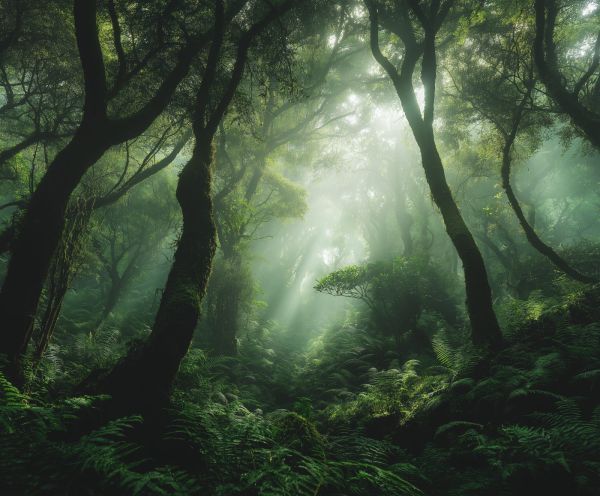
I love that photograph of “Ghibli-Hobbit” architecture, but how can you build something to look as if it were built by accretion over decades, as “Ghibli-Hobbit” architecture does? Trying to look like something from the past didn't entirely work in our suburban neighborhood.
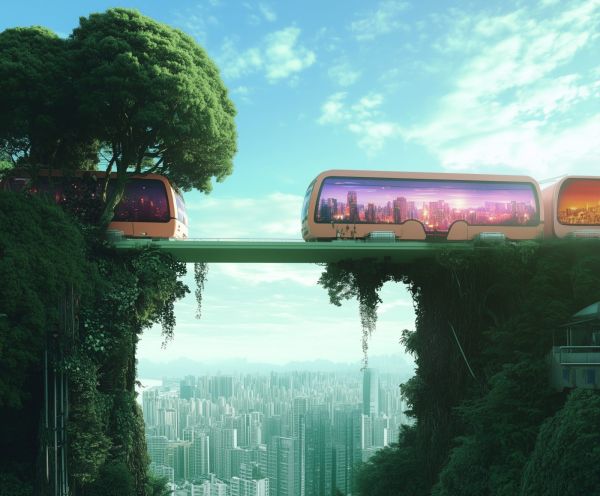
Of course, you're talking about entire cities and not just neighborhoods. I love the mixed uses, walkability, and transit systems that your diagram suggests.
Thanks for your cool and stimulating thought experiment here.